

Published Feb 17, 2024 | 10:58 AM ⚊ Updated Feb 17, 2024 | 10:58 AM

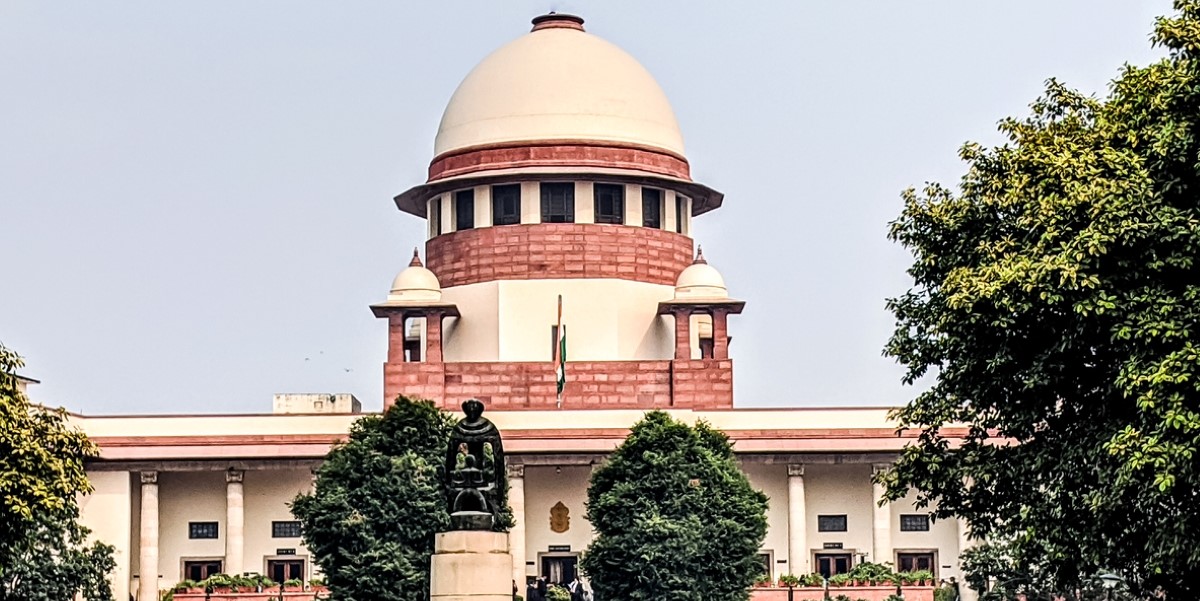
Supreme Court of India. (iStock)

The Supreme Court on Friday, 16 February, ordered clubbing a fresh plea challenging the validity of certain provisions of the 2019 law, which make the practice of instant divorce through triple talaq a punishable offence, with those already pending with the court. Violation of the law entails imprisonment of up to three years.
A bench comprising Chief Justice DY Chandrachud and Justices JB Pardiwala and Manoj Misra agreed to hear the plea along with pending petitions on which notices were issued to the Centre in 2019.
The fresh plea has been filed by Amir Rashadi Madani, a resident of Azamgarh in Uttar Pradesh.
During the brief hearing, the Chief Justice asked how the provisions violated the rights of men.
The counsel for Madani said the provisions of the Muslim Women (Protection of Rights on Marriage) Act, 2019, criminalise instant triple talaq and provide for punishment to men.
Contradicting laws
Sections 3 and 4 of the law are contrary to each other, the lawyer claimed.
Section 3 terms triple talaq illegal and Section 4 provides for a three-years jail term and a fine for husbands for granting instant divorce through this mode.
The bench then ordered tagging of the pleas filed earlier on the issue by two Muslim organisations — Jamiat Ulama-I-Hind and ‘Samastha Kerala Jamiathul Ulema’, a religious organisation of Sunni Muslim scholars and clerics in Kerala.
On 23 August 2019, the top court had agreed to examine the validity of the Act.
Both Jamiat Ulama-I-Hind and ‘Samastha Kerala Jamiathul Ulema’ have urged the court to declare the law “unconstitutional”.
Jamiat claimed in its petition that “criminalising a mode of divorce in one particular religion while keeping the subject of marriage and divorce in other religions only within the purview of civil law, leads to discrimination, which is not in conformity with the mandate of Article 15”.
Article 15 of the Constitution deals with the prohibition of discrimination on grounds of religion, race, caste, sex, or place of birth.
Jamiat claimed since the pronouncement of triple talaq by a Muslim husband upon his wife had already been declared “void and illegal”, there was no requirement to enact the law.
“However, the impugned Act criminalises the act of pronouncement of talaq by a Muslim husband and makes it a cognizable offence, without appreciating that such pronouncement had already been declared unconstitutional and amounted to nullity in the eyes of law,” Jamiat said in its plea.
Referring to the provision of the Act which stipulates punishment of up to three years’ jail along with the fine, the plea said it is an “ill-conceived provision which imposes excessive and disproportionate punishment”.
(Disclaimer: The headline, subheads, and intro of this report along with the photos may have been reworked by South First. The rest of the content is from a syndicated feed, and has been edited for style.)



