

Published Sep 22, 2023 | 9:18 PM ⚊ Updated Sep 23, 2023 | 1:16 PM

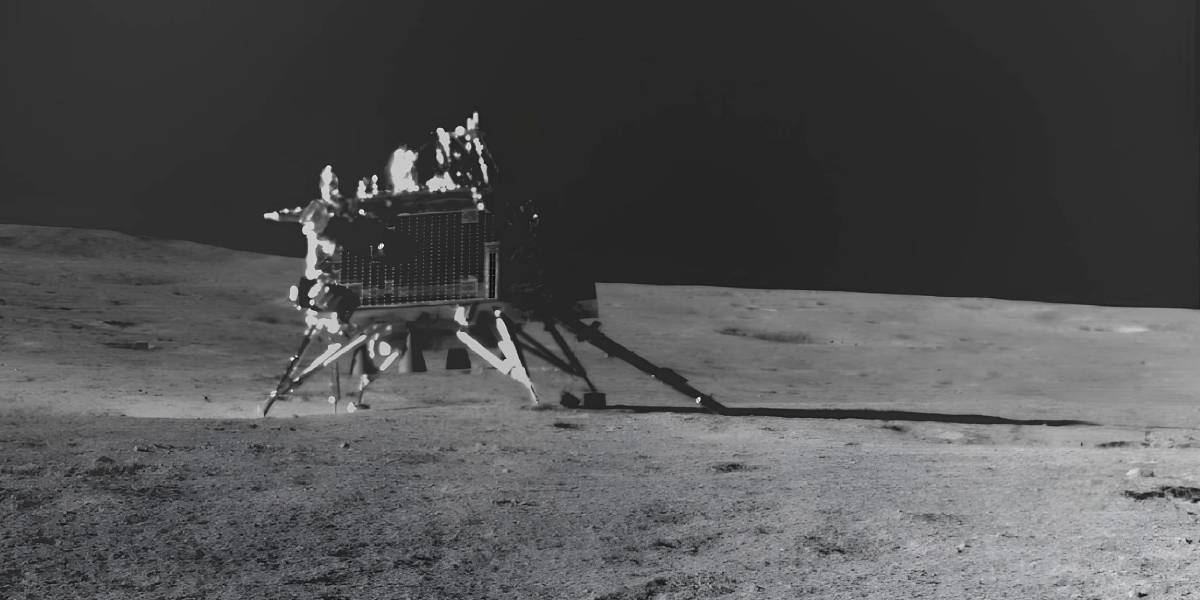
the lander was crucial for gathering valuable information about the moon’s environment and geological features.

The Indian Space Research Organisation (ISRO) on Friday, 22 September, said it made efforts to establish communication with its lunar mission Chandrayaan-3’s Vikram lander and Pragyan rover to ascertain their “wake-up condition” after they had been put into sleep mode early this month.
However, no signal had been received from them, it added in its post.
Attempts to make contact with the lander and rover would continue, said the space agency on social media platform X.
With dawn breaking on the moon, ISRO attempted to re-establish communication with the lander and the rover to revive them so that they could continue scientific experiments.
Both the lander and the rover were put in sleep mode earlier this month ahead of the lunar night setting in on Earth’s only natural satellite. However, their receivers were on.
“Efforts have been made to establish communication with the Vikram lander and Pragyan rover to ascertain their wake-up condition. As of now, no signals have been received from them. Efforts to establish contact will continue.” ISRO said in a post on X.
Chandrayaan-3 Mission:
Efforts have been made to establish communication with the Vikram lander and Pragyan rover to ascertain their wake-up condition.As of now, no signals have been received from them.
Efforts to establish contact will continue.
— ISRO (@isro) September 22, 2023
“We put both the lander and rover on sleep mode because the temperature [on the moon] would go as low as minus 120-200 degrees Celsius. From 20 September onwards, sunrise will happen on the moon, and by 22 September we hope that the solar panel and other things will be fully charged, so we will be trying to revive both the lander and the rover,” ISRO’s Space Applications Centre Director Nilesh Desai said on Thursday.
With sunlight back on the south polar region of the moon, where both the lander and the rover are located, and their solar panels believed to be optimally charged, ISRO is making efforts to establish contact with them again to check their health and ability to resume functioning in order to try to revive them.
After landing on 23 August, the lander, the rover, and the payloads onboard performed several experiments, completing them within 14 Earth days (one lunar day) before pitch darkness and extreme cold weather engulfed the moon.
The lander and rover, with a total mass of 1,752 kg, were designed to operate for one lunar daylight period (about 14 Earth days) to study the surroundings there.
However, ISRO is hoping that now that the Sun has risen again on the moon, they can be revived and carry on with the experiments and studies there.
“The Vikram Lander is set into sleep mode around 08:00 Hrs IST today… Payloads are now switched off. Lander receivers are kept ON. Vikram will fall asleep next to Pragyan once solar power is depleted and the battery is drained. Hoping for their awakening around September 22, 2023,” ISRO posted on social media platform X on 4 September.
On 2 September, after putting the rover into sleep mode, ISRO said, “The rover completed its assignments. It is now safely parked and set into sleep mode. APXS and LIBS payloads are turned off… Currently, the battery is fully charged. The solar panel is oriented to receive the light at the next sunrise expected on September 22, 2023.”
The lander touched down near the South Pole of the moon on 23 August, successfully completing one of the main objectives of the Chandrayaan-3 mission: Soft landing on the lunar surface.
Subsequently, the 26-kg six-wheeled rover descended from the lander’s belly onto the moon’s surface, using one of its side panels, which acted as a ramp.
Noting that as long as the sun shines, all the systems would have power, ISRO Chairman S Somanath earlier said, “The moment the sun sets, everything will be in pitch darkness, temperature will go as down as low as minus 180 degree Celsius. So it is not possible for the systems to survive, and if it survives further, then we should be happy that once again it has come to life and we will be able to work on the system once again.”
He said, “We hope it would happen that way.”
If the payloads are successfully switched on again, ISRO is expected to undertake the same set of experiments it had conducted on the lunar surface after the landing, sources from the space agency said.



