

Published Apr 19, 2023 | 4:25 PM ⚊ Updated Apr 19, 2023 | 4:25 PM

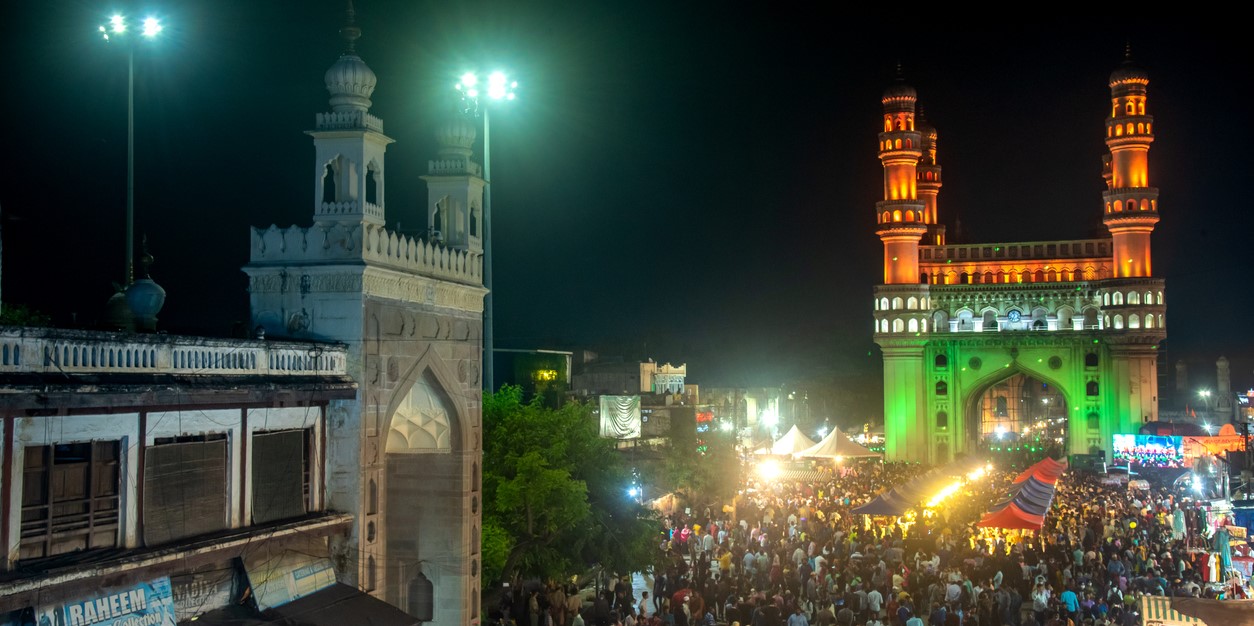
The area around Charminar in Hyderabad is considered to be one of the most crowded spots in India. (iStock)

According to the latest UN data, India has surpassed China to become the world’s most populous nation, with 142.86 crore people.
China now has a population of 142.57 crore, thus being the second most populous country, the UN world population dashboard showed.
According to a new UNFPA report, 25 percent of India’s population is in the age group of 0-14 years, 18 percent in the 10-19 age group, 26 percent in the age bracket of 10-24 years, 68 percent in the 15-64 years age group, and 7 percent above 65 years.
Estimates by different agencies have suggested that India’s population will keep rising for nearly three decades before it peaks at 165 crore and then start declining.
The population demographics of India vary from state to state. Kerala and Punjab have an ageing population while Bihar and Uttar Pradesh have a young population, experts have said.
Andrea Wojnar, the representative for United Nations Population Fund (UNFPA) India and the country director for Bhutan, said that “India’s 1.4 billion people must be seen as 1.4 billion opportunities”.
“As the country with the largest youth cohort — its 254 million youth (15-24 years) — can be a source of innovation, new thinking and lasting solutions.
“The trajectory can leapfrog forward if women and girls, in particular, are equipped with equal educational and skill building opportunities, access to technology and digital innovations, and most importantly with information and power to fully exercise their reproductive rights and choices,” she said.
Wojnar said that ensuring gender equality, empowerment and advancing greater bodily autonomy for women and girls are the key determinants for a sustainable future. Individual rights and choices should be respected, and all should be able to decide when to have children, if any, and how many, she said.
“Women and girls should be at the centre of sexual and reproductive policies and programmes. When rights, choices and equal value of all people are truly respected and held, only then can we unlock a future of infinite possibilities,” the UN official added.
(Disclaimer: The headline, subheads, and intro of this report along with the photos may have been reworked by South First. The rest of the content is from a syndicated feed, and has been edited for style.)



