

Published Jan 26, 2024 | 10:30 AM ⚊ Updated Jan 26, 2024 | 10:30 AM

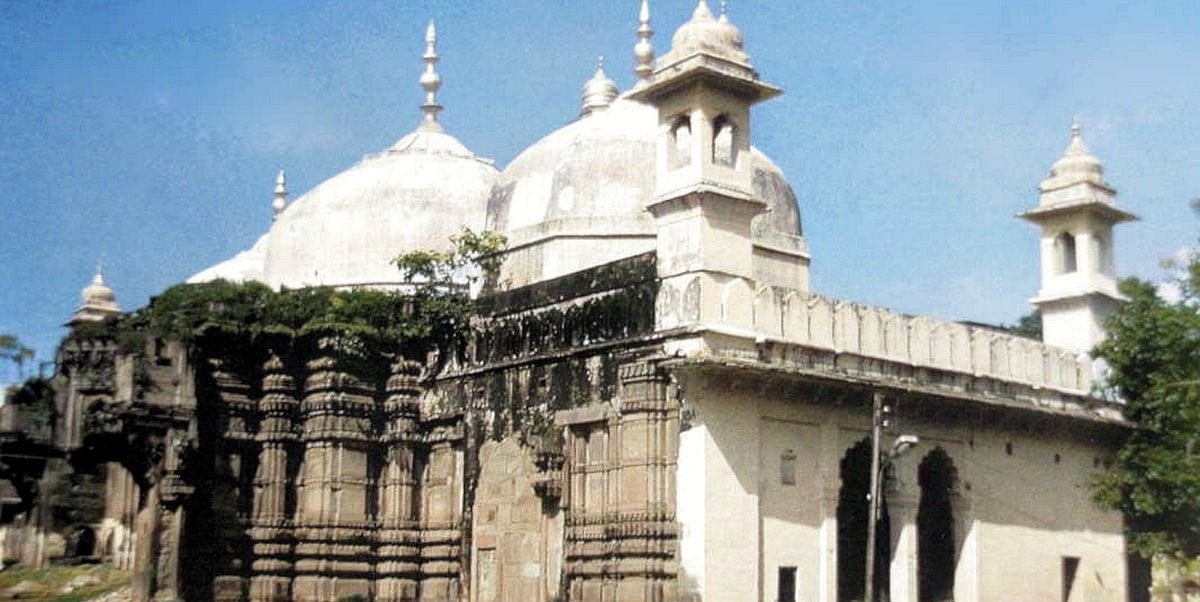
Gyanvapi mosque in Varanasi. (X)
The lawyer of the Hindu petitioners in the Kashi Vishwanath-Gyanvapi case Thursday, 25 January, claimed the report of a scientific survey by the Archaeological Survey of India (ASI) suggests the mosque was built on the remains of a pre-existing temple.
Vishnu Shankar Jain told reporters in Varanasi the copies of the 839-page report were made available to the parties concerned by the court late Thursday evening.
The report makes it clear that the mosque, which stands adjacent to the Kashi Vishwanath Mandir, was built on the remains of a grand Hindu temple after it was demolished in the 17th century during the reign of Aurangzeb, he said.
He also claimed that the survey report has sufficient evidence of the existence of a temple at the place where the mosque now stands.
Debris of the statues of Hindu gods have been found in two basements during the survey, he claimed, adding some parts of the pre-existing temple including pillars were used in the construction of the Gyanvapi mosque.
Jain claimed the order and the date of demolition of the temple is inscribed on stone in Persian language. A stone with “mahamukti” inscribed on it has also been found, he added.
Jain further claimed that the western wall in the rear side of the Mosque is the wall of the pre-existing temple. A “ghanta” (a large size bell) and a “swastik” symbol are inscribed on the wall, he said.
He further claimed the survey report says the roof of the basement is placed on pillars of temples of Nagar style.
“These evidence indicate that when the temple of Adivishwara was demolished by Aurangzeb in the 17th century, a grand temple was pre-existing there,” Jain claimed.
Jain further said they would appeal in court for a survey of the wazu khana, where ablutions are performed before namaz.
Jain said that on the basis of the report, they would present their side by placing evidence before the court during the next hearing on 6 February.
Earlier in the day, a total of 11 people from both Hindu and the Muslim sides applied in the court to get the ASI survey report on the Gyanvapi complex adjoining the Kashi Vishwanath temple.
(Disclaimer: The headline, subheads, and intro of this report along with the photos may have been reworked by South First. The rest of the content is from a syndicated feed, and has been edited for style.)


