

Published Jan 11, 2026 | 8:17 PM ⚊ Updated Jan 11, 2026 | 8:17 PM

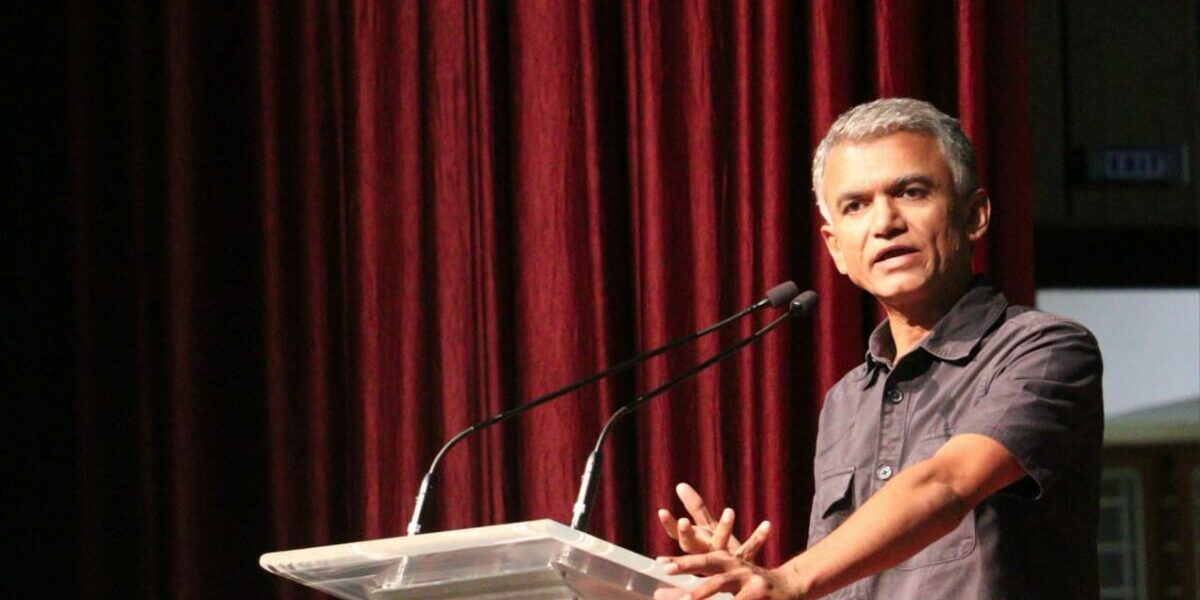
Karnataka Minister of Revenue Krishna Byre Gowda.
Synopsis: Amid shrinking GST transfers, rising debt and growing welfare commitments, Karnataka has urged the Union government to include robust revenue protection in the Union Budget 2026–27. In its presentation, the State sought compensation for GST losses following rate rationalisation, a 50:50 sharing of excise duty on tobacco and pan masala, and the release of pending Central funds for key schemes.
The upcoming Union Budget 2026–27 will be of particular interest to Karnataka, as the State’s finances are under strain due to shrinking transfers from the Central government and increasing pressure to fund welfare schemes.
The Budget, expected to be presented on 1 February, comes at a time when Karnataka says its responsibilities have expanded faster than its revenues.
At the pre-Budget consultations chaired by Union Finance Minister Nirmala Sitharaman in New Delhi on the morning of Saturday, 10 January, the State flagged what it described as the need for “corrective fiscal measures” to address the growing mismatch.
Raising a total of nine demands, Karnataka Minister of Revenue Krishna Byre Gowda, who represented the State at the meeting, said, “Karnataka is a major contributor to national growth, but is facing shrinking fiscal space amid GST changes, rising social commitments, climate shocks, and rapid urbanisation.”
These concerns also come against the backdrop of rising debt. The Mid-Year Review on State Finances 2025–26 predicted that the State’s total liabilities, in absolute terms, are expected to rise from ₹6,85,101 crore in 2024–25 (Revised Estimates) to ₹7,64,655 crore in 2025–26 (Budget Estimates).
In its representation to Sitharaman, Karnataka pointed out that its GST growth has fallen from 12 percent to 5 percent after GST rate rationalisation, resulting in a ₹5,000 crore shortfall this year and ₹9,000 crore annually.
The Union government rolled out GST rate rationalisation in September 2025, revising rates for most goods and services into fewer slabs of 5 percent and 18 percent, from the earlier four-tier structure.
Karnataka had flagged concerns then over the potential impact on State finances. On 5 December, Siddaramaiah wrote to Prime Minister Narendra Modi, stating that gross GST collections for November 2025–26 had declined by 2 percent, compared with a 9.3 percent growth in November 2024.
On Saturday, the State sought a “robust revenue protection mechanism” for States and full compensation for revenue loss, similar to the GST Compensation Cess, a levy introduced to compensate States for potential revenue losses following the introduction of GST, but largely discontinued with rate rationalisation.
Karnataka also sought a 50:50 sharing of excise duty on tobacco and cess on pan masala to “restore fiscal equity and cooperative federalism”.
“States bear the public health, enforcement, and regulatory costs, but cess proceeds remain outside the divisible pool,” the State’s representation said.
The State also sought the urgent release of the Central government’s pending share under the Jal Jeevan Mission. Rural Development and Panchayat Raj Minister Priyank Kharge had, in November 2025, alleged that delays by the Centre in releasing funds had pushed drinking water projects in rural parts of the State to the brink of collapse.
“Against Central release of ₹11,786 crore, the State has released ₹24,598 crore. Karnataka has released ₹13,004 crore in advance, over and above its share, to avoid disruption of JJM works,” the representation said.
Issuing a rebuttal to Congress ministers’ allegations of delays in fund releases, Union Minister of State for Jal Shakti and Railways V Somanna said, “The Congress-ruled State government has not submitted utilisation certificates to the Ministry for the money already spent under the scheme.”
The State government also pointed out that the new cost-sharing following the repeal of the Mahatma Gandhi National Rural Employment Guarantee Act (MGNREGA) has increased the burden on Karnataka.
“In order to continue to provide livelihood security to the tune of 13 crore person-days, Karnataka would require approximately ₹2,000 crore that is fiscally unsustainable,” the State said, calling for a reconsideration of the scheme’s design, restoration of demand-driven employment and adequate, uncapped Central funding.
The Karnataka government has recently announced that it would legally challenge the Central government’s decision to repeal MGNREGA.
The State also sought an additional allocation of ₹796 crore under the Pradhan Mantri Annadata Aay Sanrakshan Abhiyan for the timely rollout of the Price Deficiency Payment Scheme in 2026–27. The scheme directly pays farmers the difference between the Minimum Support Price and the lower market price.
At present, the State said, MSP procurement is inadequate for several crops facing gluts and perishability issues. It proposed the PDPS for eight crops: maize, soybean, mango, chilli, onion, tomato, turmeric and ginger.
In addition, the State called for a revision of the Central share paid to Anganwadi workers, ASHA workers and cooks and helpers, seeking ₹8,000 per month for Anganwadi and ASHA workers and ₹5,000 per month for cooks and helpers. It said the existing contribution has remained stagnant.
The State has also sought the expeditious release of pending grants under the 15th Finance Commission, pointing to a shortfall of ₹4,044 crore.
At least 11 Congress MLCs have reportedly written to Siddaramaiah, urging him to press the Centre for the release of pending dues under the 15th Finance Commission for 5,950 gram panchayats in Karnataka. They said the delay in fund releases was weakening the idea of “gram swarajya” and hindering development activities in rural areas.
Earlier, Kharge had also written to Union Minister Rajiv Ranjan Singh, alleging that the State had not yet received ₹1,092 crore as the first instalment.
The State has also sought the release of disaster relief, citing Special Grants of ₹5,495 crore and State-Specific Grants of ₹6,000 crore. It further requested that the Upper Bhadra project, a major lift irrigation scheme, be declared a national project and that ₹5,300 crore in Central assistance, as announced in the 2023–24 Union Budget, be released.
Finally, the State called for Central support for the Kalyana Karnataka region beyond the State’s annual allocation of ₹5,000 crore to bridge gaps in the Human Development Index.
(Edited by Dese Gowda)


