


Published Dec 30, 2025 | 9:55 PM ⚊ Updated Dec 30, 2025 | 9:55 PM

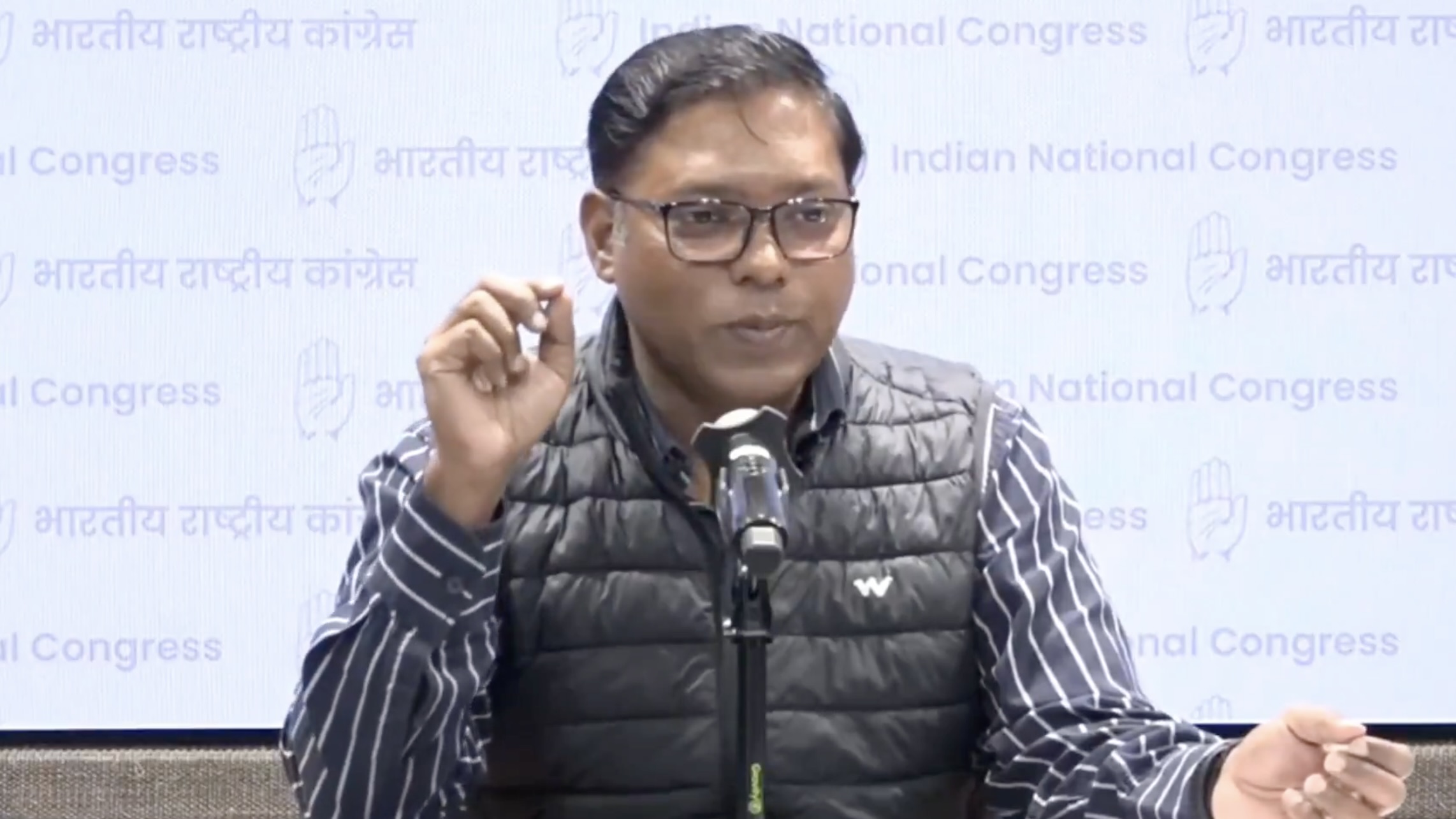
Tiruvallur MP Sasikanth Senthil
Synopsis: The Congress has accused the ECI of conducting a rushed and opaque Special Intensive Revision of electoral rolls across several states, alleging that the process is leading to large-scale voter deletions and disproportionately affecting the poor, migrants and marginalised communities. Speaking in Delhi, Tiruvallur MP Sasikanth Senthil said preliminary data pointed to widespread anomalies and demanded greater transparency, including the release of a public white paper by the ECI.
The Congress has accused the Election Commission of India (ECI) of pushing through a hurried Special Intensive Revision (SIR) of electoral rolls across states such as Bihar, West Bengal and Tamil Nadu, abandoning its own rules, operating without transparency, and carrying out an exercise that disproportionately harms the poor, migrants and marginalised communities.
Addressing a press conference at the All India Congress Committee (AICC) headquarters in Delhi, Tiruvallur MP Sasikanth Senthil on Tuesday, 30 December, said the SIR was being conducted in a manner that was “unprecedented, unreasoned, and deeply troubling”, warning that it could lead to large-scale disenfranchisement.
Citing preliminary figures, Senthil said the scale of deletions and anomalies was staggering. In West Bengal alone, he claimed, 58.19 lakh voters had been flagged as “unmapped”, while 32 lakh voters were currently unmapped and 1.7 crore cases were marked with logical discrepancies.
“These numbers force us to ask—is this happening selectively in certain states like West Bengal and Tamil Nadu? Why is there no clarity, no public explanation?” he asked.
In Tamil Nadu, Senthil said nearly 97 lakh voters had already been deleted, with 6 lakh deletions in his own constituency. “What consequences this will have, only God knows,” he said.
Senthil also took aim at Home Minister Amit Shah’s defence of the SIR as a move to remove illegal immigrants.
“Why is the Home Minister explaining this at all? Shouldn’t the Election Commission speak for itself? Is the Election Commission functioning under the Home Minister?” he asked.
The ECI’s contradictions over deduplication software, used to identify duplicate voters across constituencies and districts, were also a major focus of Senthil’s criticism.
He said the ECI had consistently praised and mandated the use of this software, including in its 2023 Manual of Electoral Rolls, which made 100 percent deduplication compulsory during revisions. “Even before the 2023 Lok Sabha elections, this software was routinely used,” he noted.
However, during the Bihar SIR, the ECI publicly announced that it would not use the deduplication software, claiming it was “not good enough”. The result, Senthil said, was alarming.
“An investigation by the Reporters’ Collective found that even after the Bihar SIR, the voter list contained around 14.5 lakh duplicate voters. This is the direct consequence of abandoning deduplication,” he said.
What has further deepened suspicion, Senthil added, is that the ECI has now quietly reintroduced deduplication software for the second phase of the SIR covering 12 states, without explaining what has changed.
“This is a complete U-turn. If the software was unreliable in Bihar, what is the software being used now? What algorithm is running? Why was Bihar treated differently? There is zero transparency,” he said.
Senthil said BLOs on the ground were being overwhelmed by constantly changing app updates and protocols, without written instructions or training.
“Today, a BLO opens the app and suddenly sees a notification saying ‘two duplicates found’. What should they do next? There is no protocol, no training. So officers are forced to make on-the-spot decisions without clear rules or guidance,” he said.
He also flagged the introduction of a new “mapping” requirement, under which voters must be linked to parents or grandparents in older electoral rolls, such as those from 2002 or 2004. Even voters above 50 years of age, or those already mapped, are now being flagged again for re-verification under new logical discrepancy rules.
“All this is being done on the fly. Today a rule is announced, tomorrow it is contradicted. This is not how a constitutional institution is supposed to function,” Senthil said.
Senthil said a Special Intensive Revision is a rare and comprehensive process, comparable to a census, involving door-to-door verification and careful determination of whether a voter is “ordinarily resident” in a place.
“Citizenship, age above 18, and domicile are the three pillars of inclusion in the voter list. But domicile, especially ‘ordinary residence’, cannot be decided mechanically. It needs time, field inquiry, and informed judgment by Booth Level Officers (BLOs),” he said.
He pointed out that the previous nationwide SIR between 2002 and 2004 took nearly two years and was staggered so gradually that voters barely noticed it.
“What we are seeing now is the exact opposite, a compressed, chaotic process being pushed across the country without any explanation for the urgency,” he said.
The Congress MP warned that the biggest victims of the current SIR process would be the poorest citizens, migrants and those without formal documentation.
“For many poor people, identity rests on three documents, ration card, Aadhaar, and the voter list. Taking away a voter’s name is not a clerical correction; it is an attack on their identity,” he said.
He pointed out that ECI guidelines themselves mandate due process, including notice periods and quasi-judicial hearings, before final deletion. “None of that is being followed. Everything is being rushed into a 30-day objection window. The entire country is in a frenzy,” he said.
Senthil also expressed concern over reports of stress and suicides among BLOs, saying the pressure of unclear instructions and impossible timelines was taking a human toll.
He demanded that the ECI immediately release a transparent white paper detailing:
“This is not a party issue. This is a voter’s issue. This is about the identity and rights of ordinary citizens,” Senthil said, adding that the party was assisting voters on the ground in filing Form-6 applications and objections.
Asked whether the Congress would consider impeachment proceedings against the Chief ECIer, Senthil said all constitutional options remained open. “This pattern of creating massive confusion, whether demonetisation, NRC, or now SIR, must be resisted,” he said.
(Edited by Dese Gowda)


