

Published Dec 29, 2025 | 5:17 PM ⚊ Updated Dec 29, 2025 | 5:17 PM

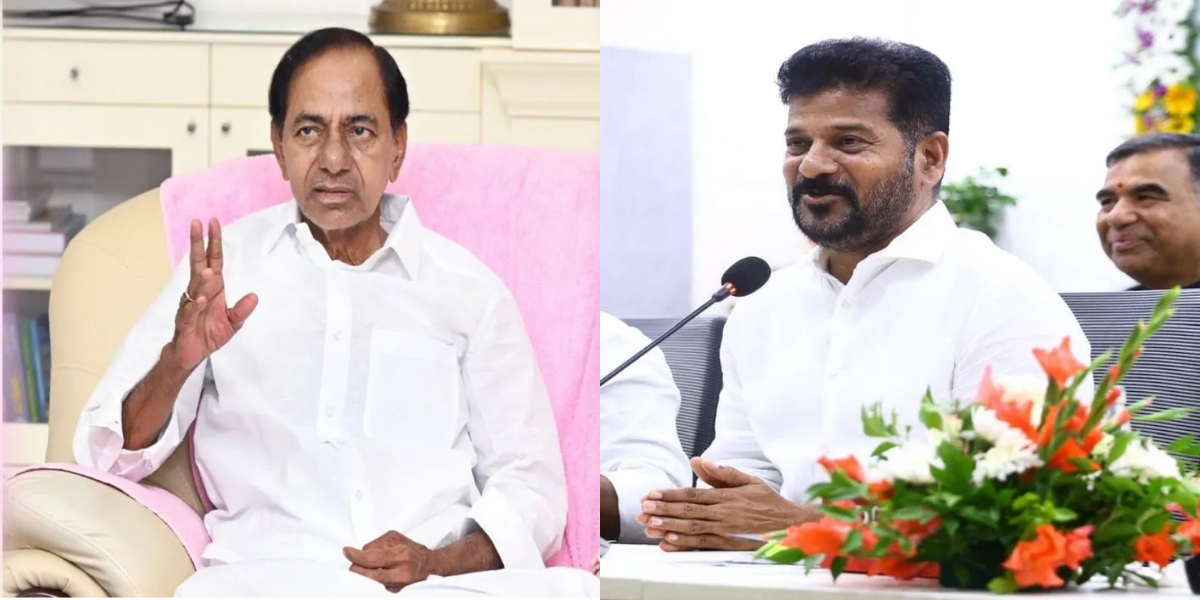
KCR to take on Revanth Reddy government on the neglect of irrigation projects (Supplied)
Synopsis: With all institutions in a state of disrepute in the public’s eyes, partisan and frenzied politics will inevitably gain more strength, or democracy might begin expressing itself, however weak it might be, in the New Year.
As some hoped, as some imagined, as some hinted from behind the scenes, K Chandrashekar Rao (KCR) has surfaced on the stage. He will remind everyone of his two duties: to sustain the party in the state and reorganise it.
Many are debating whether the fire in him has diminished, whether the man no longer appears excited. But his political acumen and contextual clarity have not diminished the least. He has his strategy in raising issues related to southern Telangana, which was the main reason for his defeat, and issues linked to neighbouring Andhra Pradesh.
KCR’s limitations
KCR plans to further strengthen the allegations of “pro-Andhra favouritism” already circulating against Chief Minister A Revanth Reddy and link the neglected Palamuru–Rangareddi with it.
Though he spoke with great restraint, without even mentioning the Chief Minister’s name, at one point his natural aggressive nature came out. Poor KCR, his carefully built argument against the Congress went into the background and the phrase, “I’ll flay them,” popped out, which became red meat for the media.
The issues he has chosen for his political campaign may be contextually appropriate, but KCR seems not to have recognised the limitations in turning them into mass issues. Focusing on Kaleshwaram and the neglect shown by the BRS government towards irrigation needs in Rangareddi, Palamuru, and Nalgonda districts is no small matter.
The pro-Telangana initiative KCR displayed in water disputes with the neighbouring state was not at a praiseworthy level. There is no moral standing or any precedent to believe he will stand firmly on these issues. Even if there were flaws in previous stances, there is no reason not to take them up now. But for that, he will have to face criticisms from opponents and Telangana protagonists.
To those who hoped that KCR’s activism would turn state politics towards public issues and that a strong opposition would enhance democracy, the recent developments have brought nothing but endless disappointment. Neither the state Congress nor the government leaders thought that responding harshly was appropriate.
As for Chief Minister Revanth Reddy, he has chosen language and expressions utterly unbecoming of his position. Do opponents fear hearing such foul language? Or at least, do his own party members appreciate it with a “shabash”? Even Congress supporters seem to be hanging their heads in shame at their leader’s words!
“Neeyavva” (a derogatory term), bathroom-cleaner, man with a face with no beard and moustache — these words should not come from a state leader, and no one needs to say that. What kind of heroism is using such language that insults women and LGBTQ people, belittles labour, and is indicative of feudal violence? Is this the kind of political discourse that Telangana’s cultural and political tradition expects?
The New Year is about to experience many crucial turning points at the national level.
The Bharatiya Janata Party, charging ahead unstoppably, is set to show its prowess in the elections in Bengal, Assam, Tamil Nadu, and Kerala. Having captured the municipal corporation in Kerala’s capital, Thiruvananthapuram, the BJP can well demonstrate its strength in that state’s elections!
On the other hand, in Tamil Nadu too, it is making intense efforts to increase its power. It may not win the government, but it can get results that can qualitatively change the situation in the future. A controversy like Ayodhya is in its early stages in Madurai.
Vijay, who started a new party, has ceased targeting the BJP after the stampede and is now working solely with the DMK as the target.
In the Bengal elections, the BJP is working with victory as its goal. Factors creating a favourable situation for it are emerging not only within the state but also from outside. In the context of elections to be held in March in Bangladesh, intense violence is erupting. Leaders who led the movement against Sheikh Hasina are being assassinated one by one.
Attacks are being made on Hindu minorities labelled as pro-Awami League and on newspapers. Brutal murders are occurring.
The reflections of that violence are visible in Bengal. Naturally, they will work in favour of the BJP and against the Trinamool. Assam is anyway under BJP dominance. Developments in Bangladesh will further strengthen it.
In every state, the Special Intensive Revision (SIR) process is causing anxiety among the Opposition parties. Additions of new voters and removals of existing ones are happening meticulously, which are beyond the scope of surveillance by citizens.
The Janata Dal (U) in Bihar, which hoped to curb the central government’s aggression, has become a subordinate to the BJP after the Assembly elections; in Andhra Pradesh, the Telugu Desam has unilaterally adopted BJP ideology and is competing with Jana Sena in adherence to Sanatana Dharma credentials.
Nationwide, the Congress’s pitiful condition continues and is deteriorating further. Amid many adverse environments and weaknesses, national opposition parties are trying to offer whatever resistance they can. Mamata Banerjee and MK Stalin are pulling out all stops. But between the two, one has dictatorial traits; the other has the stamp of corrupt governance.
In Mumbai, leaving aside Congress, the two factions of Shiv Sena are planning to unite and fight against the BJP.
The central government, which set a deadline to end Maoism by 31 March 2026, is continuing its root-out war in that direction. Actions to physically eliminate top leadership and force the surrender of lower ranks are continuing successfully. Measures to control Maoist sympathisers have also begun, as indicated by actions like the arrest of Gade Innayya and notices to the video journalist organisation that broadcast his words. That the responses from civil society are lukewarm indicates the changing atmosphere.
Whatever the Maoists’ situation, the fear is that the impact of these repressions on the democratic environment will be considerable. In the New Year, there is a chance these tensions will expand further.
When facing public opposition, the BJP is confronting it by treading new paths. It succeeded in pushing the IndiGo crisis onto the Telugu Desam minister or onto the aviation company. In the Aravalli mining issue, it noted and sensed clear opposition and stepped back.
In both these matters and in the Delhi pollution issue, Arnab Goswami, the pro-government media leader, spoke against the government and claimed that corrective actions happened only due to his pressure. Credit goes to Arnab’s TV for recognising that credibility lies in anti-government stances and for using it to its advantage with great fanfare.
In the New Year, media ethics, especially national media ethics, are reaching a crisis level. Giving relief to a convicted rapist, the judiciary is facing a great test of credibility (The Supreme Court on Monday, 29 December, stayed the Delhi High Court order suspending Unnao rape convict Kuldeep Singh’s life sentence). The highest court itself is rewriting new definitions for freedom of expression. The credibility of the Election Commission is just about holding.
Overall, with all institutions in a state of disrepute in the public’s eyes, it is inevitable that partisan and frenzied politics will gain more strength, or democracy might begin expressing itself, however weak it might be.
Even in world politics, ideologies, bereft of ideals, are spreading to regimes marked by ultra nationalism or moderate brands of nationalism. No holds barred!
(Views are personal. Edited by Majnu Babu).


