
Published Jun 07, 2026 | 10:20 AM ⚊ Updated Jun 07, 2026 | 10:20 AM

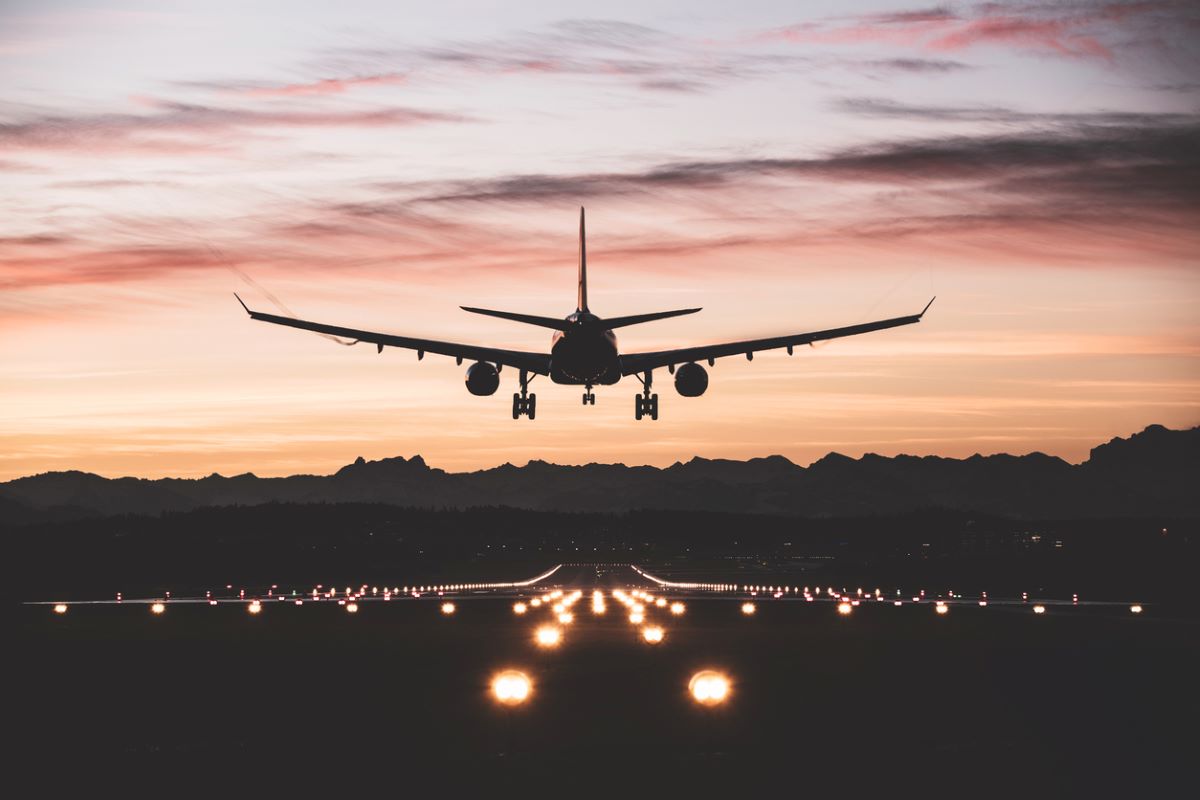
(Representational/ iStock)

Synopsis: Of late, airlines have reported that turbulence is getting worse. Aircraft approaching or departing airports embedded within or adjacent to urban heat islands must pass through what can only be described as a thermal gauntlet — a flight funnel superheated by the city below. What is needed now is a coordinated push to study the flight funnel and to reform land-use regulations around airports before development makes course correction impossible.
When a Singapore Airlines flight plunged violently over Myanmar in May 2024, killing one passenger and injuring scores of others, the world briefly paid attention to a hazard that aviation has long treated as an occupational inconvenience.
Turbulence, it turned out, could kill. But the harder question — why turbulence is getting worse, and what new variables we are failing to account for — remains largely unasked in public discourse, and dangerously understudied in research circles.
The science of turbulence is not new. Pilots and meteorologists have long catalogued its many forms — clear air turbulence lurking invisibly near jet streams, convective turbulence boiling up from thunderstorms, mountain waves rolling far downwind of terrain, and wind shear ambushing aircraft during takeoff and landing.
What is new is the growing body of evidence suggesting that climate change is intensifying these phenomena by strengthening and destabilising jet streams. The atmosphere is getting rougher. And yet our models, our regulations, and our conversations have not kept pace with what the skies are telling us.
Also Read: Bhogapuram International Airport near Vizag takes off with first test flight
Consider urban heat islands — a well-established but curiously overlooked variable in this conversation. As cities expand into sprawling mega-regions of concrete, glass, and asphalt, they generate significant thermal columns of rising warm air. These thermals are a known source of low-altitude convective turbulence.
Aircraft approaching or departing airports embedded within or adjacent to these urban giants must pass through what can only be described as a thermal gauntlet — a flight funnel superheated by the city below.
Mumbai, Delhi, Chennai, Hyderabad — airports in or near these mega-cities handle tens of thousands of flights annually through airspace that no one has systematically studied for the compounding effect of urban heat.
As cities grow hotter and denser, the thermal instability they generate will only intensify, and the interaction between urban heat plumes and existing atmospheric turbulence patterns deserves serious, dedicated modelling.
India offers some of the most instructive — and cautionary — examples of this problem. Hyderabad’s Rajiv Gandhi International Airport in Shamshabad was deliberately located on the city’s outskirts when it opened in 2008, precisely to avoid the urban density of the older city. Yet in the nearly two decades since, relentless real estate development has steadily closed in around it, shrinking the open land buffer that once existed and replacing farmland and scrub with gated communities, logistics parks, and commercial corridors.
The flight funnels approaching and departing Shamshabad now pass over an increasingly built-up thermal landscape that was never factored into the airport’s original environmental or safety planning. Meanwhile, the old Begumpet Airport, now largely decommissioned for commercial operations but still active for defence and general aviation, sits entirely within the heart of a dense, heat-retaining urban fabric — a sobering preview of what Shamshabad could become if development around it goes unregulated.
Delhi presents a different but equally telling picture. Indira Gandhi International Airport is one of the largest airport complexes in Asia, with vast campus grounds that might suggest adequate thermal buffering. But the flight funnels extending beyond its perimeter — over Dwarka, Mahipalpur, Vasant Kunj, and the rapidly developing Gurugram and Dwarka Expressway corridors — are among the most densely built stretches of urban India.
The old Safdarjung Airport, like Begumpet, is now a small general aviation enclave entirely surrounded by the city, its approaches threading over rooftops and concrete with no meaningful open land beneath. Neither airport’s surrounding development has ever been assessed through the lens of thermal turbulence contribution.
Chennai’s airport sits within a dense urban grid with virtually no green buffer, and Mumbai’s Chhatrapati Shivaji Maharaj International Airport is perhaps the most extreme case — hemmed in on all sides by one of the world’s most densely populated urban environments, with flight paths over Dharavi, Bandra, and Kurla leaving no margin whatsoever for thermal mitigation.
This is not merely an aviation or meteorology problem — it is fundamentally a city planning problem. The flight funnel, that cone of airspace through which every arriving and departing aircraft must pass, is directly influenced by what lies beneath it.
Dense, built-up urban development under and around this funnel acts as a heat trap, amplifying thermal turbulence for aircraft passing overhead. The logical counter is deceptively simple: Open land. Parks, green belts, wetlands, agricultural buffers, and tree cover near airports and along flight paths absorb heat rather than generate it, moderate surface temperatures, and reduce the thermal instability that feeds convective turbulence.
City planners and aviation regulators have historically treated the land around airports as merely a noise or safety buffer zone. It is time to recognise it as a thermal management zone as well. Building regulations near airports, particularly within flight funnels, should actively discourage dense construction and incentivise open, green land use.
In India, where airport-adjacent land is among the most commercially coveted real estate in any city, this will require political will and regulatory courage that has so far been entirely absent.
The Airports Authority of India and the Ministry of Civil Aviation would do well to commission urgent studies on urban heat contribution to turbulence at each of these airports before the next tragedy forces the conversation.
And then there are the birds. It may seem like a tangent, but it is not. Birds share the lower atmosphere with aircraft in enormous numbers, particularly along migratory corridors that frequently pass over cities and their airports. We know that birds strike aircraft — a well-documented hazard with established protocols.
What we do not know, because no one has seriously studied it, is what aircraft do to birds — specifically, whether wake turbulence, those powerful vortices trailing every aircraft, pose a measurable hazard to bird populations flying in shared airspace. Birds are biologically agile, but lighter species in the direct path of vortices generated by wide-body aircraft at low altitudes could be vulnerable.
With air traffic projected to double over the next two decades, and migratory bird populations already under stress from habitat loss and climate disruption, the intersection of aviation turbulence and bird flight ecology is a research vacuum that urgently needs filling.
Ironically, the same green and open land buffers proposed around airports would also serve as critical habitat corridors for these birds — a rare instance where a single policy intervention could address multiple problems at once.
Also Read: Six-airport push cruises ahead as Telangana releases final instalment of AAI fee
What ties these threads together is a common failure of interdisciplinary curiosity. Aviation safety research, urban climatology, city planning, and wildlife ecology each operate in their own silos, occasionally nodding at one another but rarely collaborating with urgency.
The result is that we are flying increasingly large aircraft over increasingly hot cities, through an increasingly unstable atmosphere, alongside increasingly stressed wildlife populations, armed with models and regulations built for a calmer, cooler, and less crowded world.
The Singapore Airlines tragedy should have sparked that broader conversation. It did not.
What is needed now is a coordinated push — from the Airports Authority of India, DGCA, urban local bodies, climate scientists, and ecologists — to study the flight funnel over Indian mega-cities as a distinct and complex atmospheric environment, to model urban heat as a serious turbulence variable, and to reform land-use regulations around airports before development makes course correction impossible.
Shamshabad is still salvageable. The same cannot be said for Begumpet, Safdarjung, or the approaches into Mumbai — and that should serve as a warning, not a template.
The skies are trying to tell us something. It is time our cities, our regulations, and our science learned to listen.
(Views are personal.)



