

Published Mar 09, 2026 | 12:50 PM ⚊ Updated Mar 09, 2026 | 12:50 PM

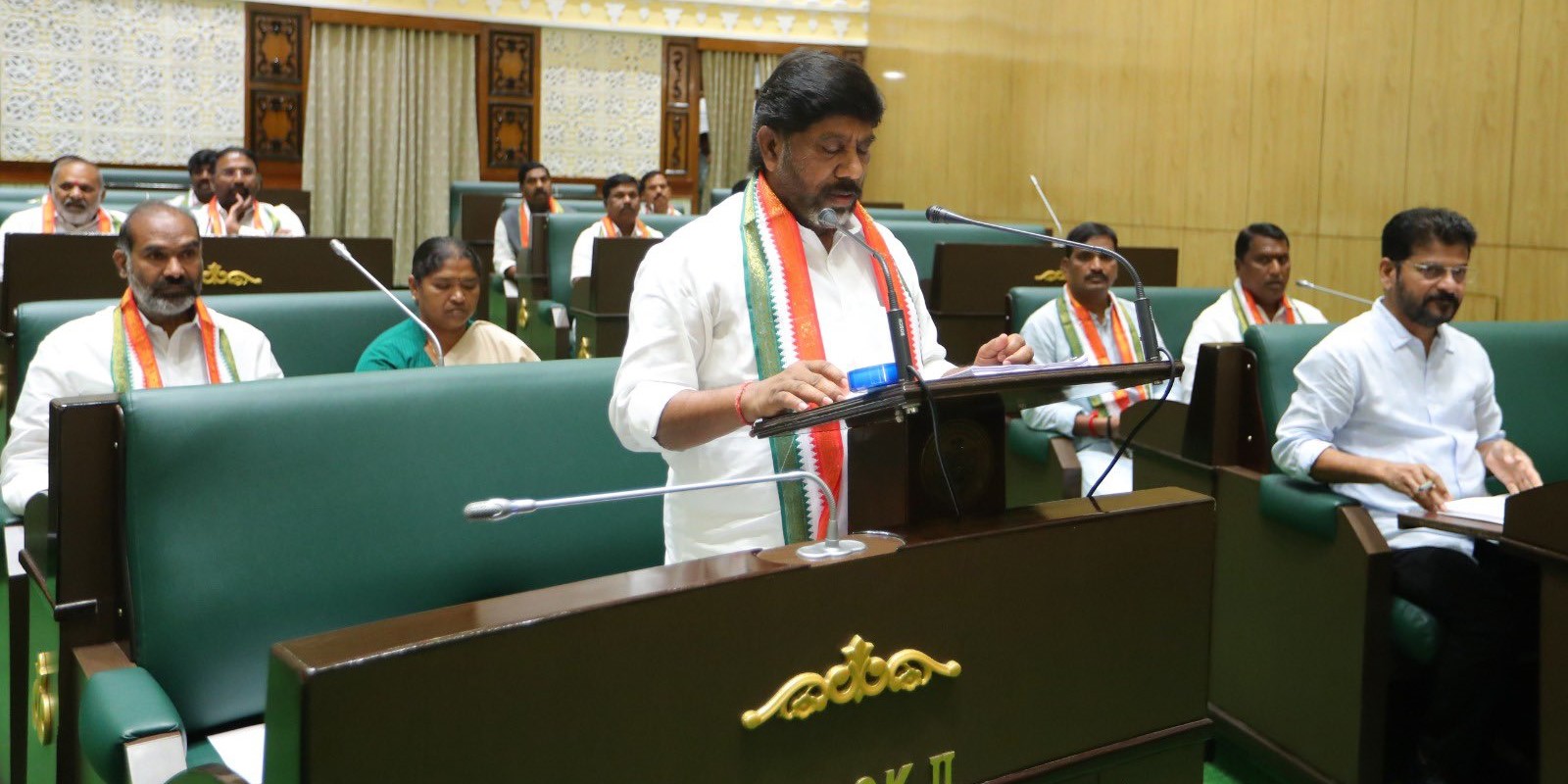
Finance Minister Mallu Bhatti Vikramarka presenting the Telangana Budget. (X)
Synopsis: Since the formation of Telangana in 2014, the state’s public finances have been a serious concern. The government has no tangible data on fixed allowances and salaries, making the tracing of its spending impossible. Non-budgetary allocations are also putting a strain on the finances. From the upcoming budget, the government must ensure that all spendings are transparent as citizens have the right to know where public money is spent.
Telangana’s public finances have been a serious concern for many years. A state budget should reflect honest priorities and a clear development plan. However, if you trace Telangana’s budgets since the state’sformation in 2014, a troubling pattern emerges: Figures announced in budget speeches bear little resemblance to actual spending.
What should be a serious exercise in public accountability has been reduced to political theatre — and the way funds are allocated has created fertile ground for corruption.
A fundamental problem is the little room that the government has to make new spending decisions. Of every rupee that comes into the state treasury, nearly 70 paise is already committed to fixed obligations: Salaries, pensions, interest payments, and loan repayments. Only around ₹10,000 to ₹15,000 crore of each year’s budget is genuinely discretionary. For anything beyond that, the state has no choice but to borrow more.
The salaries and allowances of government employees now cost the state nearly ₹72,000 crore per year — roughly ₹6,000 crore every month. This figure has grown significantly, yet the state has never performed a transparent audit of how many people it actually employs. Senior officials have been quietly adding contract staff through decentralised decisions, with no central oversight.
The state does not know — and has not publicly disclosed — how much of that monthly expenditure goes to contract workers versus permanent staff.
Contract and outsourcing workers are hired through private companies, meaning there is no reliable information about what these companies charge or what workers actually receive. Over 5,000 ghost employees have been identified in the contract outsourcing system — people on government payrolls who also registered for outsourcing jobs — a fraud uncovered only after Aadhaar details were cross-checked.
Crores of rupees were siphoned off monthly. The government has still not stated publicly what action it intends to take.
The cost of retirements is also mounting: 9,978 employees are due to retire this year, and settling their dues will cost around ₹6,000 crore. Additionally, thousands of government employees have enrolled in welfare schemes meant for the poor — drawing pensions, housing benefits, and MGNREGS payments while receiving regular government salaries.
More than 37,000 employees across all categories have been identified, drawing benefits they are not entitled to.
Reported figures put the total government employees at around 10 lakh — a number set to grow with new recruitments. The Legislative Assembly should hold a full, open debate on how many employees the state needs, whether existing staff are deployed effectively, and who is accountable when rules are broken. Workforce numbers and salary costs must be presented transparently and scrutinised properly by lawmakers.
Ten financially burdensome projects have weighed on the state’s finances since 2014 — electricity subsidies, the Hyderabad Outer Ring Road, Mission Bhagiratha, Rythu Bandhu, grain procurement, the farmer loan waiver, thermal power plants, Metro Rail, and others.
In two years, the current government has offered no public response or coherent plan for managing these burdens. Newer projects — the Gandhi Sarovar project, the Future City project, the Regional Ring Road, and GHMC infrastructure works — are adding further strain.
What makes this particularly serious is that environmental costs are never counted at all. When a project destroys a lake, clears a forest, or pollutes a river, those losses do not appear anywhere in the state’s accounts.
Rising flood risk, declining groundwater, and loss of livelihoods have real economic consequences, but none of them is budgeted for. As long as environmental damage remains invisible in financial planning, Telangana will keep incurring costs it is not preparing to meet.
The state government’s own white paper acknowledged debts of around ₹12 lakh crore. Since then, the state has borrowed to repay old loans and borrowed again to pay interest — a cycle that has driven debt higher, not lower.
These accumulated debts have not been mentioned in any budget presentation under the current government. The finance minister must introduce a dedicated, transparent section on debt in every budget. In 2025-26, under the Irrigation Department alone, the government repaid more than ₹35,000 crore in loan repayments and interest.
Borrowing at 10–11 percent interest has placed an enormous strain on the treasury. In some cases, the total interest paid has exceeded the original project cost. The government has proposed borrowing from institutions offering lower rates, and some debt swaps have been carried out — that is welcome.
But reducing interest payments is not the same as addressing the underlying problem. Without a clear accounting of how the state ended up borrowing at such high rates, the same mistakes are likely to be repeated.
A persistent and damaging pattern in Telangana’s finances is keeping major projects entirely outside the state budget. The 2026-27 budget of approximately ₹3.2–3.25 lakh crore focuses on welfare, irrigation commitments, education and health — but the Regional Ring Road, Metro expansion, Musi Riverfront, and irrigation project expansions are all kept outside it.
Excluded projects worth approximately ₹1.2–1.3 lakh crore — covering roads, irrigation, and urban development — are not transparently accounted for in the budget that the public is shown.
At the city level, the same pattern holds. The Greater Hyderabad Municipal Corporation (GHMC) proposed a budget of ₹11,460 crore, but major projects like the H-CITI project (₹5,942 crore) appear neither in GHMC’s budget nor in the state budget.
A further ₹40,000–45,000 crore of GHMC works will depend on central allocations, private investment, or debt. Projects that escape budget review also escape accountability — and that is where corruption thrives.
Average monthly expenditure runs to around ₹26,500–27,000 crore, but actual monthly revenue from all sources is estimated at around ₹12,000 crore — the state collects roughly half of what it spends. The gap must be filled by raising taxes, increasing liquor revenue, selling assets, or hoping GST receipts grow.
None of these options is being seriously discussed, and the Legislative Assembly holds no meaningful debate on revenue or long-term fiscal options.
The Telangana state budget exercise has become largely symbolic. When more than half of all expenditure is pre-committed, when the state’s debt goes unmentioned, when major projects worth over a lakh crore are kept off the books, and when there is no honest discussion of revenue, the document the Finance Minister presents tells the public very little about how their money is actually being managed.
What needs to change: The government must present a comprehensive account of all debts and interest payments, broken down by department and type, as a dedicated part of the budget.
Employee costs and workforce scale must be reported transparently and debated in the legislature. The cost of all major projects, including overruns and ongoing maintenance, must be included in budget discussions — not kept off the books. Citizens deserve a budget that tells the whole truth.
(Views are personal.)


