

Published Mar 02, 2026 | 8:00 AM ⚊ Updated Mar 02, 2026 | 8:00 AM

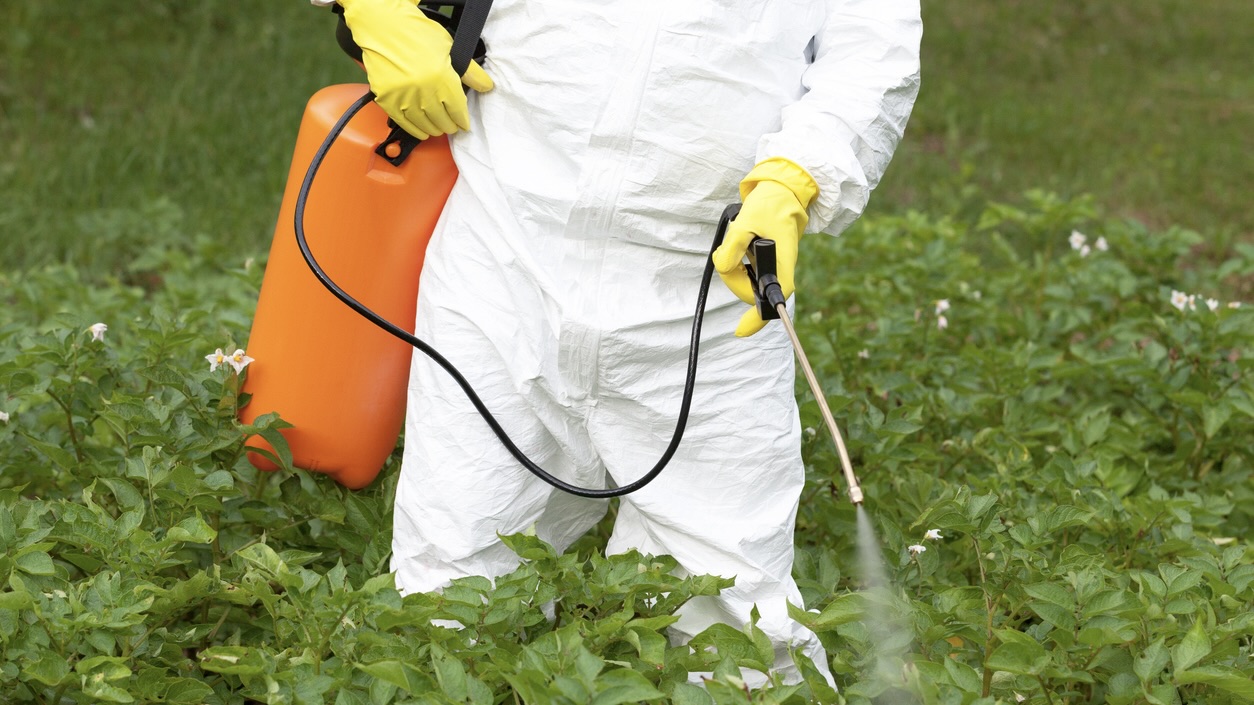
In 2015, the World Health Organisation’s cancer research agency classified glyphosate as a probable human carcinogen.
Synopsis: What most Indian consumers do not know is that American farmers routinely spray glyphosate directly onto their crops a few days before harvest, not just during the growing season but as a ripening agent to dry the grain faster before the machines come in. This means the harvested grain can carry higher glyphosate residues than grain sprayed earlier in the season. That grain then enters Indian food supply chains.
Donald Trump, the President of the United States on 18 February signed an executive order using a wartime law, the Defense Production Act of 1950, to guarantee the domestic supply of two things: elemental phosphorus and glyphosate-based herbicides.
The order says this is about national security. It is not, at least not entirely. After a careful read, one can discern that it is about protecting one American company from market competition and the proof is in the order’s own words.
Glyphosate is the world’s most widely used weedkiller, also known by its brand name Roundup. It is sprayed on hundreds of millions of acres of American farmland every year on wheat, corn, soybeans and cotton.
It became dominant in the 1990s when seed companies began selling genetically modified crops designed to survive glyphosate while every other plant around them died. Farmers who bought these seeds had to buy glyphosate too. The same company sold both. Over two decades, American farming was quietly restructured around this one chemical.
In 2015, the World Health Organisation’s cancer research agency classified glyphosate as a probable human carcinogen. It has been detected in oats, bread, beer and in the urine of people who never set foot on a farm.
It has generated billions of dollars in legal settlements. Now the United States government has declared its supply a matter of national defence.
The same wartime law designed to put national need above corporate profit has been used to guarantee one company’s profit above all else.
Elemental phosphorus does have genuine military uses in munitions, semiconductors, radar systems and batteries. Concern about America’s dependence on Chinese phosphorus is a legitimate security matter.
But here is the sleight of hand: glyphosate is made from phosphorus. The order bundles the herbicide into the same national security justification as the mineral, as though protecting one automatically requires protecting the other. It does not.
If the real goal were security, the order would protect phosphorus and leave the commercial herbicide market to fend for itself. Glyphosate was included because someone wanted it included.
Then there is Section 2(d) of the order, a single provision that gives the whole game away. It instructs the Secretary of Agriculture to ensure that nothing done under this order “places the corporate viability of any domestic producer of elemental phosphorus or glyphosate-based herbicides at risk”.
The Defense Production Act was written to put national security above corporate interests. This order turns that principle upside down. It uses a national security law to guarantee one company’s survival in the market. The order itself states that there is only one domestic producer of both substances.
This is not defence policy. It is a business guarantee signed by the President of the United States.
The order claims there is no alternative to glyphosate and that American food production would collapse without it. This is simply not true and American history proves it. Glyphosate only became dominant in the last 25 years. Before that,
American farmers grew the same crops, wheat, corn, soybeans and cotton, using crop rotation, cover crops and mechanical weeding. These methods worked for centuries. They still work. What changed was not nature or necessity.
What changed was that seed companies sold farmers a system built around glyphosate and then lobbied governments to protect it.
President Trump has simultaneously championed the Make America Healthy Again agenda, a public commitment to removing toxins from the food supply and scrutinising the chemicals Americans eat and drink every day.
Glyphosate residues have been found in everyday American foods, oats, breakfast cereals, beer and wine. The cancer research link is documented. The gut damage evidence is growing.
The MAHA agenda says the chemical burden on American bodies must be reduced. This executive order says the supply of one of those chemicals must be federally guaranteed. These two positions cannot both be true at the same time.
The administration has not tried to explain the contradiction.
The United States is one of the world’s largest exporters of wheat, soybeans and corn. India imports significant quantities of these.
What most Indian consumers do not know is that American farmers routinely spray glyphosate directly onto their crops a few days before harvest, not just during the growing season but as a ripening agent to dry the grain faster before the machines come in.
This means the harvested grain can carry higher glyphosate residues than grain sprayed earlier in the season. That grain then enters Indian food supply chains.
The executive order grants American producers legal immunity from liability under American law.
That immunity stops at the American border. India’s food safety regulator, FSSAI, sets its own maximum residue limits for pesticides in imported food. Indian law, and India’s obligations under international trade rules, fully preserve India’s right to test, restrict or reject food imports that do not meet Indian safety standards.
If glyphosate contaminated American grain causes harm to Indian consumers, the American executive order offers the exporter no protection whatsoever in any Indian court or any WTO proceeding. India does not need permission from Washington to protect its own people’s plates.
Strip away the language of national security and what remains is this: a single American company produces both elemental phosphorus and glyphosate. That company faces competitive pressure from cheaper imports, shifting markets and the growing evidence of glyphosate’s harms. The company needed protection. It got it, written into a wartime statute, announced by the President and wrapped in the American flag.
American farmers deserve a food system that is genuinely independent, not one that locks them into buying seeds and chemicals from the same corporation year after year, with federal law ensuring no competitor can threaten the arrangement.
American consumers deserve food that does not carry a probable carcinogen. Indian consumers deserve food imports that meet Indian safety standards, not American legal immunities.
This order delivers none of these things. It delivers a guarantee to one company, drafted in the language of national security and payable ultimately by every family, American or Indian, that eats what grows in its shadow.


