
Published Apr 18, 2026 | 5:24 PM ⚊ Updated Apr 18, 2026 | 5:24 PM

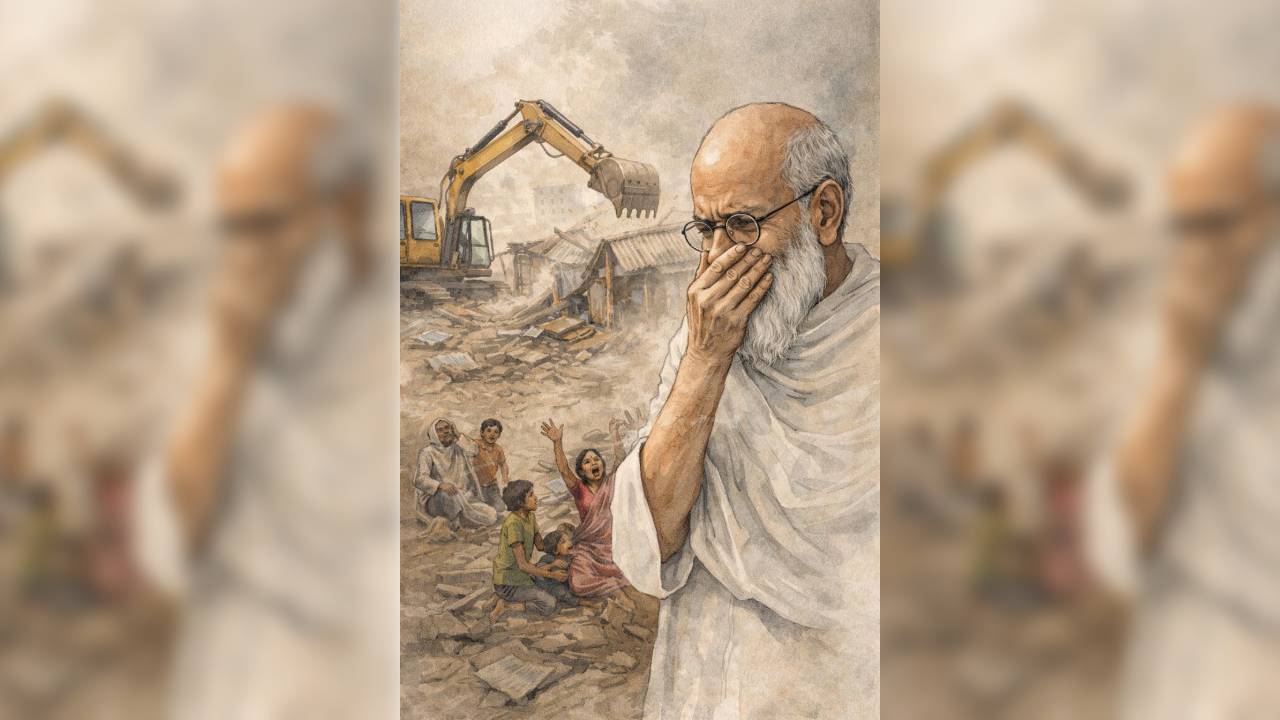
Bhoodan lands fell victim to some of the most atrocious encroachments and illegal occupations — not something Vinoba Bhave had envisaged.

Synopsis: Even as the country marks 75 years of the Bhoodan movement, serious concerns persist over the fate of the remaining Bhoodan lands in Telangana. Instead of being distributed among the poor, significant portions remain undistributed and are increasingly vulnerable to encroachment.
Similar to Earth revolving around the Sun, power seems to revolve around land, leaders around power, and people around leaders. The moral force that once inspired voluntary land redistribution in India is now being steadily eroded. The spirit of the Bhoodan movement, led by Acharya Vinoba Bhave to persuade the wealthy to donate land for the poor and thereby defuse agrarian unrest, is being undermined, ironically under the watch of governments themselves.
Seventy-five years ago, in the early years after Independence, Vinoba Bhave traversed the country on foot, appealing to landlords and large landholders to part with portions of their land for the landless. What emerged was a remarkable moral movement that redistributed land to the poorest.
Today, however, a starkly opposite trend is visible: dispossessing the poor, demolishing their homes, and reallocating land to the affluent and corporate interests. From Papayyaguda to Velugumatla and along the Musi riverbanks, the pattern appears disturbingly consistent.
Recent government surveys indicate that a large proportion of marginalised communities in Telangana remain landless. While the past was guided by Bhoodan, land as a gift, the present seems driven by Bhoodaaham, an intense hunger for land.
Also Read: Darkness in a village named light
Even as the country marks 75 years of the Bhoodan movement, serious concerns persist over the fate of the remaining Bhoodan lands in Telangana. Instead of being distributed among the poor, significant portions remain undistributed and are increasingly vulnerable to encroachment.
Despite clear land records, illegal occupations continue, sometimes with tacit official support. Nearly 8,000 acres of cultivable land have drawn attention for such disputes.
While substantial tracts were earlier allocated to poor farmers, public institutions, voluntary organisations, and housing for the underprivileged, a considerable extent has since been encroached upon. Though courts have intervened in some cases to restore land, many parcels remain under illegal possession.
Alarmingly, the very institution meant to safeguard these lands, the Bhoodan Board, has ceased to function. Although the law required its reconstitution within six months of dissolution, successive extensions have delayed its revival for years. Even the appointment of special officers has not ensured effective protection or redistribution, raising serious questions about intent and accountability.
Also Read: Midnight demolitions leave 600 families without shelter
The Bhoodan movement began under extraordinary circumstances in 1951, in Pochampally village in present-day Telangana. Deeply moved by the plight of landless villagers who said they would abandon armed struggle if they had land to cultivate, Vinoba Bhave sought voluntary contributions. In a historic moment, a local landlord, Vedre Ramachadra Reddy, donated 100 acres for distribution among the poor, marking the birth of the movement on 18 April 1951.
Over time, Vinoba Bhave walked nearly 80,000 kms across 18 states, mobilising donations of approximately 44 lakh acres. Institutional mechanisms such as the Bhoodan and Gramdan Boards were later established with statutory backing to manage, protect, and distribute these lands.
Successive generations of administrators and activists worked to maintain records, fight legal battles against encroachments, and ensure that land reached deserving beneficiaries.
However, the weakening and eventual disappearance of the Bhoodan Board has left these lands vulnerable. Various committees over the years have documented the status of Bhoodan lands.
According to a 2006 report, Telangana had over 1.71 lakh acres of such land, of which a significant portion was either uncultivable or already distributed. Yet thousands of acres remained, some of which were reclaimed through legal intervention.
Post-2014 developments further complicated matters. Government actions, including the dissolution of the Board and transfer of its powers to revenue authorities, were challenged in court. While courts upheld certain decisions, they also directed the timely reconstitution of the Board, directions that remain unfulfilled.
Also Read: Telangana promises housing for displaced poor in Khammam
Meanwhile, incidents such as the demolition of houses in Papayyaguda and Velugumatla on lands reportedly assigned to the poor have intensified concerns. The Supreme Court has also clarified that authority over Bhoodan land disputes rests with the Board, not general revenue officials.
With soaring land values, land-related conflicts have intensified across the state. Disputes, encroachments, and even violent crimes linked to land have become increasingly common. Whether under previous land management systems or newer frameworks, the situation shows little sign of improvement. A wide range of land categories, including barren lands, assigned lands, endowment lands, Waqf lands, forest lands, and village commons, are reportedly under threat. Bhoodan lands, once a symbol of voluntary equity and social justice, are now also being drawn into this vortex.
What was once a moral commitment to redistribute land for social harmony now risks being replaced by an aggressive pursuit of land for profit and power. The transition from Bhoodan to Bhoodaaham reflects not just a policy failure, but a deeper erosion of values that once shaped India’s vision of equitable development.
(Views are personal. Edited by Majnu Babu).



