

Published Jul 12, 2026 | 7:00 AM ⚊ Updated Jul 12, 2026 | 7:00 AM

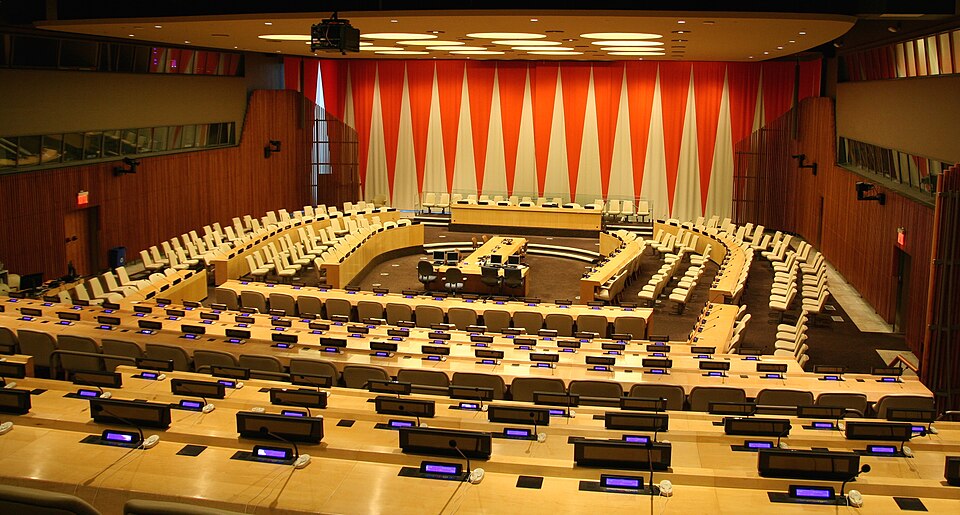
United Nations headquarters in New York.

Synopsis: The United Nations wasn’t built to serve humanity. It was built to replace colonialism with something cheaper, more profitable, and morally unassailable. Eight decades later, the pretence is collapsing.
The standard diagnosis of the United Nations is failure. Conservatives resent its encroachment on sovereignty. Liberals lament its impotence before war and atrocity. Scholars from the Global South point to its structural biases. The agreement is nearly universal. It is also almost entirely wrong.
The UN system—the United Nations, the IMF, the World Bank, the trade architecture from GATT to the WTO—has not failed. It has succeeded, with remarkable consistency, for eighty years. The question that should be asked is not why it failed, but at what it succeeded, and for whom.
The answer, clearly discernible in the historical record, is this: the system was designed to continue Western economic and political dominance after the formal end of colonialism. Assessed against that purpose—rather than the stated purposes of peace, development, and human rights—its performance has been extraordinary.
For eight decades, a group of nations representing less than fifteen percent of the world’s population has maintained disproportionate control over global trade, finance, and security, at a fraction of the cost of running actual empires, and with a degree of moral legitimacy that direct colonial rule never enjoyed.
The Bretton Woods Conference of 1944 tells the story plainly. Forty-four nations attended; two wrote the outcome.
John Maynard Keynes proposed a genuinely multilateral clearing union with no dominant national currency. Harry Dexter White proposed currencies pegged to the dollar, the dollar to gold, voting rights proportional to financial contributions. The United States held over sixty per cent of world gold reserves then. Keynes lost.
The dollar became the world’s reserve currency, and Western control of the IMF and World Bank was permanently embedded. The World Bank has always had an American president. The IMF has always had a European managing director. Neither has changed in eighty years.
The Security Council veto was settled before most of the world was consulted. The Dumbarton Oaks Conversations of 1944 involved four powers; the forty-six founding UN members had no role in designing the core architecture. At San Francisco, the following year, smaller nations fought to restrict the veto. They failed. The word “veto” does not appear anywhere in the UN Charter. The most consequential power in the document is the one never named.
The system’s designers faced a structural problem: the most destructive war in history had shredded the moral legitimacy of empire, and direct colonial control had become too costly and too politically indefensible to maintain. What was needed was a system that preserved the economic relationships, market access, and political influence of colonialism without the administrative burden of actually running colonies.
The colonial governor who arrived with troops and tax collectors was replaced by the development economist who arrives with a laptop and a conditionality matrix. The substance—extraction, dependency, terms set by outsiders—was preserved. The form changed. The form is what most people see.
One further dimension of the design has received almost no attention: the UN made no serious attempt to resolve, or even establish mechanisms for resolving, the conflicts that colonialism itself created—the borders drawn for administrative convenience, the communities divided or forced together, the territorial disputes left unresolved at independence. This too served a structural purpose.
Nations locked in inherited conflicts are not building alternative financial institutions or regional coalitions. They are buying weapons. The five permanent Security Council members—charged by the Charter with maintaining international peace—account between them for the overwhelming majority of global arms exports. Colonial legacy was not merely continued by the UN system. Through the weapons trade, it was actively accelerated.
The Trump administration’s assault on international institutions was almost certainly not designed as a service to analytical clarity. But that has been its effect. By early 2026, the United States had withdrawn from or defunded 66 international organisations, including 31 UN bodies. The system’s principal architect and primary beneficiary publicly declared the institutions it created to be a poor investment. The magician explained the trick while performing it.
Nowhere has the system’s hollowness been more brutally exposed than in Gaza. The UN Secretary-General has been denied entry to the territory—the head of the organisation nominally charged with maintaining international peace, blocked from visiting an active crisis. UN agencies have been bombed. Humanitarian staff have been killed. UNRWA has been defunded by campaigns orchestrated within a permanent Security Council member.
The Security Council has passed ceasefire resolutions that have been ignored without consequence. Every element of the system’s claimed purpose has been rendered simultaneously and visibly inoperative—in a single crisis, in full public view. This is not the system failing. This is the system functioning as designed: the veto ensuring that enforcement cannot be turned against the interests of permanent members or their allies.
With the search for a new Secretary-General now underway, the moment is timely for an honest reckoning. The next occupant of that office takes over at a point when the system’s credibility has been damaged in ways that cannot be repaired with a new strategic vision document. Whether the selection process produces a figure with genuine independence—or, as it usually does, one whose independence is carefully pre-bounded—will itself be a signal about whether the system retains any capacity for self-correction.
The options on the table are not attractive.
The West will push for reform that adjusts the optics without touching the structure—a Security Council seat here, a marginal IMF voting shift there. That buys time, not legitimacy; audiences that watched Gaza are not going to be reassured by procedural tinkering. Real reconstruction—actually abandoning the veto, symmetric trade rules, replacing dollar dominance with a currency basket along the lines Keynes originally proposed—would address the actual problem and is resisted for exactly that reason.
What is more likely is drift: the gradual emergence of a parallel BRICS-anchored architecture that handles some things for some countries, while the old institutions hollow out further. That is the worst of the options. Climate, pandemic, financial contagion—these do not respect bloc membership. A world with two competing institutional frameworks and no governing authority for problems that neither bloc can address alone is not a multipolar world. It is an ungoverned one.
The UN system has not failed. It succeeded at the wrong things, brilliantly and for a very long time. The question of what replaces it—or whether anything coherent does—is the defining institutional question of this century. Getting that question right requires honesty, from both the West and the Global South, about what the last system actually was. The next one cannot be designed in the same room, by the same powers, with the same self-serving assumptions dressed in the same universalist language.
(Dr Biksham Gujja is an independent researcher and policy analyst. He has worked with international institutions, governments, and civil society organisations across the Global South for three decades, principally on water, sustainability, and development — and has watched the system described in this article operate from the inside. Views are personal.)



