

Published Jan 02, 2026 | 11:46 AM ⚊ Updated Jan 02, 2026 | 3:40 PM

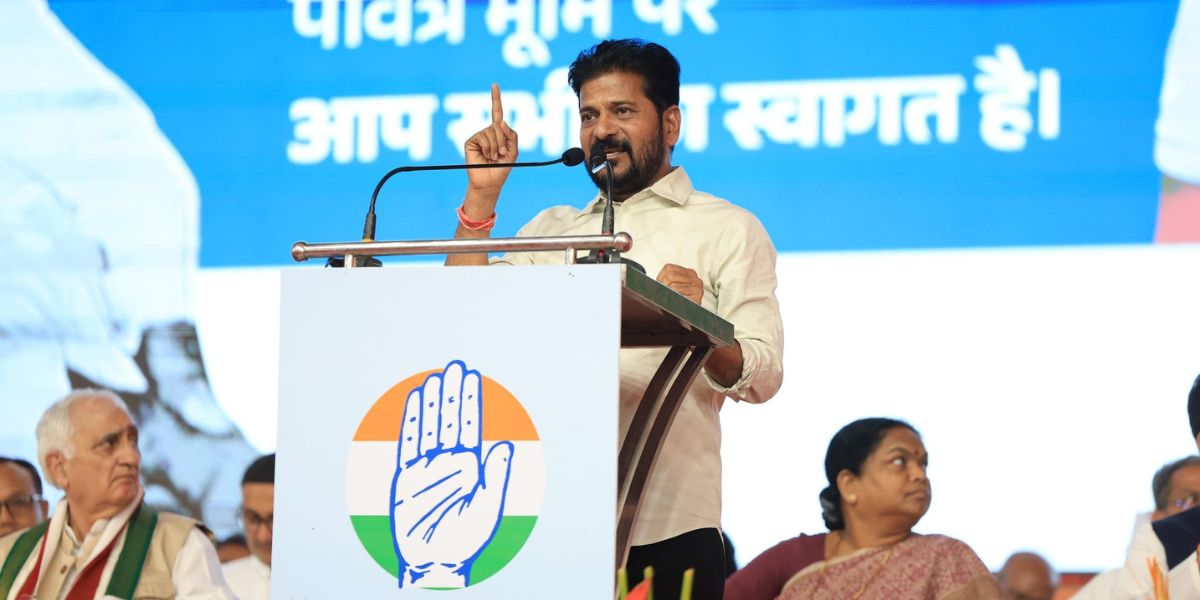
Telangana Chief Minister A Revanth Reddy.
Synopsis: Two years after the Congress assumed office, Telangana Chief Minister A Revanth Reddy’s efforts to establish himself as a strong leader have borne fruit. Decisions that add vibrancy and distinction to governance brought irreversible changes to the lives of the Telugu people, and that elevated his stature. He should now convert the political mandate he has received into fuel for transforming rural living standards.
Two years after the Congress assumed office, the political landscape in Telangana has become completely clear. Chief Minister A Revanth Reddy’s efforts to establish himself as a strong leader have borne fruit, despite strategies by Opposition leaders and even leaders within his own party to pull him down.
The results of the Jubilee Hills by-election and the panchayat elections have clearly defined who stands where in Telangana politics. The strength of the BRS has not increased significantly. The BJP, which won eight Lok Sabha seats, faltered badly in the panchayat battle.
Overall, Congress hoisting its victory flag in more than double the number of seats compared to the BRS in the panchayat elections is no small achievement.
Running an administration steadily with the available resources is one thing; taking decisions that add vibrancy and distinction to governance is another. It is such decisions in the past that brought irreversible changes to the lives of the Telugu people and elevated the stature of the leaders who made them.
Similar to leaders before him, Chief Minister Revanth Reddy has made a mark with decisions such as free transport for women and the supply of good rice through ration shops. He is also preparing to make several more governance-related decisions in his own distinctive style.
Revanth Reddy’s political journey is completely different from that of most other leaders. From the very beginning, he chose an unconventional path rather than routine decisions. That is why, despite coming from a family with no political background, he entered the legislature and, within just 16 years, rose to occupy the chief minister’s chair.
Now, he must be able to take the same path to transform the village life in Telangana as well. When we toured villages ahead of the panchayat elections, one thing stood out — individual households are doing reasonably well due to government welfare schemes.
However, when viewed as a whole, the lack of infrastructure and development in villages is glaring. Government schemes are reaching almost every household, but government funds are not reaching villages at the same level.
Over the past two decades, schemes that directly transfer money to beneficiaries have gained momentum in national politics. Designed to eliminate corruption, these schemes have, in many places, become a financial burden on states.
Even so, several state governments, including the Revanth Reddy government, are responsibly bearing this burden. That much is fine. But in some places, the situation is steadily worsening. The condition in villages, in particular, has become pitiable.
If one village is taken as an example, individual welfare schemes are running smoothly, reaching 90 out of every 100 people, and this number is increasing year after year. However, the problems that reflect the overall condition of the village and the living standards of its people have remained unchanged for the past 10 years.
Several government schools lack kitchens and toilets. There are no proper drainage systems. Roads are damaged with potholes. Due to the partial success of Mission Bhagiratha, the drinking water problem continues to affect many villages. Numerous such issues have piled up at the village level.
Despite the best efforts of MLAs and local public representatives to resolve these problems, the results have been minimal. The routine response from officials is just one question: “Where is the money?” MLAs, collectors, and public representatives find themselves in a helpless situation, unable to do much.
Nearly 90 percent of people’s problems and hardships can be resolved through just 12 government departments. Every year, huge funds are allocated to these departments in the budget.
Yet, the 75 years of experience show that these funds do not reach villages. These 12 departments together have annual expenditure estimates of over ₹2 lakh crore. If even just two percent of these funds could be directly routed to villages, it would be sufficient.
In Telangana, the central funding for nearly 12,800 gram panchayats amounts to only about ₹3,000 crore. To provide an average of ₹50 lakh per village per year, an additional ₹3,500 crore is required. Even if these funds cannot be given directly to villages, there is scope to spend them through the 12 key government departments.
If ₹25 crore per year is allocated as MLA funds, making the local MLA, the sarpanch, and the collector collectively responsible, the face of rural Telangana would change within three to four years.
It is precisely because of the diversion of direct funds into rural areas that leaders like Nitish Kumar in Bihar and Naveen Patnaik in Odisha were able to govern for long periods. Not only that, but the states that were once symbols of backwardness are now moving onto the path of progress.
Instead of saying there is no money for development, a bit of creativity and innovative experimentation offers a better solution. It is not enough to think differently; one must also dare to convert the political mandate one has received into fuel for transforming rural living standards.
Such bold decisions alone can elevate Revanth Reddy to a level where he can play a prominent role in national politics. If he can take a few more courageous decisions to steer rural Telangana onto the path of development, he will remain forever etched in the hearts of rural people. This is the right time to set the development chariot of Telangana’s villages into rapid motion.
If each MLA is given ₹25 crore per year and proper guidelines are framed for the expenditure of these funds, rural Telangana is certain to move ahead on the development path with a new look by the time of the next Assembly elections.
If our chief minister considers this a necessary investment to make Telangana’s villages number one in the country, the chances of him continuing as in the position for another 10 years will improve by 100 percent.
(This article was originally published in Andhra Jyothi, a Telugu language newspaper. Views are personal. Edited by Muhammed Fazil.)


