
Published Dec 17, 2025 | 8:00 AM ⚊ Updated Dec 17, 2025 | 8:00 AM

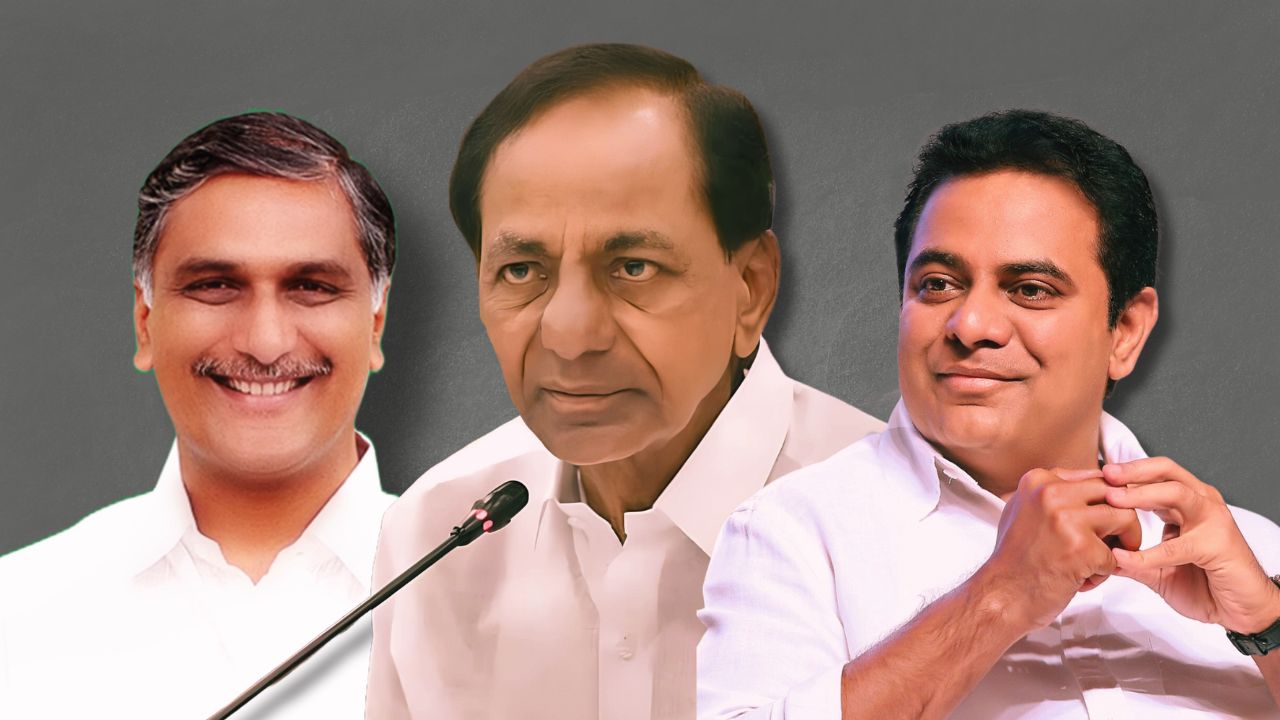
The warning signs for the BRS appeared well before the 2023 defeat.
Synopsis: A pervasive inertia has gripped the BRS. No statewide mobilisation programme has been undertaken since the party’s 2023 electoral defeat. While the BRS maintains a presence on social and mainstream media, it is steadily disappearing from the public arenas where opposition politics is actually practised. Discontent within the party is growing. President K Chandrashekar Rao remains largely confined to his farmhouse, while senior leaders operate from the comfort of private villas.
Political organisations, much like machines, survive only when they adapt. A car that refuses to change gears eventually stalls. In democratic politics, stagnation is fatal. Parties that fail to evolve with changing realities risk being reduced to bystanders.
The Bharat Rashtra Samithi (BRS), which the people of Telangana entrusted two years ago with the responsibility of being a vigilant and constructive opposition, appears to be failing that test.
Rather than reshaping itself after electoral setbacks, the BRS seems trapped in a cycle of decline, revealing deep organisational fatigue. At the grassroots, this erosion is stark. In the ongoing Gram Panchayat elections, party workers and local leaders are fighting largely for individual survival rather than as part of a coherent political strategy. The struggle reflects desperation, not direction.
The party’s recent electoral record underscores this crisis. Defeat in the 2023 Assembly elections was followed by a humiliating blank in the 2024 Lok Sabha polls. Losses in the Secunderabad Cantonment and Jubilee Hills Assembly by-elections further reinforced the image of a party in retreat. Without visible intent or effort to rebuild its organisational foundations, further decline seems inevitable.
This vacuum has consequences beyond the BRS. The Bharatiya Janata Party (BJP) has used the opportunity to steadily expand its footprint in Telangana, while the ruling Congress benefits from the absence of a credible opposition capable of channelling public discontent. For the BRS, however, the outcome is unequivocally damaging.
Ironically, the ongoing Panchayat elections also offer a lesson the party leadership seems reluctant to learn. In several villages, particularly in Sarpanch contests, BRS candidates have put up strong fights against the Congress.
Grassroots workers attribute this not to leadership guidance, but to local dynamics, cadre resilience, and the instinct for political survival in rural Telangana. Their frustration runs deeper: even after a decade in power and two years in opposition, the party has failed to re-emerge as a vibrant political force.
A pervasive inertia has gripped the organisation. No statewide mobilisation programme has been undertaken since the party’s electoral defeat. While the BRS maintains a presence on social and mainstream media, it is steadily disappearing from the public arenas where opposition politics is actually practised.
Discontent within the party is growing. President K Chandrashekar Rao remains largely confined to his farmhouse, while senior leaders operate from the comfort of private villas.
District committees, frontal organisations, and various party wings that were dissolved remain unreconstituted. Decision-making has become intensely centralised, to the extent that even routine press interactions reportedly require approval from the top.
Like the Bahujan Samaj Party in North India, the BRS continues to function as an “MLA-centric” party. Even two years after moving into opposition, it has not constituted a Legislative Party Executive Committee. Its representatives attending official forums such as the Business Advisory Committee reportedly face ridicule from ruling party members, who question their authority.
Grassroots workers are mobilised for Assembly and parliamentary elections, but when local body polls—where leadership roles could reward cadre effort—arrive, senior leaders are conspicuously absent. This double standard has deeply demoralised the base.
During the Telangana statehood movement, the public was willing to overlook fatigue and organisational lapses. But once a movement transforms into a governing party, and later into an opposition, such neglect is no longer excusable.
Issuing statements without stepping onto the streets or initiating direct action fails to resonate with people facing everyday problems. Opposition politics cannot be reduced to a handful of press conferences and social media posts.
The warning signs for the BRS appeared well before the 2023 defeat.
In the 2019 Lok Sabha elections, held just months after the Assembly polls, the party suffered a sharp drop in vote share and lost key seats in North Telangana to the BJP.
Karimnagar, Adilabad, and Nizamabad slipped away, with even KCR’s daughter, K. Kavitha, losing in Nizamabad. Subsequent defeats in the Huzurabad and Dubbak by-elections, the setback in the GHMC elections, and the failure to win the Graduates’ MLC seat in North Telangana were unmistakable signals demanding course correction.
Yet the response was not organisational renewal, but further consolidation of power at the top. Internal competition at lower levels faded, while unhealthy rivalries at the leadership level weakened the party.
The Jubilee Hills by-election illustrated this decay. Despite favourable conditions and a divided Congress, the local BRS unit collapsed once external factors shifted, exposing the party’s fragile internal structure.
If even armed insurgent groups can reassess strategy and adapt to changing conditions, a democratic political party has little excuse for avoiding an honest review of its failures.
Yet the BRS leadership has not conducted a serious post-mortem. Instead, it has occasionally suggested that voters erred by voting the party out and would eventually realise their mistake. Such rhetoric runs counter to democratic logic and risks further alienating the electorate.
An honest appraisal of strengths and weaknesses is unavoidable. While Working President K. T. Rama Rao has said the party is “searching for where it lost ground”, this sentiment must translate into action.
The decision to stay away from the Teachers’ and Graduates’ MLC elections marked a sharp departure from the party’s earlier culture of fearless electoral participation. In North Telangana, where the BJP has advanced steadily since 2019, the BRS failed to respond effectively.
In the south, particularly in Khammam and Nalgonda, the party faces stiff competition from the Congress and has been unable to capitalise on the decline of the Left.
Cadres and sympathisers now look to the extended party meeting scheduled for the 21st, hoping it will initiate a genuine revival process. Seven years into KTR’s tenure as Working President, occasional district visits are no longer sufficient.
Sustained public outreach—possibly even a padayatra—could help reconnect the party with the people. Meanwhile, Kavitha’s exit, though personally manageable for her, has placed the organisation in an awkward political position.
Ultimately, the strengthening or weakening of the BRS depends on KCR alone. His decision ahead of the 2023 elections to retain underperforming MLAs, despite earlier promises to replace them, proved costly. Where candidates were changed, as in Narsapur and Dubbak, the party performed better.
His focus on national ambitions, the rebranding of the TRS as the BRS, and frequent engagements outside Telangana diluted the party’s organic regional identity, prompting internal calls to reconsider even the party’s name.
During the movement and the early years of governance, KCR thrived on wide consultation and deep political engagement. Over time, this culture faded, disconnecting the leadership from ground realities.
Persistent rumours of rivalry between Harish Rao and KTR have further damaged the party’s image—an issue only KCR can resolve decisively.
If the BRS is to survive, its leader must step out of political isolation, abandon suspicion and indecision, and take bold, transparent decisions. Without a shift in gears, the party risks being left behind in Telangana’s fast-changing political landscape.


