

Published Jan 01, 2026 | 1:00 PM ⚊ Updated Jan 01, 2026 | 1:09 PM

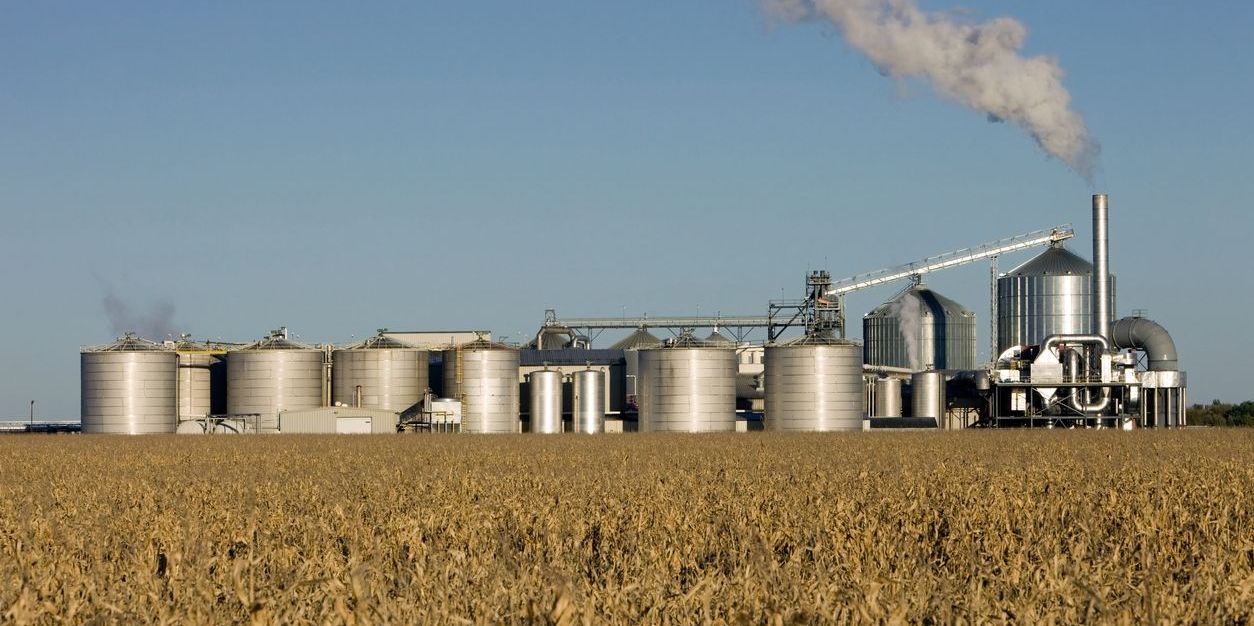
Ethanol industry. (iStock)
Synopsis: A private company dropped its plan to establish an ethanol factory in Telangana’s Mominpet after people resisted the move. Residents realised that an ethanol factory would emit poisonous gases and chemicals such as formaldehyde and methanol, leading to the contamination of land, air, and water. Fears strengthened that groundwater, too, would be polluted, resulting in widespread health problems among the people.
The dawn of the New Year has come with a welcome and heartening piece of news. Bowing to public opinion, the company management has announced that it is withdrawing from a pollution-causing industry proposed at the Mominpet mandal headquarters in Vikarabad district of Telangana.
On Tuesday, 30 December, a public hearing was held on the proposal by Suvira Bio Fuels Private Limited to set up a grain-based ethanol manufacturing unit on 10.33 acres of land at Mominpet, with an investment of ₹100 crore and a production capacity of 60,000 litres per day (LPD).
The people who participated in the public hearing — residents, public leaders, representatives of all political parties, including the ruling Congress, pro-people scientists, leaders of civil society organisations, and social activists — opposed the ethanol factory in one voice. Anyone who watches the video of the public hearing can clearly see the people’s creativity, thoughtfulness, and defiance.
Yielding to the unanimously expressed opinion of the people, the company representative announced that the company was withdrawing from its plan. For now, the people have won. There may be doubts about whether this people’s victory is real or whether the company might try to re-enter through the back door.
However, currently, having made this announcement before hundreds of villagers and several government officials, including the district collector, the company has no option but to abide by it.
Over the past few years, with the Union and state governments announcing policies favourable to the ethanol industry, attempts have begun to establish about 30 ethanol factories in Telangana alone. Along with this, public resistance also began almost everywhere, driven by awareness of the dangers posed by ethanol factories.
There has been wide discussion about how such industries require enormous quantities of water, leading to the plunder of local surface and groundwater resources, and about the risks of water pollution and air pollution from industrial waste.
Yet, since governments are chanting the mantra of “ease of doing business,” and since the Telangana government has virtually transformed the very name of Telangana into a business slogan — “Telangana Means Business” — it is directly and indirectly supporting this poisonous industry.
The Mominpet factory, too, was given in-principle clearance by the State Level Environmental Impact Assessment Authority on 23 February 2025. This preliminary clearance specifies the aspects to be assessed and the procedures to be followed for environmental impact assessment.
Based on this, the Environmental Impact Assessment (EIA) report stated that baseline environmental studies were conducted from March to May 2025 after preparing an environmental management plan. Such a report is supposed to be prepared by an independent agency with no connection to either the government or the company.
However, in practice, such “independent” agencies are often influenced by both the government and the company. This report was also prepared entirely in the company’s interest and is riddled with errors. The very claim that a factory producing 60,000 litres of ethanol per day would not discharge any wastewater at all shows that it was a blatantly false report.
Using such a fraudulent EIA report, the government and the company believed they could conduct the legally mandated public hearing as a mere formality on 30 December. According to residents, even by 24 December, there was no information among the local people about the public hearing scheduled for 30 December.
Local public representatives and even the sarpanches of the villages falling within the factory’s impact area had no information either.
A delegation of representatives from civil society organisations such as the Telangana People’s Joint Action Committee, Rythu Swarajya Vedika, Scientists for People, and the Progressive Organisation of Women toured villages in Mominpet mandal on 24 December and informed people about the realities of the ethanol company.
As a result, people became conscious of the dangers of the ethanol factory and decided that it should not be allowed to come up under any circumstances. Eventually, with overwhelmingly opposed public opinion, local leaders of all political parties, including the Congress in power in the state and the BJP in power at the Centre, had no choice but to oppose the factory.
Residents realised that an ethanol factory would emit poisonous gases and chemicals such as formaldehyde and methanol, leading to the contamination of land, air, and water. Fears strengthened that groundwater, too, would be polluted, resulting in widespread health problems among the people.
It became clear that producing 60,000 litres of ethanol per day would require nearly three lakh litres of water daily. Even if this water were drawn solely through borewells, the entire region’s groundwater would be depleted.
People also learnt that producing one litre of ethanol requires two and a half kilograms of rice — meaning this factory would consume one and a half lakh kilograms of rice every day. In a region with no livelihood other than agriculture, depletion of groundwater would mean the destruction of agriculture itself and a grave threat to the livelihood security of thousands of people.
Overall, the warnings and scientific explanations given by scientists and social activists — that such a factory would render the village and surrounding areas uninhabitable — deeply alarmed the people.
In fact, these concerns are not limited to the residents of Mominpet alone. People in all other areas where ethanol factories have been planned since the days of the BRS rule in the state share the same anxiety. It was due to such public agitations that the proposed ethanol factory at Dilawarpur in Nirmal district was cancelled.
The ethanol factory proposed at Pedda Dhanwada in Jogulamba Gadwal district faced severe resistance from the people and was forced to leave.
In this context, it is worth reflecting on why governments are so keen to promote an ethanol industry which is so harmful to public health and safety, and that too, an industry that does not generate significant employment.
In 2021, the NDA government introduced a policy called “Ethanol 20.” According to this policy, the target was set to blend 20 percent ethanol with petrol consumed in the country by 2025–26. The stated objective was to reduce pollution from petrol and save a portion of the foreign exchange spent on importing petrol.
However, whatever reduction in pollution petrol blending might achieve is almost offset by the pollution caused by ethanol factories themselves. Moreover, with the number of vehicles increasing uncontrollably day by day — and with the government and banks actively encouraging people to buy more and more vehicles — the foreign exchange supposedly saved through ethanol blending would be consumed by the fuel required for the new vehicles hitting the roads.
In effect, zero for zero—nothing gained.
Once these proclaimed good intentions are nullified, it is astonishing to see who actually benefits. Under this policy, the government provides rice at a subsidised price of ₹20 per kilogram to those who set up ethanol factories — or even to those who merely show on paper that they will set one up, without actually operating it.
The owners of these companies can procure rice cheaply and sell it in the market at a profit. Not only that, those claiming to set up ethanol factories are provided with interest-free bank loans for six years.
That means by claiming to set up an ethanol factory, one can take interest-free loans of ₹100 crore or even several hundred crores, divert that money for six years into other avenues that yield high interest, and make huge profits.
Even without resorting to such illegality, even if a factory is set up and ethanol is produced legitimately, the government enters into agreements to buy the ethanol itself, ensuring a stable return for ethanol companies. That is why those who have studied this industry say that it is not really an energy industry but an industry of subsidies and concessions.
In fact, as part of this policy, governments even contemplated doing away with public hearings and public consultation processes altogether. In other words, without giving people any information and without caring for public opinion, they wanted to impose this ethanol furnace on people’s chests and propagate it as “development.”
As soon as the NDA government announced this policy in 2021, the TRS (now BRS government promptly embraced it, combined it with the already operational corporate-friendly TS-iPASS policy, and earned the dubious distinction of granting permissions for nearly 30 ethanol factories across the state.
Not only industrialists and businesspeople, but leaders of all political parties in the state and neighbouring states are among the owners of these factories.
The TRS government ran this policy for two years, and even after the Congress government came to power — despite sharply criticising the previous government on many other issues — it continued this policy unchanged.
Congratulations and best wishes to the people of Mominpet, who have escaped the danger of an ethanol factory with such a formidable history behind it. All other affected people should choose the Mominpet path.
(Views are personal. Edited by Muhammed Fazil.)


