
Published Dec 15, 2025 | 3:25 PM ⚊ Updated Dec 15, 2025 | 3:25 PM

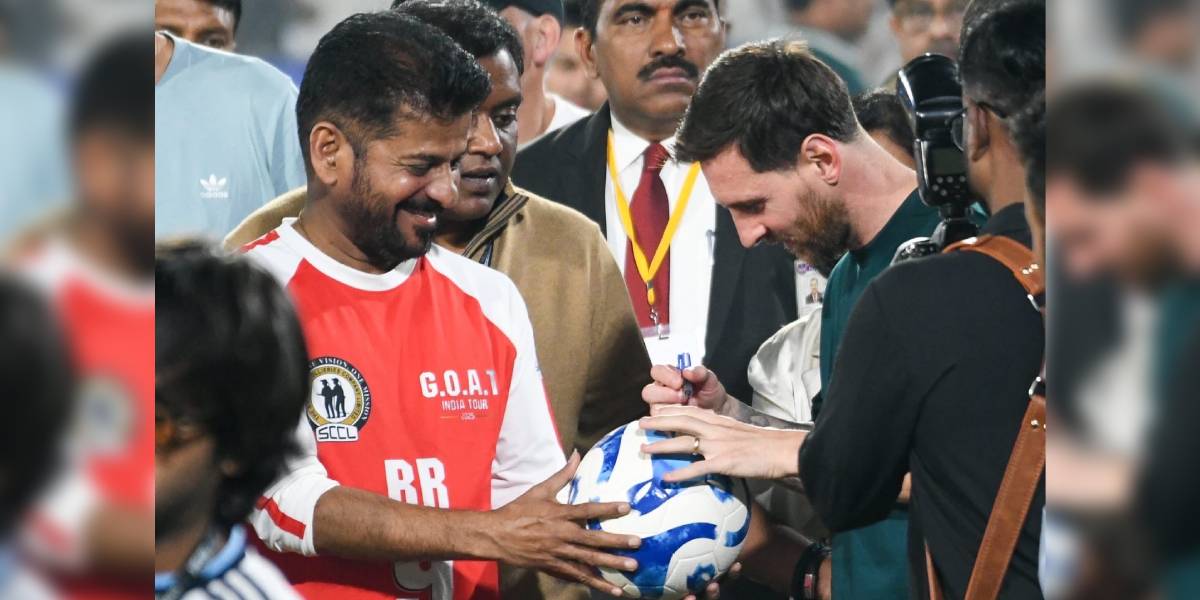
Football with Messi may further boost Revanth Reddy's image.
Synopsis: To further weaken an already battered Opposition, the Revanth government has pursued inquiries and investigations based on various allegations. The Kaleshwaram probe and the telephone-tapping case have become major headaches for the BRS.
Former Uttar Pradesh chief minister and Samajwadi Party leader Akhilesh Yadav assured BRS leaders that they would return to power in Telangana in the coming elections. Such reassurance is an expected consolation offered to a party that has lost power and is now in the Opposition.
For a party active in the public arena, striving to put the ruling party under pressure, the immediate goal is always to capture power.
Moreover, a party that played a key role in the Telangana statehood movement and ruled the new state for a decade is also regarded by the people as a natural alternative. That being the case, two years after the Congress government under A Revanth Reddy came to power, what is the state of public support for the ruling party? How is the Opposition’s journey in regaining the upper hand progressing?
This discussion has not arisen merely because two years have passed; it has been present among the people for six months after the elections. Observers have been trying to decipher the varied signals emanating from Telangana society.
The incomplete implementation of the loan waiver, the failure to fulfil several promises, and similar factors should, in theory, have generated public disenchantment with the government fairly quickly.
As Revanth Reddy, too, is repeating the very actions that had discredited KCR and the new government, too, emulating the old one in adopting coercive measures to counter the public anger, the resentment should have reached peaks. It is not that dissatisfaction does not exist, but it has not crystallised into outright opposition. Nor has there been sufficient public remorse over having defeated the BRS. Whether it was after one year of the new government or even after two years, there is no real difference in the situation.
That said, has a positive opinion formed around Revanth Reddy? Are people celebrating that this is the government they wanted? The answer is no. Are people thrilled about the projects being conceived with the vision of leaving a personal imprint on Telangana, or about the proposed new cities? Not at all.
Even after seeing the panchayat election results, which too reflected an attitude of resignation and endurance — a “let us tolerate and bear it” mindset — the question remains: what exactly is the present situation?
As an Opposition party, the performance of the BRS deserves appreciation. Even before fully recovering psychologically from defeat, the party entered the field with a strategy of directly attacking the government.
In some places, it led to agitations openly; at other times, it extended support. It has conducted an aggressive campaign through social media and levelled corruption allegations against Revanth Reddy and his cabinet colleagues. It highlighted his association with N Chandrababu Naidu and alleged pro-Andhra policies. Above all, it managed, within limits, to successfully contain the ruling party’s strategy of engineering defections. It persistently pursued legal cases regarding the disqualification of those who defected.
However, the party has flatly refused to issue any apology or express regret for the aspects of its governance that led to public resentment. Akhilesh Yadav’s observation that even defeat can be beneficial, as it offers an opportunity to review policies and performance, is something the BRS could still choose to take seriously.
Even after winning, Revanth Reddy has not taken the BRS lightly. Both the BJP and the Congress have shared interests in completely weakening the regional party. While the BRS won a respectable number of seats in the Assembly elections, it could not win any seats in the parliamentary polls.
Even after winning eight seats, the BJP continues to target the BRS in its rhetoric. To further weaken an already battered Opposition, the Revanth government has pursued inquiries and investigations based on various allegations. The Kaleshwaram probe and the telephone-tapping case have become major headaches for the BRS.
While the Revanth government has publicly and through the media campaigned aggressively on alleged land scams by the BRS, pro-government newspapers have simultaneously carried competing stories about land irregularities involving BRS leaders. The party supremo has remained confined to the farmhouse as he thought the time was not appropriate, while KTR and T Harish Rao have been running party programmes in their own respective styles.
As observers note signs of a covert rivalry between the two, the Kavitha episode has pushed the BRS into deeper trouble. While showing respect to her father, Kavitha has raised the flag against other senior party leaders and is now making a series of allegations about corruption within the BRS leadership.
As people begin to believe that the family is not united and that internal strife has erupted from within, her allegations that party leaders even engaged in collections during the Telangana movement period appear to target the party’s entire history. At a time when the BRS is actively and aggressively working to enhance its stature as an Opposition, Kalvakuntla Kavitha, from another direction, is working to tarnish it. Even after two years, the BRS graph is not rising, and the reasons are as many as those attributed to Karna’s death.
Revanth Reddy’s principal success can be seen in his ability to keep the Opposition’s influence under control. By maintaining public antipathy and indifference toward the BRS at the same level, he has managed to prevent dissatisfaction with himself from turning into outright opposition. At the same time, Revanth is also making efforts to enhance his own personal standing.
However, the support he receives from party and government colleagues to build his image is limited. He even lacks well wishes capable of crafting strategies that generate positive public sentiment. On the contrary, some advisers offer suggestions that land him in trouble and cause embarrassment. As a result, there are occasions when his words work against him. And it may snowball into the state itself, turning unfavourable.
The global summit organised to promote stereotyped, unoriginal visions to build a fourth city did not receive publicity commensurate with its scale. Still, his aura has gained a little more shine than before. After playing football with Lionel Messi, his image may further improve. Even though the party suffered reverses in the recent elections, including in Bihar, in a way, it benefited Revanth personally. His value has increased in the eyes of the high command. Dissatisfaction has receded.
Whether he is managing the BJP in such a way that problems do not arise from that side, or whether they themselves have stepped back, or whether there is some other calculation at play — it is not clear. But this too is an aspect working in Revanth’s favour. Weighing all these factors and unable to conclude, the public is likely to remain in this state of indecision until the elections draw closer.
If the BRS, burdened by unending arrogance and internal problems, wants to improve its rating, the only way forward is for KCR to actively step into the field and set everything right. Expecting that arriving at the last minute and casting a spell will create a favourable atmosphere would be a mistake.
Revanth’s strategy of making the opponent appear small to look big himself cannot continue forever. He must independently pursue sound development and welfare policies and earn positive sentiment from the people. Leaving a mark on governance does not mean merely organising summits or showcasing project models. It means bringing about a change in the living standards of the people, creating an empowering environment in which even the most marginalised individual can progress, and making effective use of natural and human resources. If he can do that, victory can be secured again through favourable public support.


