

Published Jan 10, 2026 | 8:00 AM ⚊ Updated Jan 10, 2026 | 8:00 AM

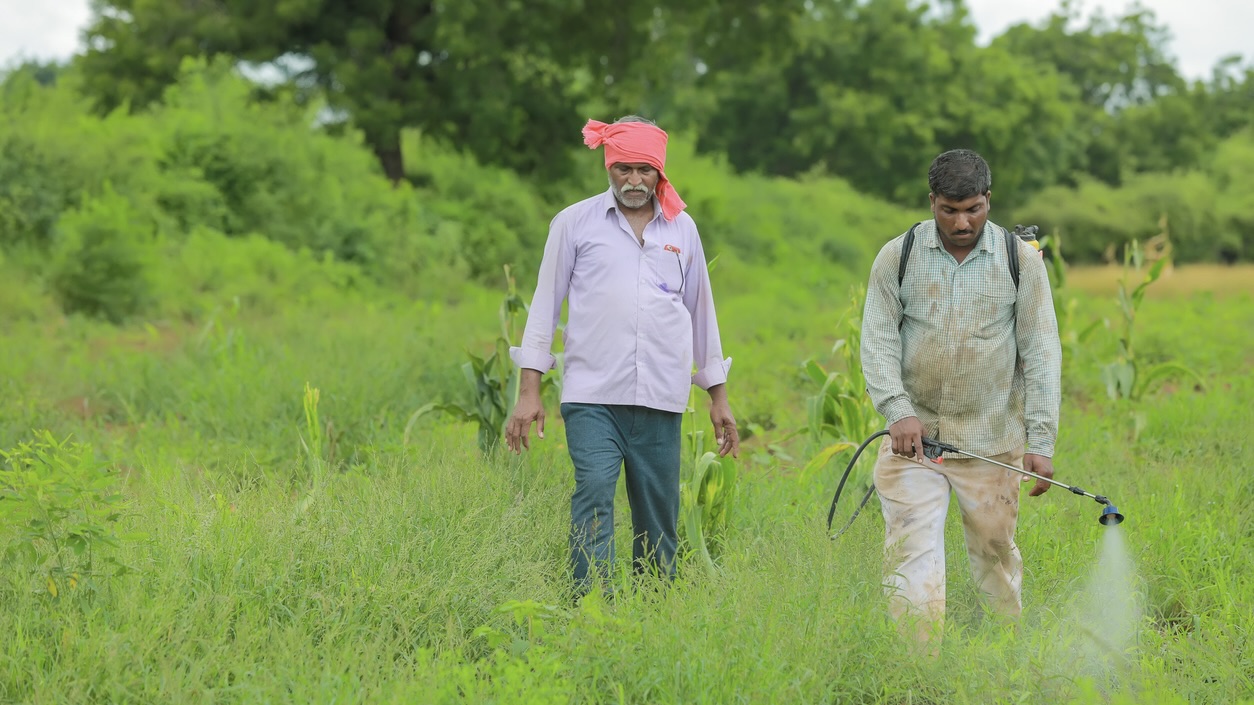
Pesticides now account for a substantial share of per-acre production costs.
Synopsis: The Pesticide Management Bill, 2025, despite being the fifth iteration over 17 years, fails to address fundamental problems evident during 57 years under the Insecticides Act, 1968. Without criminal liability for manufacturers, comprehensive supply chain licensing including agricultural advisers, emergency management provisions, resistance liability, adequate powers for States, and price regulation, the Bill will perpetuate rather than resolve the pesticide crisis that is killing farmers, poisoning ecosystems, and threatening public health.
The Union government has released the latest draft of the Pesticide Management Bill, 2025 for public comment. This is at least the fifth version, following earlier drafts in 2008, 2017, 2019, and 2020. The Bill seeks to replace the Insecticides Act, 1968 and the Insecticides Rules, 1971 framed under it.
Curiously, the latest version retains the title Pesticide Management Bill, 2020. This is likely because the 2020 Bill was introduced in the Rajya Sabha and remains technically alive, obviating the need for a fresh introduction. The Union government is expected to pass the legislation during the February 2026 Budget session.
The pesticide industry continues to operate as an essentially unregulated sector, thriving on anxieties cultivated among poor and marginal farmers through hollow scientific claims and unscientific practices promoted by sections of the agricultural research and extension system.
Pesticides have consistently failed to play a meaningful role in improving agricultural productivity. Instead, they have become a crushing burden on the economic and physical health of farmers and their families.
They now account for a substantial share of per-acre production costs, not because of rising prices, but due to intensive and largely unproductive usage patterns driven by aggressive marketing and compromised extension services.
Yet regulatory agencies have failed to adequately assess this catastrophic experience or to learn from decades of systemic failure.
Over the 57 years since the Insecticides Act, 1968, and particularly the 17 years since the 2008 draft Bill, problems related to pesticide poisoning have sharply intensified. These “forever chemicals” now contaminate air, water and soil, accumulating as residues in living organisms through biomagnification.
While any attempt at pesticide regulation should be welcomed, the numerous omissions in this Bill raise serious questions about both its intent and its likely effectiveness.
Three fundamental elements remain absent even in the 2025 version: manufacturer liability for pesticide poisoning, price regulation, and adequate powers for State governments.
International treaty obligations:
India is party, through consent and participation, to several international conventions, including the Stockholm Convention on Persistent Organic Pollutants. The Bill must explicitly incorporate commitments arising from these treaties. The proposed Central Pesticide Board should be made responsible for implementing all international conventions to which India is a party, ensuring that domestic law is aligned with international obligations.
Criminal liability:
Criminal liability must be clearly established for manufacturers, distributors and marketers. Numerous documented instances demonstrate pesticides being used for purposes entirely unrelated to crop protection: poisoning lakes and water bodies, deliberate harm to livestock, and, tragically, human suicides.
At present, manufacturers face no criminal consequences for producing poisons that kill thousands annually. This absence of accountability sustains a culture of impunity in which profits are prioritised over human lives.
Comprehensive licensing:
Licensing must be made compulsory across the entire pesticide supply chain, from manufacturers and distributors to retailers. Crucially, prescriptions issued by agricultural officers must also fall within the regulatory ambit. All crop protection advice provided by various officers and agencies should be recorded and systematically monitored for misuse.
Agricultural extension workers frequently function as de facto pesticide salespersons. Their recommendations, therefore, require clear accountability and effective oversight.
The Bill must include robust emergency management provisions to address hazardous situations such as factory fires, land and water contamination, spillovers, and pesticide tanker collisions. Local authorities—panchayats, municipal bodies, fire services, and emergency medical services—must be formally integrated into emergency response frameworks.
Mandatory prior information sharing and the preparation of emergency management plans are essential. Communities have a right to know what toxic substances are manufactured, stored, or transported through their areas, and how to respond when disasters occur.
Liability provisions must extend beyond immediate deaths and debilitation caused by poisoning to encompass the development of resistance in both targeted and non-targeted life forms, including bacteria, viruses, insects, and plants.
Pesticide-resistant organisms are emerging public health threats, while simultaneously destabilising natural species balances.
Manufacturers profit from pesticide sales; they must therefore bear responsibility for the evolutionary consequences their products generate: superbugs and superweeds that demand ever more toxic chemical responses.
Pesticide poisoning—occupational, accidental, and deliberate—has become both a rural and urban hazard. Poisonings now occur in homes, agricultural fields, and public spaces, claiming innocent lives across contexts.
Children fall victim to a throwaway culture that leaves empty or residual pesticide containers carelessly accessible. For young adults, pesticides have become a readily available means of suicide in moments of despair.
Doctors increasingly confront helplessness, as many herbicides and pesticides lack antidotes, turning exposure into a death sentence.
Drones represent the latest technological expansion of the poison circle, enveloping all life forms in chemical clouds from which non-target species, pollinators, birds, beneficial insects, and humans breathing contaminated air have no escape.
The Bill must confront how emerging technologies such as drone-based application intensify exposure risks while simultaneously diluting accountability.
Critical dimensions of pesticide impacts continue to be systematically overlooked by regulatory agencies. The contribution of pesticides to farmer indebtedness receives no serious attention, despite evidence that pesticide expenditure pushes many farmers into unsustainable debt.
Their role in climate change, through emissions from manufacture and transport, and nitrous oxide releases from nitrogen-based compounds, is similarly ignored.
Equally unexamined is the relationship between intensive pesticide use and declining crop yields, driven by soil degradation, pollinator loss, and the destruction of beneficial organisms, despite mounting evidence.
State governments must be granted adequate powers to regulate, restrict, or ban pesticides in response to local conditions, ecological sensitivity, and community health concerns. Centralised regulation cannot address the diversity of agricultural systems, environmental conditions, and social contexts across India.
States need the authority to act decisively when pesticide-related problems emerge, rather than waiting on slow-moving central bureaucratic processes.
The absence of price regulation enables pesticide companies to extract maximum profits from distressed farmers while facing no accountability for effectiveness or safety. Price controls linked to demonstrated efficacy and safety profiles would help curb overuse while protecting farmer livelihoods.
(Edited by Dese Gowda)


