

Published Dec 17, 2025 | 11:47 AM ⚊ Updated Dec 17, 2025 | 11:47 AM

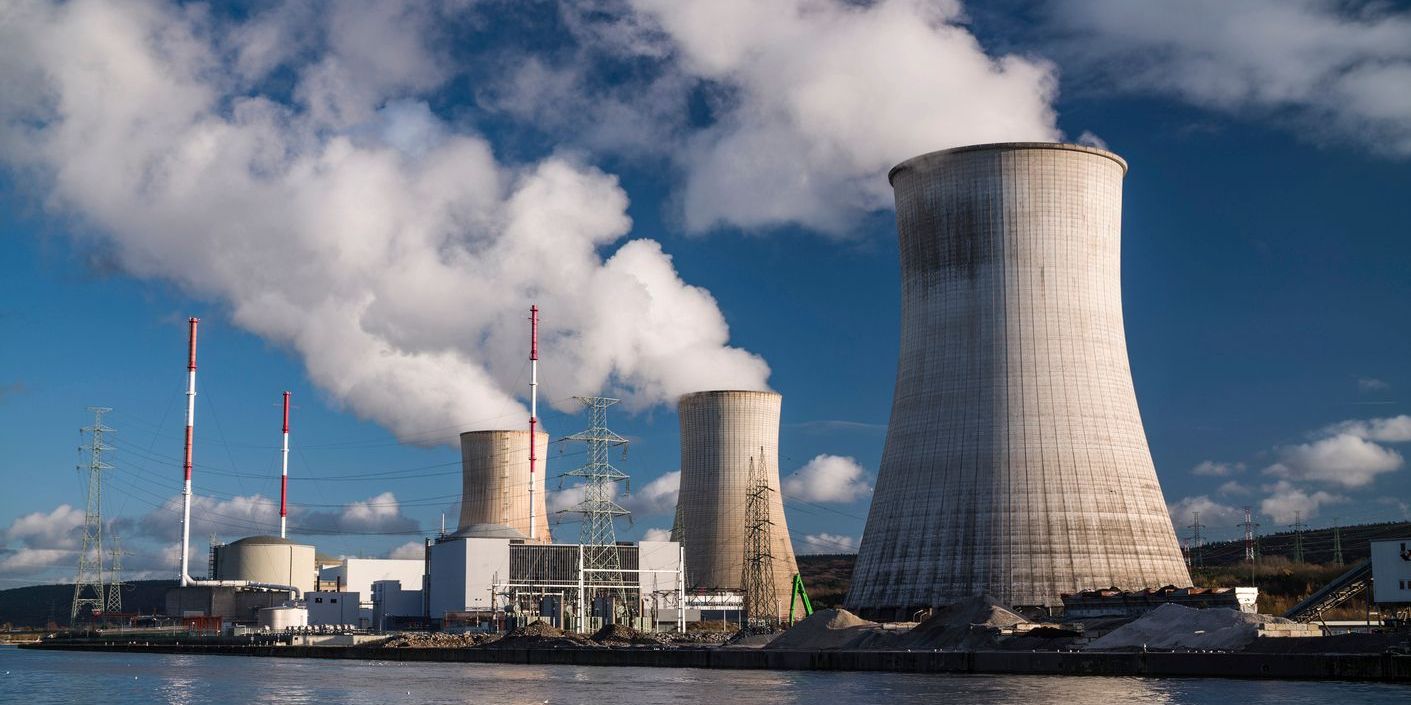
A nuclear power plant. (iStock)
Synopsis: The new nuclear energy bill introduced in the Lok Sabha is set to scrap India’s strict liability law for suppliers in the event of nuclear accidents and also allows private companies to enter a sector hitherto reserved for specialised public enterprises.
The Modi government, on 15 December, introduced a new Bill in the Lok Sabha that scraps India’s strict liability law for suppliers in the event of nuclear accidents and also allows private companies to enter a sector hitherto reserved for specialised public enterprises.
The Sustainable Harnessing and Advancement of Nuclear Energy for Transforming India (SHANTI) Bill, 2025, comes weeks after Prime Minister Narendra Modi said that his government is preparing to open India’s nuclear industry to private players to bolster the country’s energy security and strengthen its technological capabilities.
The new Bill will replace the Atomic Energy Act, 1962 — India’s primary legislation for the nuclear sector — and the Civil Liability for Nuclear Damage Act, 2010, which US nuclear suppliers have long campaigned against with the aggressive support of Washington. The new law — which will facilitate US companies making multi-billion dollar reactor sales — also comes against the backdrop of difficult trade negotiations with the Trump administration, in which the latter has been demanding more business opportunities in India for American corporations.
When the 2010 law was enacted, the BJP joined the Left in opposing the dilution of two key provisions, as demanded by the US nuclear lobby:
(1) Section 17 (b), which grants an Indian nuclear operator a ‘right of recourse’ – as far as compensation it is liable to pay victims – where “the nuclear incident has resulted as a consequence of an act of supplier or his employee, which includes supply of equipment or material with patent or latent defects or sub-standard services.”
(2) Section 46, which said the operator of a nuclear plant would not be exempt “from any proceeding which might, apart from this Act, be instituted against such operator”, i.e. which allows victims of an accident to sue the operator for damages (tort claims).
In January 2015, six months after Narendra Modi became prime minister, the Ministry of External Affairs sought to placate the US administration’s demand for dilution of the 2010 CLNDA by issuing an ‘FAQ’ in which it sought to read down these two provisions. US President Barack Obama responded by publicly declaring that India and the US had “achieved a breakthrough understanding on two issues that were holding up our ability to advance our civil nuclear cooperation, and we’re committed to moving towards full implementation”.
With US nuclear suppliers still not satisfied, however, American pressure for the formal repeal of the two liability provisions slowly built up again. Given the domestic political sensitivity, the Modi government had hoped the issue would remain on the back burner indefinitely, but the return of a super-transactional Donald Trump to the White House appears to have forced its hand.
While the SHANTI Bill gives US nuclear suppliers a free pass even in the event of an accident caused by defective equipment, it camouflages its diluted liability provisions within a new version of India’s overarching atomic law — presumably in an attempt to avoid the political damage that a standalone, highly visible reversal of the 2010 law’s liability provisions would generate.
Accordingly, in its Statement of Objects and Reasons the Bill merely says that the proposed legislation is aligned to “achieve the objectives of increasing the share of nuclear energy in the total energy mix of India, facilitate innovation in nuclear science and technology, expand its applications to non-power applications and continue to honour India’s obligations towards safety, security, safeguards and towards nuclear liability.”
What the new Bill does is to delete the entire clause on supplier liability from the subsection on the operator’s right of recourse (Section 17 of the CLNDA and Section 16 of SHANTI) in the event of an accident. As for tort claims against nuclear operators, which Section 46 of the CLNDA allowed, the new draft law shuts the door on that possibility by barring the jurisdiction of civil courts in the event of a nuclear accident (Section 81, SHANTI):
“No civil court shall have jurisdiction to entertain any suit or proceedings in respect of any matter which the Central Government, Board, the Appellate Tribunal, the Claims Commission or the Claims Commissioner, as the case may be, is empowered to determine or adjudicate, under this Act…”
The other major provisions of the new Bill are that it will allow any government department, or government company, or any other company, including joint ventures, to build, own, operate or decommission a nuclear power plant or reactor.
Under the earlier regime, only the Nuclear Power Corporation of India Ltd (NCPIL) was authorised to operate nuclear power facilities.
Once passed, licenses will be provided to private players to build, own, operate or decommission a nuclear power plant or reactor, the fabrication of nuclear fuel, including conversion, refining and enrichment of uranium-235 up to such threshold value, or production, use, processing or disposal of other prescribed substances, as may be notified by the Union government.
Further private players can also get licenses for the transportation or storage of nuclear fuel or spent fuel or any other prescribed substance; the import, export, acquisition, or possession of nuclear fuel or prescribed substance, equipment, technology or software, that may be used for the development, production or use of prescribed substance or prescribed equipment; or any other facilities or activities as may be notified by the Union government.
Somewhat contradictorily, however, the Bill adds that the Union government will exclusively undertake the enrichment or isotopic separation of prescribed substances or radioactive substances, the management of spent fuel, including reprocessing, recycling, separation of radionuclides contained therein and management of high-level radioactive waste arising thereof; the production of heavy water and its upgradation by isotopic separation.
Unless the government’s intention is not to treat U-235 as a ‘prescribed substance’.
Like the CLNDA, the SHANTI Bill says that the nuclear operator shall be liable for damages from an accident except those caused by “a grave natural disaster of an exceptional character, an act of armed conflict, hostility, civil war, and insurrection or terrorism.”
It also says that the maximum amount of liability in respect of each nuclear incident shall be the rupee equivalent of three hundred million Special Drawing Rights or such higher amount as the Union government may, by notification, specify. Special drawing rights are supplementary foreign exchange reserve assets defined and maintained by the International Monetary Fund.
However, the SHANTI Bill drops a key provision of CLNDA (Section 5(2)) that prevents operators from using compensation paid for “nuclear damage” under the law as a legal shield against other, independent claims arising from the same incident under other laws, such as environmental damage, tort claims etc.
“Provided that any compensation liable to be paid by an operator for a nuclear damage shall not have the effect of reducing the amount of his liability in respect of any other claim for damage under any other law for the time being in force.”
The SHANTI Bill says that the Union government will be liable for nuclear damage in an installation owned by it, or if liability exceeds the amount of liability of an operator specified in the Second Schedule of the law, to the extent such liability exceeds the liability of the operator. It can also assume full liability for a nuclear installation not operated by it if it is of the opinion that it is necessary in the public interest to do so.
Like the CLNDA, the Bill also provides for the Union government to establish a fund to be called the Nuclear Liability Fund, in such a manner, as may be prescribed.
Since SHANTI is also meant to replace the AEA of 1962, the Bill envisages the same regulatory structure – an Atomic Energy Regulatory Board which will provide safety authorisation – but adds an Atomic Energy Redressal Advisory Council for redressal of disputes.
While the bill was tabled on 15 December, Opposition members raised objections during the introductory stage.
“Permitting profit-seeking private participation in ultra-hazardous nuclear activities while simultaneously limiting liability while granting statutory immunities, and restricting judicial remedies undermines the state’s non-delegable public trust obligations over life, health and the environment,” said Congress MP Manish Tewari.
MoS Jitendra Singh in the Prime Minister’s Office, however, said that Tewari’s objections could be taken up during the discussion on the Bill, while only the introduction was being put forward at present and then went on to say that previous legislations had been brought to the House under Congress governments.
“The same house brought the Atomic Energy Act, 1962, when Jawaharlal Nehru was the prime minister, and the Civil Liability for Nuclear Damage Act, 2010, was brought when Manmohan Singh was the prime minister. Why, suddenly, there is a different party in power, the house has been forbidden from bringing this Bill?” said Singh.
The Bill, in its Statement of Objects and Reasons, also states that India has set an ambitious target to achieve energy independence with a roadmap for decarbonisation of the economy by 2070 and to achieve 100 gigawatt of nuclear power capacity by 2047.
“To achieve this goal, it is imperative to enact new legislation to harness the full potential of India’s nuclear energy and indigenous resources through active involvement of both the public and private sectors. It further seeks to leverage the contribution of domestic nuclear energy for augmenting the global nuclear energy ecosystem,” it says.
(The story was first published by The Wire and has been republished with permission.)


