


Published Apr 05, 2026 | 7:00 AM ⚊ Updated Apr 05, 2026 | 7:00 AM

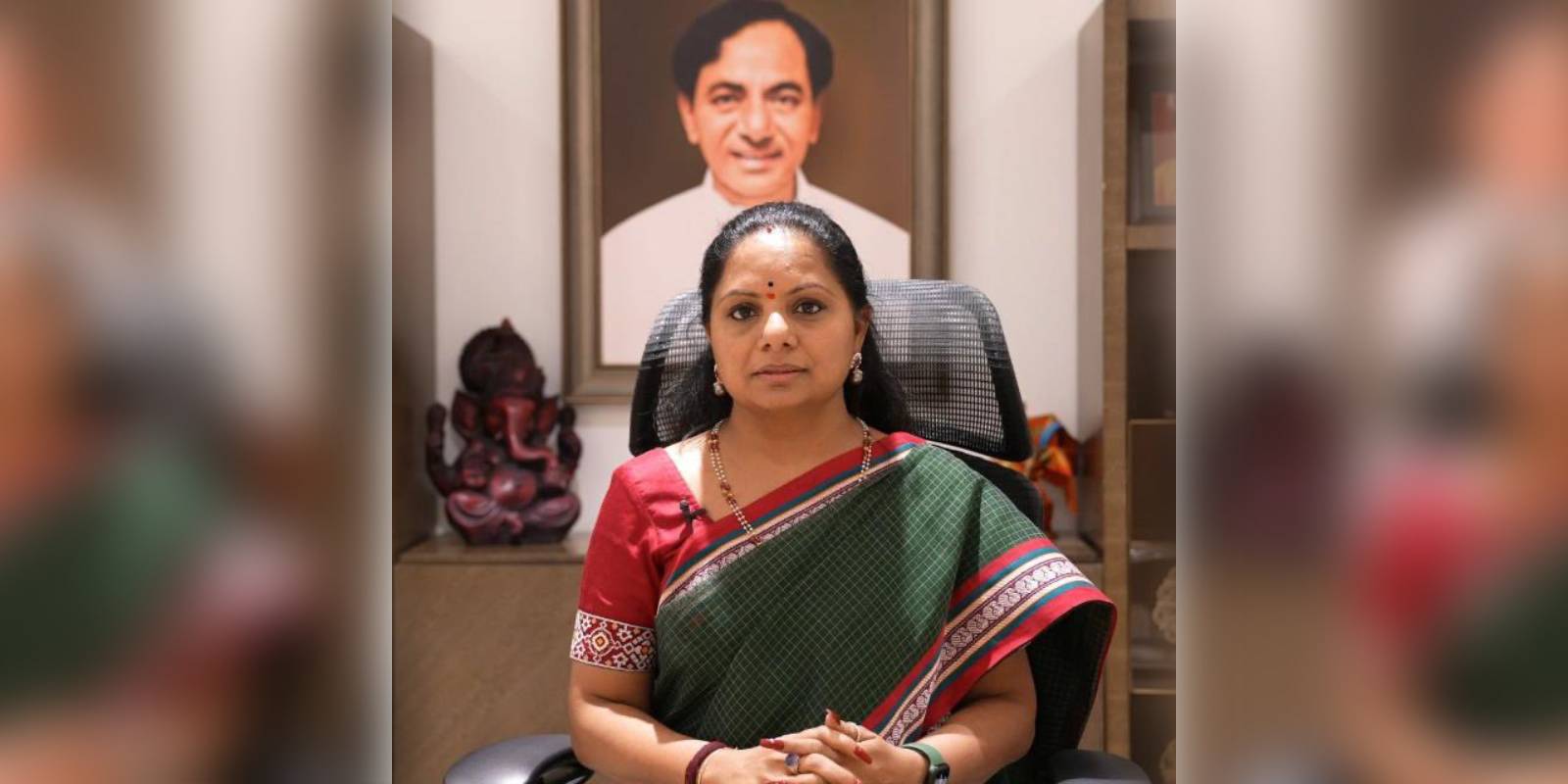
K Kavitha. (X)
Synopsis: The timing of Kavitha’s party launch is politically significant. Around the same period, the BRS is expected to organise a major public meeting, possibly coinciding with its foundation day on 27 April or earlier. The party leadership appears confident that no major leaders will defect to Kavitha’s camp, though she claims to be in touch with several legislators.
The proposed launch of a new regional political party in Telangana by K Kavitha has triggered a fresh round of political debate. Is there space for yet another regional force in the State? More importantly, what distinct social and economic alternative will her party offer? These two questions are central to discussions within political circles.
Kavitha has indicated that she will formally launch the party on 25 April 2026 and unveil its agenda the same day. Her assertion that “if a woman starts a party, people will see how strong it can be” comes at a time when the Union government is preparing for the implementation of women’s reservation in legislatures by 2029. Whether her political experiment will galvanise greater participation of women in politics, and what consequences it may lead to, remain open questions. In a State where a triangular contest already exists between two national parties and a dominant regional party, the prospects for the expansion of a new entrant are uncertain.
For any new political party to gain traction, it must present a compelling rationale and a clear alternative to the prevailing political order. Kavitha, who spent over a decade in the Bharat Rashtra Samithi, has held positions such as Member of Parliament and Member of Legislative Council. As the daughter of former Chief Minister K Chandrashekar Rao, she has also led the socio-cultural organisation Jagruti since its inception.
While Jagruti has often been perceived as aligned with the BRS, Kavitha has maintained that she ran it independently. However, differences over policy and internal functioning led to a widening rift between her and the party leadership. Without directly accusing her father, she has levelled allegations of corruption and favouritism against key leaders such as KT Rama Rao and T Harish Rao. These tensions culminated in her suspension from the party in September last year.
Since then, she has undertaken extensive outreach through the “Jagruti Janam Bata” programme, touring districts, interacting with intellectuals, activists and opinion makers, and attempting to build a broader political narrative. A recurring theme in Kavitha’s political articulation has been the idea of a Social Telangana. While she has engaged with multiple issues depending on context, she consistently emphasises the need for social justice. Her arrest in the Delhi liquor policy case and subsequent legal developments have also shaped her political positioning. Although she has claimed vindication, the case continues to remain under judicial consideration.
In the interim, she has sought to expand her public appeal by aligning with marginalised and disadvantaged sections. Her advocacy spans BC reservations, Dalit rights, women’s representation, recognition for activists and support for families of martyrs. She has been visible at protest sites, from Dharna Chowk demonstrations to land displacement issues in Khammam. However, her critics question why many of these concerns were not raised during her tenure within the BRS. They argue that her current stance reflects opportunism, contrasting it with the responsibility-bound authority exercised by leaders she now criticises.
The timing of Kavitha’s party launch is politically significant. Around the same period, the BRS is expected to organise a major public meeting, possibly coinciding with its foundation day on 27 April or earlier. The party leadership appears confident that no major leaders will defect to Kavitha’s camp, though she claims to be in touch with several legislators. Her supporters highlight Telangana First as the party’s guiding slogan, drawing parallels with nationalist narratives elsewhere.
Yet, beyond slogans, the key question remains what policy framework will underpin her politics. Past precedents offer cautionary lessons. Leaders across the spectrum, including NT Rama Rao and K Chandrashekar Rao, have made strong ideological assertions before coming to power, only to adopt different approaches in governance. Similarly, Kavitha will be expected to clarify her stance on complex issues such as reservations for Dalit Christians, among others. There is also criticism that her party may end up splitting anti-incumbency votes, indirectly benefiting the ruling party in future elections.
Political analysts often note that new parties struggle to gain acceptance without a distinctive identity. Several past experiments have failed due to the absence of a credible alternative agenda. The trajectory of YS Sharmila is frequently cited in this context.
Despite differences, parallels are drawn between Sharmila and Kavitha. Both emerged from family disputes into independent political ventures. Observers suggest that such movements often end up serving broader political equations rather than establishing themselves as enduring forces.
Historical examples reinforce this pattern. Leaders like Manda Krishna Madiga, despite strong grassroots movements, have not translated that influence into electoral success. Jayaprakash Narayan remained more influential as a civil society leader than as a political force. Even the initial momentum of Chiranjeevi’s Praja Rajyam Party in 2009 did not sustain, ultimately benefiting rival parties by dividing votes. Similarly, Sharmila’s political positioning has drawn criticism for targeting opposition parties more than the ruling establishment, raising questions about strategic intent.
Jagruti, as a socio-cultural platform, enjoyed a certain degree of public goodwill. It had the potential to function effectively as a pressure group. Transitioning into a political party, however, requires a broader and more cohesive appeal. Ultimately, the success of Kavitha’s political venture will depend on whether she can articulate and implement a clear, credible and inclusive social and economic agenda. Without such a framework, the party may struggle to establish itself in a competitive political landscape. As political history suggests, new parties endure only when they earn public trust, not merely through rhetoric, but through a convincing vision and consistent action.
(Views are personal. Edited by Majnu Babu).


