


Published May 01, 2026 | 8:00 AM ⚊ Updated May 01, 2026 | 8:00 AM

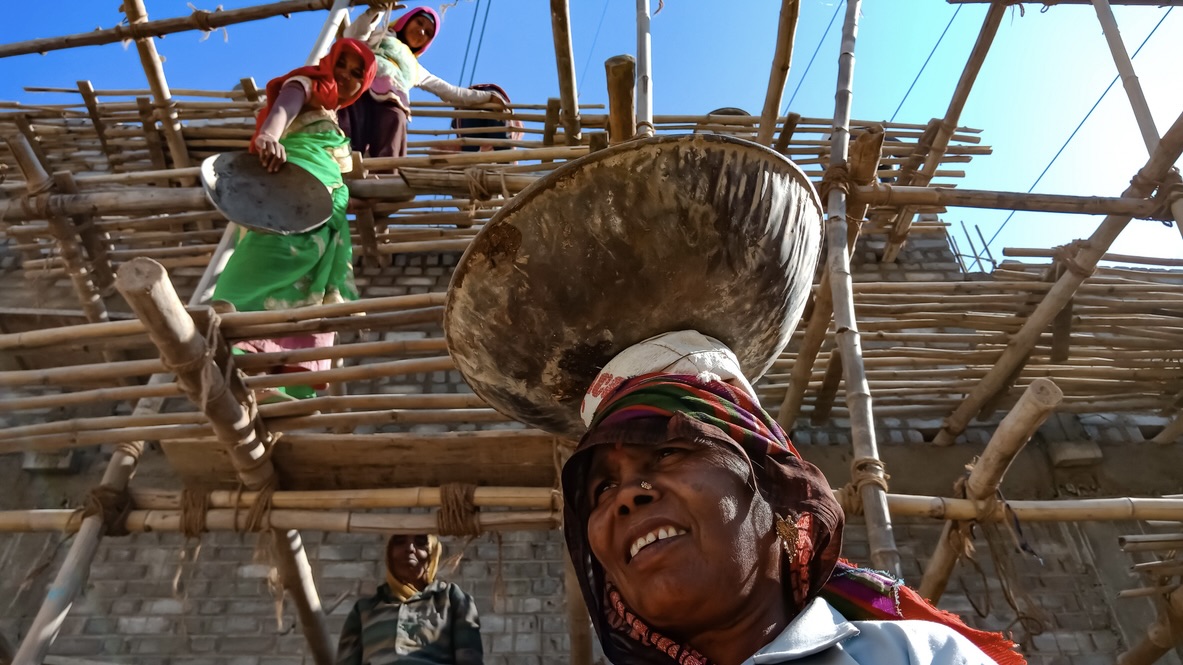
The workforce has fragmented into multiple categories, and each group faces distinct challenges.

Synopsis: For decades, labour politics revolved around a relatively simple structure: capital versus labour. Employers invested resources and controlled production, while workers contributed physical effort. However, the structure of the economy has fundamentally changed. Industrial production gave way to service-led growth, and now to a digital and platform-driven economy. Capital is no longer concentrated in factories; it flows through global markets, venture funding, and digital platforms.
Each year on International Workers’ Day, the world marks the historic struggles that secured the spirit of dignity for workers: fair wages, humane hours, and safer workplaces.
Yet in 2026, the idea of labour rights has moved far beyond its traditional frame. What was once a relatively clear contest between employer and employee is now shaped by global conflicts, technological disruption, shifting demographics, and new forms of work. For India, these changes are particularly consequential.
External shocks, from energy disruptions linked to tensions in West Asia to shifting trade regimes and migration uncertainties, are exposing the vulnerabilities of Indian workers both at home and abroad. Labour rights, therefore, are no longer a linear concept confined to workplace negotiations; they are part of a broader economic and geopolitical reality that requires deeper, long-term policy thinking.
Also Read: Why Kerala—India’s trade union bastion—defies Centre’s new labour codes
The roots of modern labour rights lie in the 19th-century industrial world, most notably the
Haymarket affair in the United States, where workers demanding an eight-hour workday faced violent repression. Their struggle eventually led to reforms that transformed labour standards globally, and May Day became a symbol of collective resistance.
In India, this consciousness took shape during the colonial period, with the first May Day celebration held in Madras (now Chennai) in 1923, signalling the emergence of organised labour movements.
For decades, labour politics revolved around a relatively simple structure: capital versus labour. Employers invested resources and controlled production, while workers contributed physical effort. The central debate focused on how economic gains should be distributed between these two groups. This framework shaped much of the legal and institutional architecture governing labour rights.
However, the structure of the economy has fundamentally changed. Industrial production gave way to service-led growth, and now to a digital and platform-driven economy. Capital is no longer concentrated in factories; it flows through global markets, venture funding, and digital platforms.
At the same time, the workforce has fragmented into multiple categories—formal employees, informal labourers, gig workers, migrants, and self-employed individuals. Each group faces distinct challenges and varying levels of protection.
This transformation has rendered the traditional binary inadequate. Labour rights today must address a layered workforce where vulnerabilities differ widely, and where the lines between employer and employee are often blurred.
Also Read: India’s war on labour rights
India’s labour market reflects this complexity in its most acute form. According to the Economic Survey of India 2025–26, only about 20 percent of the workforce enjoys formal employment with stable conditions. The vast majority—nearly 70 to 80 percent—operates in the informal sector, characterised by low wages, job insecurity, and minimal social protection.
Agriculture continues to dominate employment, accounting for over 40 percent of the workforce. A significant portion of this is affected by Disguised unemployment, where more people are engaged in work than necessary, resulting in low productivity and hidden unemployment.
Seasonal uncertainties—erratic rainfall, climate shocks, and fluctuating market prices—further destabilise rural livelihoods, often pushing households into cycles of debt.
Beyond agriculture, millions work in construction, street vending, domestic service, and other informal occupations. These workers typically lack formal contracts, legal safeguards, and access to benefits such as healthcare or pensions. Their bargaining power is limited, and their livelihoods remain highly vulnerable to economic fluctuations.
Social hierarchies deepen these challenges. Many informal workers belong to marginalised communities and face discrimination that restricts access to opportunities and fair wages.
Labour rights, in such contexts, are inseparable from broader questions of social justice and
inclusion.
Gender inequality adds another layer of complexity. While female labour force participation has risen significantly in recent years, much of this increase is concentrated in unpaid or low-productivity work. Women continue to shoulder a disproportionate share of domestic responsibilities, limiting their ability to engage in formal employment. Structural barriers—ranging from workplace safety concerns to entrenched cultural norms—restrict mobility, career progression, and earnings. Even when employed, women often receive lower wages than men for similar work.
Addressing these disparities requires more than incremental reforms. It calls for a reimagining of labour policy that integrates economic, social, and gender considerations into a cohesive framework.
Also Read: ‘Labour laws a barrier to India’s development’
One of the most visible shifts in India’s labour landscape is the rapid expansion of the gig economy. Digital platforms have created new opportunities for employment, offering flexibility and low entry barriers. Yet, this flexibility often comes without security. Gig workers typically operate outside formal labour laws, lacking access to provident funds, health insurance, and retirement benefits. Their earnings are unpredictable, shaped by opaque algorithms and fluctuating demand.
Recent demands by delivery workers for basic amenities, such as restrooms, fair pay structures, and accident compensation, highlight the precarious nature of gig work. As this sector continues to grow, the absence of regulatory frameworks threatens to create a large class of workers without fundamental protections.
Internal migration further complicates the labour landscape. Economic disparities between regions have driven millions of workers from states such as Bihar and West Bengal to urban centres in southern and western India. These migrant workers are essential to industries such as construction, manufacturing, and infrastructure development, yet they often remain invisible within policy frameworks.
Their vulnerabilities became starkly evident during the COVID-19 lockdown in India, when millions were left stranded without income, shelter, or transport. The mass exodus of workers walking back to their home states exposed the fragility of India’s labour systems and the absence of portable social security mechanisms.
In recent years, tensions between local and migrant workers have also intensified. Proposals such as the Karnataka State Employment of Local Candidates Bill, 2024, reflect growing demands to prioritise local employment. While these measures respond to regional anxieties, they also risk fragmenting the national labour market and undermining economic efficiency.
Together, the rise of gig work and the persistence of migration highlight a central challenge: labour rights must adapt to forms of work that are mobile, flexible, and often informal. Traditional frameworks are no longer sufficient.
Also Read: Gig economy sustains growth, denies security
India’s demographic profile presents both an unprecedented opportunity and a significant risk. The country is projected to have one of the largest working-age populations in the world over the next decade. This demographic dividend has the potential to drive sustained economic growth and transform India into a developed economy.
However, this window is limited. As fertility rates decline, the population will gradually age, increasing the dependency ratio. If India fails to create sufficient productive employment during this period, it risks falling into the “middle-income trap,” where growth stagnates before reaching high-income status. The consequences would be severe: a large ageing population without adequate savings or social security.
Current policy approaches have focused heavily on attracting investment, boosting manufacturing, and improving the ease of doing business. While these are essential for economic growth, they often overlook the quality of employment being generated. Job creation without adequate protections can lead to a workforce that is employed but insecure, limiting both productivity and long-term stability.
Regional demographic imbalances further complicate the picture. Southern states are experiencing ageing populations and labour shortages, while northern states continue to have a surplus of working-age individuals. This has intensified patterns of internal migration, making it essential to create policies that ensure equitable treatment and protection for migrant workers.
The challenge, therefore, is not merely to create jobs but to create jobs that are secure, productive, and aligned with the aspirations of a rapidly changing workforce.
Also Read: Gig workers, menstrual leave, and right to disconnect
The evolving nature of work demands a fundamental shift in how labour rights are conceived and implemented in India. Indeed, the rollout of the Labour Codes of India 2020 on 21 November 2025 marks a pivotal shift in India’s labour regime, but beneath the promise of simplification lies a deeper concern—that greater flexibility for firms may come at the cost of job security and collective bargaining, formalising work while widening insecurity. They can no longer be treated as isolated legal provisions; they must be integrated into broader economic and social policy.
First, formalisation of the informal sector is critical. Expanding access to social security: health insurance, pensions, and accident coverage can provide a safety net for millions of workers. Digital platforms and direct benefit systems offer new opportunities to achieve this at scale.
Second, investment in education and skill development is essential to bridge the gap between labour supply and industry demand. A skilled workforce is better equipped to transition from low-productivity sectors such as agriculture to higher-value industries.
Third, structural transformation of agriculture is necessary to address disguised unemployment. Mechanisation and technological adoption can improve productivity, but must be accompanied by the creation of alternative employment opportunities in manufacturing and services.
Fourth, the gig economy must be brought within the ambit of labour regulation. This includes establishing minimum wage standards, ensuring transparency in algorithmic management, and extending social security benefits to platform workers.
Fifth, gender equity must be prioritised through policies that support childcare, enforce equal pay, and create safer workplaces. Empowering women in the workforce is not only a matter of justice but also a key driver of economic growth.
Ultimately, labour rights must be understood as fundamental human rights. Workers are not merely inputs in an economic system; they are central to the nation’s development. A framework that balances economic growth with social protection is not only desirable but necessary.
As India stands at this critical juncture, the redefinition of labour rights will shape its future trajectory. The goal is not simply to protect workers, but to create a system where growth and dignity go hand in hand—ensuring that the benefits of development are shared by all.
(Views are personal. Edited by Majnu Babu).



