

Published Jul 13, 2026 | 11:53 AM ⚊ Updated Jul 13, 2026 | 11:53 AM

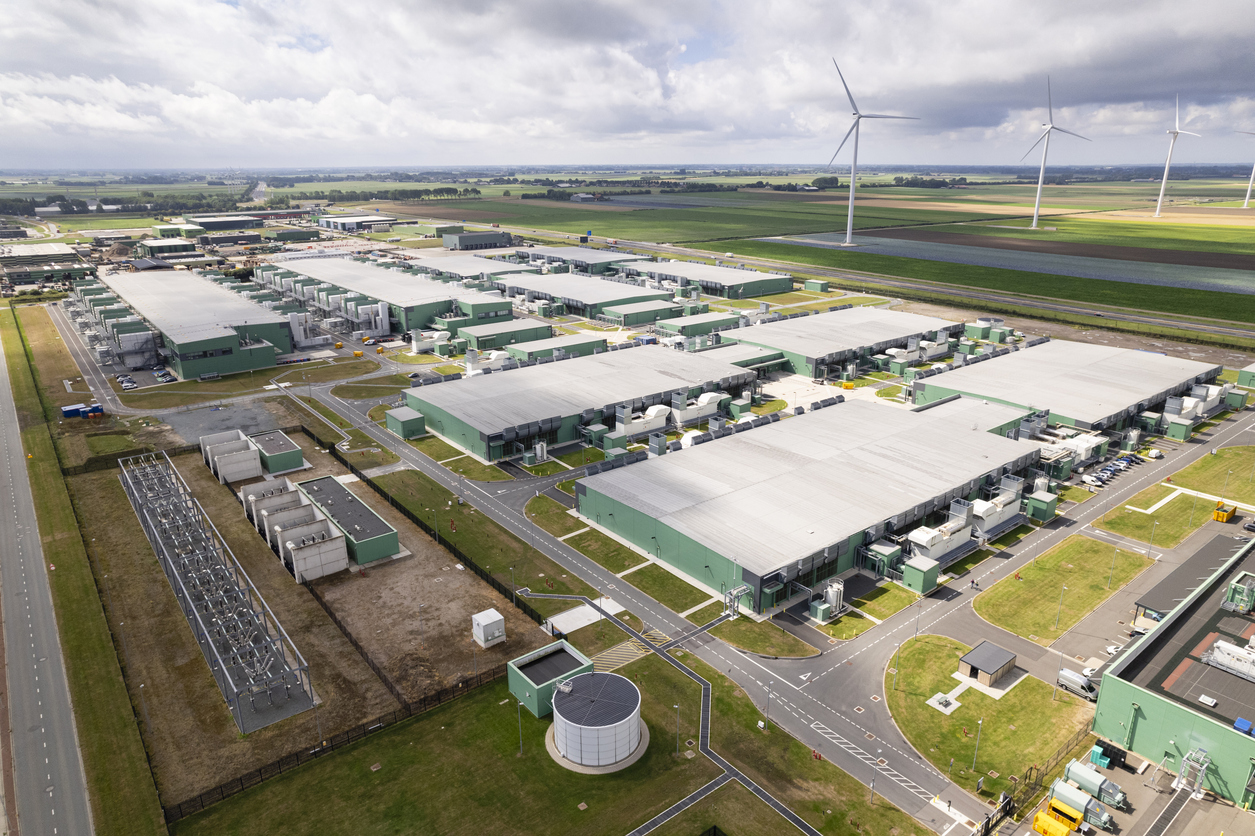
A data centre. Representative Image. (iStock)

Synopsis: Bengaluru is simultaneously one of India’s leading data centre hubs and one of its most water-stressed urban centres. What makes this a governance failure rather than merely an environmental one is the absence of public accountability.
India’s digital economy rests on a lie of omission. The lie is not about what the digital sector delivers. No doubt, it delivers a great deal. The question is: At what cost? Governments, technology companies, and planning bodies have collectively allowed the infrastructure powering the internet to expand without the environmental accounting applied to other resource-intensive industries.
In no city is this failure more visible than in Bengaluru. The city is simultaneously one of India’s leading data centre hubs and one of its most water-stressed urban centres. It reflects a policy failure disguised as progress.
Bengaluru currently hosts around 30 operational data centres, with more under construction. Data centres are not, despite the language surrounding them, immaterial. They are large industrial facilities that operate continuously. Many rely on substantial amounts of water for cooling, though actual consumption varies widely depending on the cooling technology used.
Karnataka’s IT minister stated that each megawatt of capacity requires roughly 25 million litres of water annually. A hydrologist studying the sector estimated that Bengaluru’s data centres consume approximately 20 million litres of water per day. That volume, researchers suggest, could meet the daily domestic water needs of approximately 130,000 people.
Meanwhile, the city’s residents continue to queue for water tankers every summer, watch borewells run dry, and pay rising prices for an increasingly scarce resource. These realities coexist, drawing on the same stressed groundwater system, directly or indirectly.
Explained: Why Karnataka is reviewing its data centre policy amid water concerns
What makes this a governance failure rather than merely an environmental one is the absence of public accountability. No public agency maintains a consolidated, publicly available account of the total water consumed by Bengaluru’s data centres. The Bengaluru Water Supply and Sewerage Board records municipal supply, but facilities also depend on treated water, private tankers, and, in some cases, groundwater.
Neither the Karnataka State Pollution Control Board nor the IT Department publishes consolidated consumption data. As a result, most publicly available figures are estimates rather than measured totals. Without reliable data, there can be no informed policy, meaningful public scrutiny, or credible assessment of the trade-offs being made on behalf of residents who were never consulted.
When a private industry consumes a scarce public resource at scale, and the state cannot account for that consumption, the state has failed in one of its basic responsibilities.
The location of these facilities compounds the problem. Most of Karnataka’s data centres are concentrated in Whitefield, Electronic City, and the Devanahalli corridor. These areas already experience groundwater stress and heavy dependence on water tankers during the summer months.
Groundwater assessments have indicated growing over-extraction in parts of the Devanahalli region. Investment decisions understandably prioritised reliable power, digital connectivity, and transport infrastructure. Water availability appears to have received far less attention. A sector that was welcomed as an economic asset was not evaluated with the same seriousness as a consumer of scarce natural resources.
The digital economy has long benefited from the impression that its operations are somehow weightless. Terms such as “cloud” and “virtual” create the illusion that digital services exist outside physical limits. This perception has helped shield the sector from the level of environmental scrutiny routinely applied to other resource-intensive industries.
However, in environmental terms, data centres resemble large industrial facilities. They consume land, electricity, and, in many cases, significant volumes of water. Like other large industrial facilities, they also generate waste heat, although Bengaluru’s broader urban heat island is driven primarily by rapid urbanisation and the steady loss of green cover.
The infrastructure powering the AI economy does not exist outside the city. It operates within it and depends on the same finite resources as its residents.
India’s regulatory framework has yet to respond fully to this reality. Data centres are subject to building regulations, electricity rules, environmental laws, and pollution controls. However, there is no dedicated framework to measure or manage their cumulative impact on water use, heat generation, and carbon emissions.
The result is a fragmented system in which the sector’s overall environmental footprint remains poorly understood.
Also Read: HRF demands withdrawal of green nod for Vizag data centre project
Karnataka’s IT Minister has acknowledged these concerns and indicated that a revised state data centre policy is being prepared. That is a welcome step. But policy cannot rest on assumptions where measurement is both possible and necessary.
A serious policy response need not be complicated. Every data centre should be required to disclose independently verified water consumption. New facilities in water-stressed areas should undergo environmental impact assessments.
Using treated wastewater for cooling should become standard practice. Future expansion should be directed to regions with greater water availability, including suitable parts of coastal Karnataka, instead of adding more capacity to an already water-stressed Bengaluru.
The digital economy is here to stay, and India needs data centres. But no industry should use a scarce public resource without measuring and reporting its consumption.
Bengaluru’s residents are sharing their water with a rapidly expanding digital infrastructure. They deserve transparency. Without reliable data, governments cannot make sound policy. The problem here is not technical; it is a failure of political will.
(Views are personal.)



