


Published Jan 26, 2026 | 11:11 AM ⚊ Updated Jan 26, 2026 | 11:11 AM

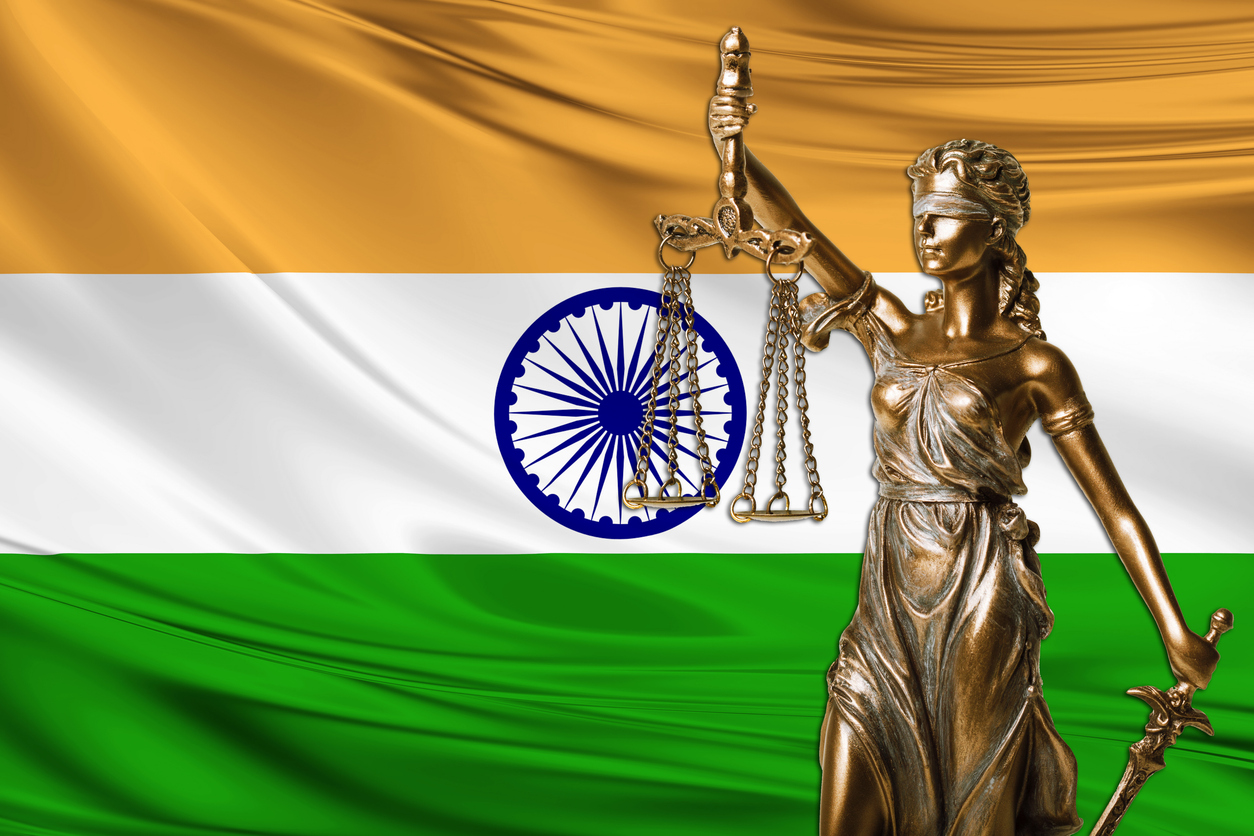
Indian flag and statue of blind lady justice. (iStock)
Synopsis: The framers of the Indian Constitution set a constitutional framework for governments to discharge their functions without being affected by majority-influenced decisions, guaranteeing liberty of thought, expression, belief, faith and worship. Also, it clearly defined roles and responsibilities for the government and its wings by imposing the rule of law, and it prevented the tyrannical rule by accumulation of power through the doctrine of separation of powers and placing equally important actors for checks and balances.
On 26 January 2026, India is celebrating its 76th Republic Day, and it is the optimal time to revisit the concept of the republic and its political significance to citizens. India is not only a democratic but also a constitutional republic, which protects its citizens by way of rights and acts as a guardian against tyrannical rule.
However, the Constitution alone cannot prevent arbitrary attempts by executives or protect citizens’ rights; it requires dedicated independent institutions.
The republic is an even more mature and complex arrangement than democracy, as its priorities are everyone’s rights over the majority’s collective will. It requires a powerful institution to implement the supremacy of the Constitution and exercise the Rule of Law.
Let us analyse the Constitutional arrangements for the Indian Republic and other institutions that play a vital role in ensuring rights and making a republic in practice.
Our founding leaders realised the human innate violence that was witnessed during the partition struggles, so they made up their minds not to allow such an identity crisis in the future.
Making India a republic was viewed as the best available option, which set a constitutional framework for governments to discharge their functions without being affected by majority-influenced decisions, guaranteeing liberty of thought, expression, belief, faith and worship.
Also, it clearly defined roles and responsibilities for the government and its wings by imposing the rule of law, and it prevented the tyrannical rule by accumulation of power through the doctrine of separation of powers and placing equally important actors for checks and balances.
Ideally, the Constitution acts as a guiding light of a republic and protects citizens’ rights, but practically it requires a mechanism to protect the Constitution from the government, preserve the concept of rule of law from rulers, and ensure the last mile deliveries of guarantees.
For guarding the guardian of the republic, constitutional framers brainstormed extensively and made a few arrangements. The separation of powers and structural checks and balances prevent the concentration of power, which potentially creates an environment for tyrannical rule and arbitrary actions.
For this, they distributed the powers among the legislature, which represents the people. The popular will makes policies but can not implement them. The executives who implement these policies are recruited by merit-based competition and assured service conditions. Ministers are part of both and are held accountable in Parliament and assemblies through various devices such as motions, questions and so on.
Further, the independent judiciary was put in place to scrutinise the other wings’ functions and validate consistency with the power to strike, in case of violation.
Apart from the judiciary, the Indian Constitution charter several other institutions that are part of the government but function independently for various roles, including policy enforcement and monitoring existing government wings.
The Election Commission of India, which is mandated with the conduct of free and fair elections for the President, Vice President, Parliament and State assemblies, was constituted to ensure the integrity of the democratic spirit, empower citizens’ political rights and maintain a level playing field in the election domain.
The Comptroller and Auditor General (CAG) of India acts as the guardian of the public purse by verifying that all expenditures are spent legally and efficiently for the intended purposes and holds the executives accountable to the legislature. The Union Public Service Commission (UPSC) and other State Public Service Commissions act as “watchdog of meritocracy” by recruiting, selecting, and ensuring a competent bureaucracy without political influence.
Finance commission was established for the fair devolution of central revenues (vertical) with states (horizontal ) and among states by examining the income distance, population, area, demographic performance and ecological factors. Various commissions such as the National Commission for Scheduled Castes, Scheduled Tribes, Backward Classes and the special officers for linguistic minorities were appointed to ensure equality and equity.
Realising future threats to the republic, the Constitution framers created a powerful model to secure constitutional bodies from bending before the executives.
They put the Supreme Court, high courts, Election Commission, CAG and other constitutional bodies by ensuring secure tenure, appointment by the President (warrant under hand and seal), fixed service conditions not alterable to their disadvantage and charging their expenses from the Consolidated Fund of India to keep their function without executive interference and maintain functional autonomy.
Furthermore, the higher officials cannot be removed by executives, their removal — technically impeachment — is similar to the president of India, which must follow a stringent process in Parliament.
As the famously coined fourth pillar of democracy, the media plays a vital role in exposing infringement of rights and arbitrary acts to the public and holds violators accountable.
NGOs and civic organisations, especially human rights monitors, have emerged as enablers of effective implementation, oversight, and accountability of citizens’ rights. Over the years, the Government has added other layers of institutions in the duty to protect the republic.
The National Human Rights Commission handles rights infringement issues and the Right to Information Act makes the governments and policies more transparent and financially accountable.
However, challenges have been mounting against guardians; the Judiciary faced multiple confrontations since India’s independence. The Constitutional Preamble’s objectives of Justice (Social, Economic and Political ) faced issues with Liberty and Equality, which were taken before the judiciary.
In the Kesavanda Bharati case, the Supreme Court’s largest bench reinforced the republic nature of constitutional supremacy, which must be unaltered by the majority and put limitations on legislatures.
The innovation of basic structure doctrine saved many such overarching attempts by legislature and executives, but the judiciary paid a heavy price for it as the government appointed Justice AN Ray as the Chief Justice of India (CJI) by superseding three senior judges — JM Shelat, KS Hegde, and AN Grover — who were part of the majority in the bench.
Later, in the second judges’ case, the judiciary opted a collegium system for appointment and transfer of judges to the Supreme Court and high courts, which is also a target for the government and its legislature.
In 2014, the government created a National Judicial Appointments Commission (NJAC) by way of the 99th Constitutional Amendment, which was struck down by the Supreme Court as it violates judicial independence.
Even after, the government systematically restricted the functions of collegium by delaying or rejecting its appointments. Recently, a former vice president (constitutional posting holder) publicly attacked the judiciary, saying Article 142 has become a nuclear missile against democratic forces. These are examples of consistent targeting of the judiciary for discharging their constitutional duties.
Further, the executive influence the appointments of constitutional bodies. One of the most recent attempts was the Chief Election Commissioner and other Election Commissioner (Appointment, Conditions of Service and Term of Office) Act 2023. The Act replaced the CJI by a Cabinet minister from the selection panel of the ECs and CEC, technically nullifying the purpose of the committee where the executive has an absolute majority.
Other Constitutional bodies also face severe systematic hurdles by the government in the form of political interference, limiting their resources. These interferences affect the functions of institutions, delayed appointments, lack of staffing and infrastructure, undermining the independence and effectiveness in upholding constitutional mandates.
At the heart of the idea of a constitutional republic lies a paradox that no constitution can resolve on its own: While the state is empowered to protect rights, the same state also possesses the capacity to violate them, making the problem of “who guards the guardian” not merely institutional but deeply political.
Independent institutions are therefore not ornamental features of constitutional design; they are the living mechanisms through which constitutional morality is translated into everyday governance.
Their legitimacy flows not from electoral majorities but from public trust, procedural integrity, and functional autonomy, enabling them to act as counter-majoritarian forces when popular will turns oppressive or when executive convenience undermines legal restraint.
In a society marked by deep social hierarchies, economic inequalities, and identity cleavages like India, this role becomes even more critical, as formal equality before law often masks substantive inequalities in access to justice and political voice.
Institutions such as the judiciary, election commission, audit bodies, information commissions, and human rights mechanisms collectively create a distributed architecture of accountability, ensuring that power is fragmented, scrutinised, and continuously contested.
Their erosion does not usually occur through dramatic constitutional breakdowns but through incremental processes: selective appointments, budgetary strangulation, procedural delays, regulatory capture, and the normalisation of executive dominance in the name of efficiency or stability.
This slow institutional decay is far more dangerous than overt authoritarianism, because it preserves the external rituals of democratic elections, courts, and parliaments, while hollowing out their substantive content.
When oversight bodies begin to internalise political loyalty over constitutional duty, when judicial independence is replaced by judicial compliance, and when regulatory agencies fear reprisal more than illegality, the republic survives only as a formal shell.
The ultimate safeguard, therefore, lies not merely in constitutional text but in a culture of constitutionalism, where institutions are defended by an informed citizenry, a vigilant civil society, and a political class restrained by ethical limits.
In this sense, independent institutions do not merely guard the constitution; they sustain the moral ecology of the republic itself, ensuring that power remains a public trust rather than a private instrument.
Without them, democracy risks degenerating into electoral authoritarianism, where periodic voting coexists with systemic unaccountability, and the promise of liberty is reduced to a symbolic abstraction rather than a lived reality.
As Dr BR Ambedkar observed during the Constituent Assembly debates while introducing the Draft Constitution: “Constitutional morality is not a natural sentiment. It has to be cultivated.”
As Yuval Noah Harari warned, “Democracy thrives on trust, Dictatorships thrive on fear, when trust erodes… (It ) destroys democratic governance and replaces it by an autocratic version”, democracies have all the feasibility of transit into dictatorships through gradual erosion of republican nature and democratic backsliding.
When the constitutional checks and balances are dismantled, leading to silencing opposition voices, it weakens the rule of law and ultimately chokes the spirit of a constitutional republic.
Even guardians need guards for effective enforcement of the rule of law, republic guarantees lie in the independence of constitutional bodies, effective oversight of executive functioning and assured remedies for infringement by checks and balances.
(Views are personal. Edited by Muhammed Fazil.)


