

Published Apr 10, 2026 | 6:15 PM ⚊ Updated Apr 10, 2026 | 6:15 PM

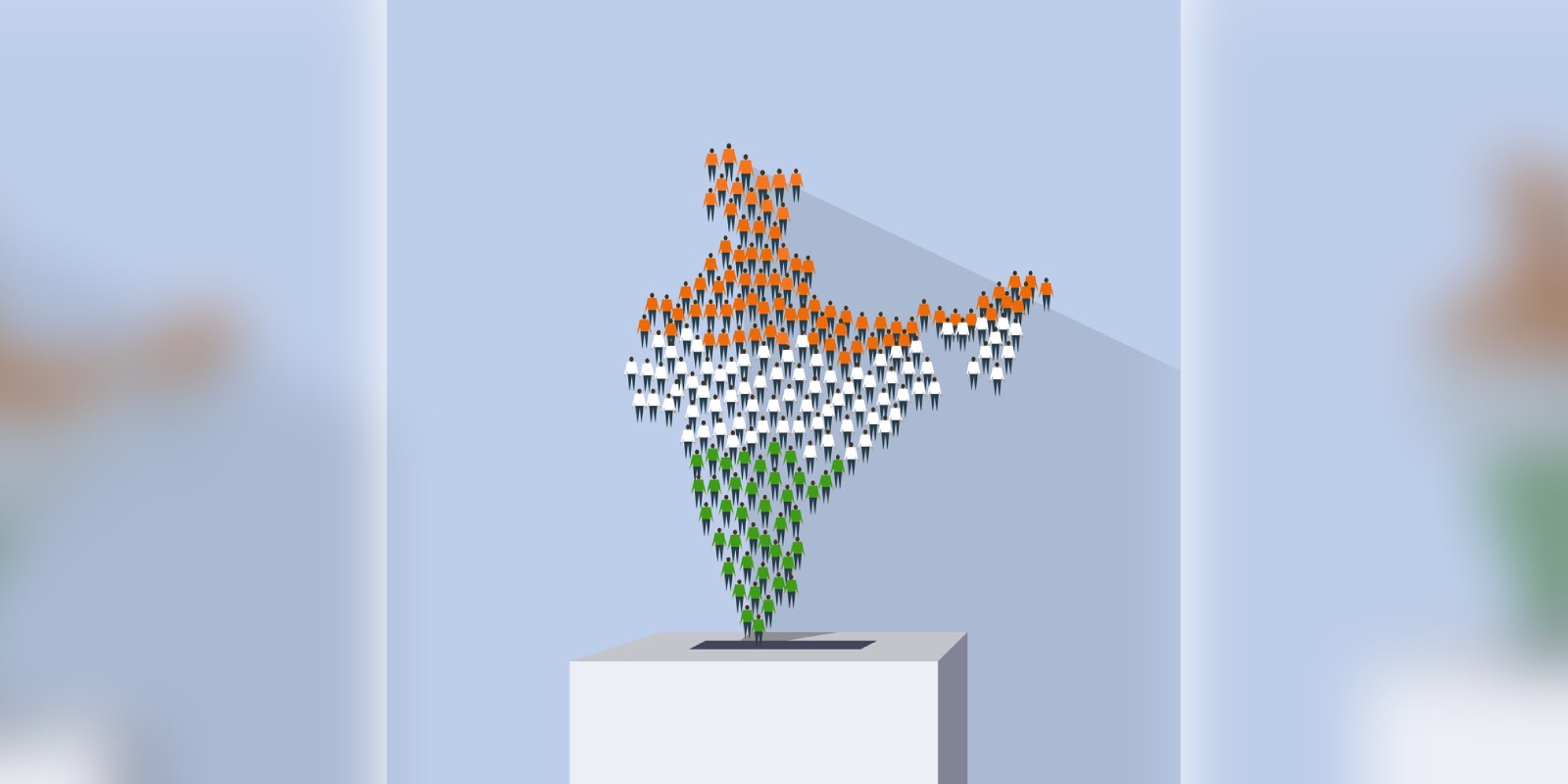
India's skewed population growth has implications for the South when it comes to delimitation. (iStock.jpg)
Synopsis: Delimitation determines the nature and extent of political representation. Southern states argue that any increase in seats, whether based on population or through uniform expansion, will still disproportionately benefit northern states where population growth has been higher.
The Union government appears to be attempting a classic two birds with one stone strategy. By advancing the long-pending issue of delimitation alongside the implementation of women’s reservation, it seeks to address two politically sensitive questions at once.
The proposed special session of Parliament signals both urgency and intent. At the centre of this strategy lies a significant proposal. Instead of recalibrating constituencies strictly based on population, the government is considering a 50 percent increase in seats across legislatures.
This approach is expected to ease resistance from southern states that fear a decline in their political representation, while also creating room to implement a one-third reservation for women as early as the 2029 general elections. However, rather than resolving tensions, the proposal has triggered fresh concerns, particularly in southern India.
Delimitation determines the nature and extent of political representation. Southern states argue that any increase in seats, whether based on population or through uniform expansion, will still disproportionately benefit northern states where population growth has been higher.
The concern extends beyond numbers. It includes political influence, fiscal allocations, and decision-making power at the national level. States such as Tamil Nadu, Karnataka, Kerala, Telangana, and Andhra Pradesh have expressed apprehension that their voice in Parliament may weaken over time. Their argument is rooted in historical policy outcomes.
Southern states have, over decades, effectively implemented population control measures in line with national priorities. In contrast, several northern states have witnessed higher population growth. A delimitation exercise based on present demographics, they argue, would reward those who lagged in population control and disadvantage those who succeeded. This perceived imbalance has sharpened regional concerns and intensified political opposition.
India’s delimitation framework is based on the principle of equal representation. The idea is that every citizen’s vote should carry similar value. To achieve this, constituencies were meant to be periodically adjusted using census data. Delimitation exercises were conducted in 1952, 1962, and 1972, increasing Lok Sabha seats from 494 to 543.
A major shift occurred in 1976 when the number of seats was frozen to encourage population control. This freeze was later extended until 2026. As a result, while constituency boundaries were revised in 2009 based on the 2001 Census, the total number of seats remained unchanged. With the freeze nearing its end, the question of expanding or redistributing seats has returned to the forefront.
Although the Women’s Reservation Bill was passed in 2023, its implementation depends on a fresh census followed by delimitation. The census scheduled for 2021 was delayed, and even if conducted soon, the timeline makes implementation before 2029 difficult. By proposing an increase in seats and possibly using earlier census data, the government may attempt to accelerate the process. Politically, this also places opposition parties in a difficult position, as resistance could be portrayed as opposition to women’s representation.
A uniform 50 percent increase in seats does not resolve the issue of imbalance. For example, if Uttar Pradesh increases from 80 to 120 seats and Karnataka from 28 to 42, the gap between them grows wider. The difference rises significantly, reinforcing disparities instead of reducing them. This highlights a fundamental limitation of the current proposal.
Given the complexity of the issue, alternative approaches deserve attention. One option is to defer the increase in total seats while proceeding with boundary adjustments based on updated population data. This would retain the current strength of the Lok Sabha while addressing internal disparities.
International examples provide a useful perspective. The United States has maintained a fixed number of 435 seats in the House of Representatives for over a century, adjusting representation through redistribution rather than expansion. Similarly, the European Union follows a model where representation varies among member states, with smaller states receiving relatively higher representation per capita.
India could consider a hybrid approach. The total number of Lok Sabha seats could remain unchanged, while states that have effectively controlled population growth could be compensated through increased representation in the Rajya Sabha.
The delimitation debate is not just a technical exercise. It is a test of India’s federal balance. Any solution must reconcile two important principles: One is equal representation for citizens. The other is fairness for states that have adhered to national goals such as population control.
A purely population-based approach risks widening regional disparities, while a uniform expansion does not address the core issue. The challenge before the Union government is to build consensus across regions and political lines. Without such a consensus, delimitation may deepen divisions instead of strengthening democracy. Resolving this issue requires not just numerical adjustments, but careful political judgment and institutional innovation.
(Views expressed are personal. Edited by Majnu Babu).


