
Published Oct 20, 2026 | 4:42 PM ⚊ Updated Oct 20, 2026 | 4:42 PM

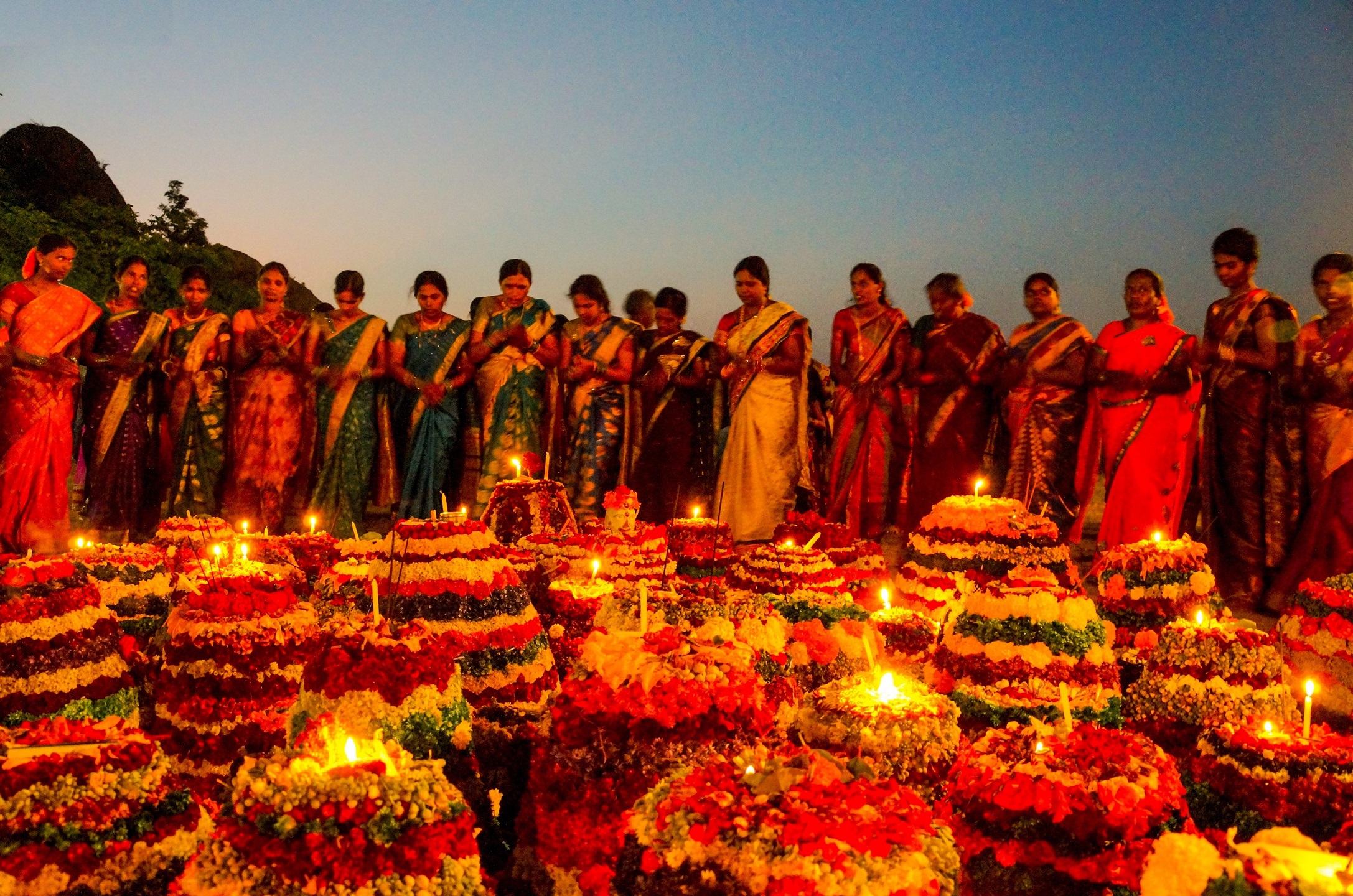
Bathukamma, a part of Dasara festivities, is unique to Telangana.

Synopsis: The deeper value of Dasara, known as Pedda Panduga (the Big Festival), in Telangana lies not merely in the celebrations, but also in the circulation of money among ordinary people and the preservation of the state’s folk traditions.
The real Dasara story in Telangana may not be found in temple queues or festive greetings, but in the butcher’s ledger, the tailor’s unfinished orders, the textile shop’s cash counter and the liquor depot’s sales register.
For the 2026 festive rush, the Telangana State Road Transport Corporation arranged 7,000 special buses, reflecting the extraordinary movement of people towards their hometowns. As families return to their native villages, money begins to flow through markets that remain relatively quiet during ordinary weeks. Children demand new clothes, kitchens prepare elaborate non-vegetarian feasts, relatives arrive with expectations of hospitality, and village streets acquire the unmistakable excitement of a festival.
Dasara, known as Pedda Panduga (the Big Festival), is not merely a religious celebration here; it is a colourful expression of folk culture and brings a powerful, if largely unmeasured, stimulus to the rural economy.
The scale of household consumption provides a useful starting point.
According to the National Statistics Office’s Household Consumption Expenditure Survey for 2023–24, average monthly per capita consumption expenditure in rural Telangana was ₹5,435, against ₹8,978 in urban areas. For a rural family of five, the rural average translates into approximately ₹27,175 in monthly consumption expenditure. Dasara purchases can add a substantial burden, particularly when families seek to make the occasion memorable despite limited incomes.
Consider a representative rural household preparing for the festival.
New clothes for children, sarees for women and shirts or trousers for men could cost ₹4,000–₹8,000. Additional groceries, sweets, cooking oil, vegetables and special meals may require ₹2,000–₹4,000. Chicken, mutton, fish and other non-vegetarian purchases could absorb another ₹2,000–₹5,000.
Alcoholic beverages may add ₹1,000–₹4,000 in households where drinking accompanies celebrations. Transport, gifts, temple visits and community contributions could account for another ₹1,000–₹3,000.
The cumulative expenditure works out to approximately ₹10,000–₹24,000 for this illustrative household. These are indicative estimates, not officially measured rural Dasara spending averages. Nevertheless, even a ₹10,000 festival bill amounts to more than one-third of the family’s benchmark monthly consumption expenditure.
Food remains at the heart of Telangana’s Dasara celebrations.
The arrival of relatives often means preparing larger quantities of rice, curries and meat. Mutton occupies a special place in many festive gatherings, while chicken offers a relatively affordable alternative. Purchases increase not only at village butcher shops but also in weekly livestock markets and wholesale poultry outlets.
For shepherds, poultry farmers, livestock traders, butchers, transporters and small vendors, the festival can bring an important seasonal increase in business. In the weekly open-air market in Navipet alone, sales of sheep and goats were reported to have fetched around Rs 7 crores.
The wider consumption pattern reinforces the importance of this spending.
In rural Telangana, the 2023–24 household expenditure survey recorded average monthly per capita spending of about ₹362 on eggs, fish and meat. For a five-member household, that represents roughly ₹1,810 a month. A festive meat bill of ₹3,000 or ₹4,000 can therefore exceed the household’s usual monthly expenditure on this category alone.
Alcoholic beverages form another conspicuous part of the festive marketplace. Telangana recorded liquor sales worth ₹3,048 crore in September 2025, approximately 7% higher than the ₹2,838 crore reported for September 2024. Purchases surged ahead of the October 2 dry day last year, with sales worth ₹697.23 crore reported between September 29 and October 1. These statewide figures cover the broader market and cannot be treated as rural Dasara expenditure alone.
The current festive season offers another indication.
On October 14, 2026, Telangana reportedly recorded liquor sales of ₹102.17 crore, against ₹76.34 crore on the corresponding day in 2025. Beer sales volumes increased by 53.4%, while cumulative liquor sales for October through the 14th reached ₹1,310.40 crore. These figures demonstrate the scale of commercial activity surrounding the festival, rather than the amount consumed by rural families alone.
Clothing shops, sweet stalls, grocery stores and transport services also experience heightened demand. The return of workers from Hyderabad and other cities brings families together and channels part of their urban earnings into village markets.
Yet celebration has its contradictions. Families that borrow to finance expensive clothes, lavish feasts or alcohol may face financial strain after the festivities. Social expectations can make modest celebrations feel inadequate, especially for households already struggling with agricultural uncertainty and rising living costs.
Dasara’s economic significance cannot be captured by liquor sales alone, nor can total rural festival expenditure be calculated reliably without a dedicated survey. Its deeper value lies in the circulation of money among ordinary people and the preservation of Telangana’s folk traditions.
The festival is at once a celebration of kinship, a marketplace for rural livelihoods and a test of household finances. Its greatest success would be measured not by the size of the bill, but by the happiness families carry into the months that follow.
From our archives:
Majestic Darbar: A glimpse into Mysore Dasara’s royal legacy
(Edited by R Rajesh Kumar.)



