

Published May 26, 2026 | 1:00 PM ⚊ Updated May 26, 2026 | 5:25 PM

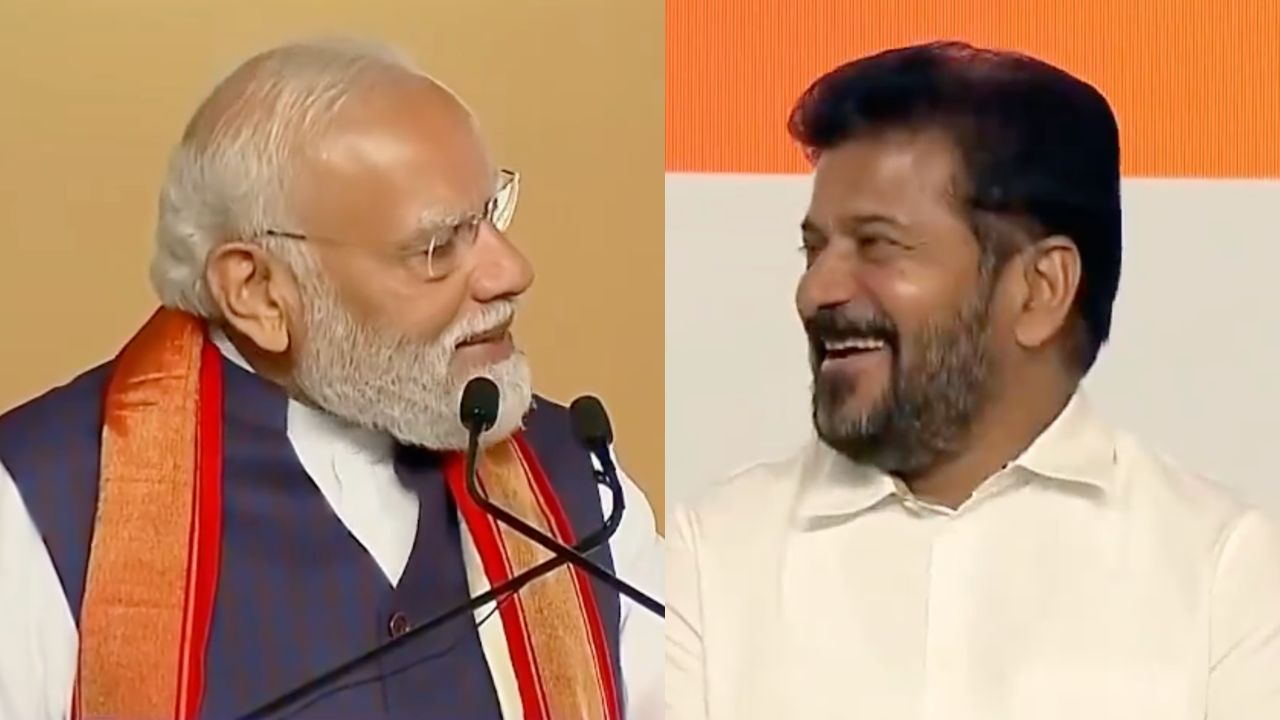
PM Modi and Telangana CM Revanth Reddy

Synopsis: Two and a half years in, Telangana’s Congress government faces rural discontent over faltering power reliability, delayed farm procurement, and sluggish irrigation progress. Welfare schemes continue, but execution gaps versus BRS-era benchmarks fuel anti-incumbency. Central apathy on MSP and grain lifting compounds burdens, leaving the state overstretched. Without urgent reforms and stronger advocacy, its 2023 mandate risks erosion.
Two and a half years into its tenure, the Congress government in Telangana is confronting mounting rural anger over its inability to sustain BRS-era benchmarks in power supply, timely farm procurement, and irrigation, even as it rightly highlights the Centre’s inadequate support on MSP enforcement and grain lifting that exacerbates the state’s burdens in a high-production southern agrarian economy.
The 2023 mandate promised six guarantees and farmer-centric governance, yet persistent gaps in execution have allowed opposition narratives to gain traction.
While the state government has pushed welfare measures, core sectors show qualitative decline, compounded by central apathy that leaves Telangana shouldering disproportionate costs for national food security.
Power reliability remains a glaring shortfall. BRS delivered near-24×7 free agriculture supply that boosted productivity. Under Congress, peak seasons trigger unscheduled outages damaging pumps and crops, despite promises of continuity.
Inherited debts and surging demand offer partial cover, but failure to rapidly augment generation and transmission capacity points to planning lapses.
Also Read: BJP slams Telangana government over ‘non-serious’ approach to Godavari basin projects
Free power endures as a political necessity, yet without matching infrastructure, it strains discoms and leaves farmers exposed — a regression that no fiscal inheritance fully excuses.
Farm procurement presents an even sharper failure, intertwined with Centre shortcomings. Official claims of procuring over 50 lakh metric tonnes in recent Rabi seasons with substantial MSP payments clash with ground reports of delays, gunny bag shortages, slow lifting amid unseasonal rains, and distress sales at below-MSP prices.
Farmers protest waiting weeks, incurring extra costs for transport and labour while produce risks moisture damage. Loan waivers provided relief, but logistical execution has weakened compared to BRS focus.
Here, the Centre’s role invites valid criticism. CM Revanth Reddy has repeatedly urged the Union government to lift additional procured quantities — such as 18 lakh metric tonnes beyond approved limits — via the Food Corporation of India, warning that limited central off-take forces states to bear heavy borrowing and interest burdens.
The Centre announces MSP hikes but procures less than 30 percent of production in many cases, leaving surplus states like Telangana to manage excess grain, storage, and payments without commensurate support.
Requests for expanded coverage of crops like maize and jowar under price support schemes, or removal of purchase caps, have met slow responses, undermining MSP’s effectiveness and pushing farmers toward middlemen.
In South India’s rice bowl regions, this central stinginess on procurement and logistics amplifies state-level delays, turning record harvests into rural crises rather than opportunities.
Irrigation momentum has similarly slackened. BRS-era lift projects expanded ayacuts despite controversies. Congress inherited midway initiatives like Palamuru-Rangareddy but delivers only incremental progress amid interstate disputes and funding constraints.
Also Read: RSS distances itself from BJP affairs in Telangana after POCSO case against Bandi Sai Bageerath
Rural areas await accelerated command area development, sensing a shift from agrarian priorities toward urban and welfare consolidation. While central policies on river sharing influence outcomes, the state’s slower pace risks drought vulnerability in a water-stressed South.
Narrative control exposes another weakness.
Congress showcases job recruitments, women’s free bus travel, and urban wins, yet these resonate poorly against village-level power cuts, rotting stocks, and incomplete canals.
Blame on BRS legacies is frequent, but the government also correctly flags central procurement shortfalls — a point that deserves louder amplification in southern forums to pressure for fairer burden-sharing. In competitive South Indian politics, reactive messaging cedes ground.
Constraints are real: massive inherited debt curbs flexibility, growth spikes demand, and national MSP frameworks influence local outcomes. Some volumes and welfare outlays reflect gains. Yet qualitative delivery in power, procurement logistics, and irrigation lags BRS standards, breeding anti-incumbency.
The Centre’s limited lifting and narrow procurement exacerbate this, turning Telangana into a de facto buffer for national shortages without adequate reimbursement or flexibility.
For Congress, eyeing southern relevance beyond Telangana, this is a pivotal test. Urgent steps — depoliticized administration, capital investment prioritisation, streamlined procurement, and sustained advocacy for central accountability on MSP and grain off-take — are essential.
Without them, the 2023 mandate erodes under combined state execution gaps and Union neglect.
Rural South India, pragmatic and production-focused, demands results over rhetoric; every outage, delayed centre, and unlifted tonne risks reshaping 2028 verdicts across the region.
Telangana’s experiment, promising revival, now teeters on unfulfilled potential unless both state agility and central cooperation improve.



