

Published Jan 19, 2026 | 11:42 AM ⚊ Updated Jan 19, 2026 | 11:42 AM

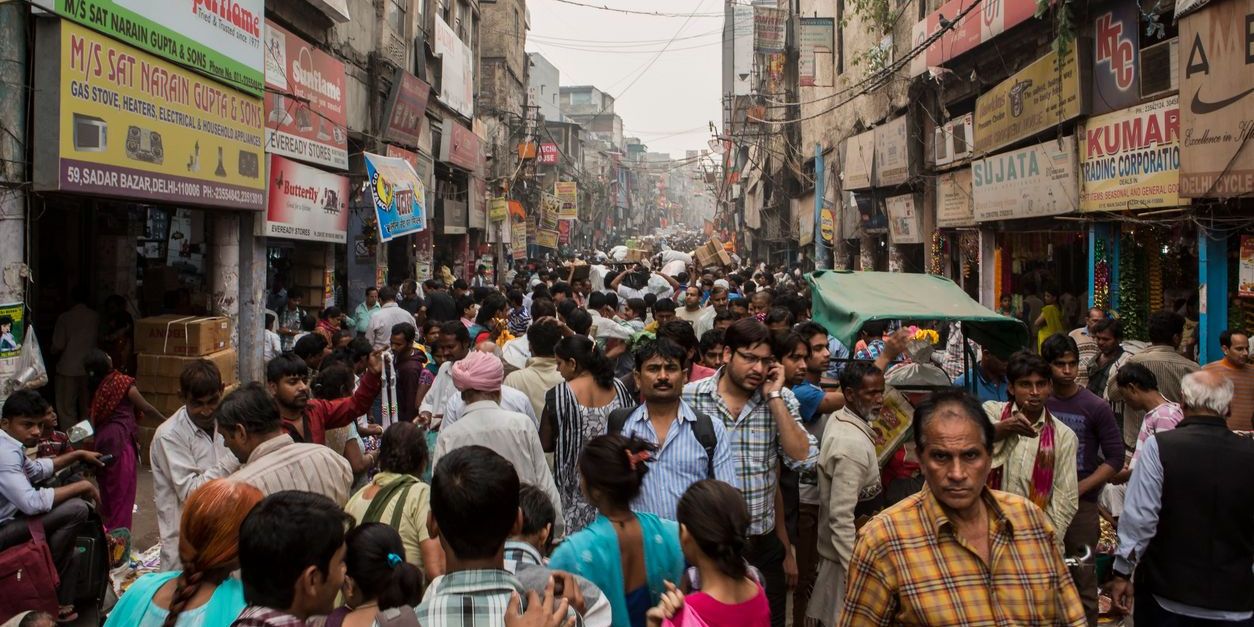
Indian people. (iStock)
Synopsis: If an all-India caste census is conducted, the figures will be deeply unsettling for the upper castes. It will expose, in naked numbers, a truth long hidden: those who have monopolised power, wealth and institutions are only a tiny minority. What then remains open to this minority is a simple choice: Either to return peacefully – the positions they have occupied without mandate, or to brace themselves for the crushing gravity of a true majority finally made visible.
Caste survives centuries not by coercion alone, but through the numerical erasure of the lower caste majority. What is called ‘Hindu’ society perfected a form of domination in which the oppressed were omnipresent as labour and pollution, and yet their numerical status was kept hidden. They cleaned, carried, tiled and served, but were never allowed to appear as the majority that they are.
BR Ambedkar understood this fact with devastating clarity. He insisted that caste is not simply a division of labour, but a division of labourers, arranged in a hierarchy of “graded inequality.” (1)
Each caste is taught to look down upon another, ensuring that no collective numerical anti-caste consciousness can emerge. He writes, “caste is not a physical object like a wall of bricks or a line of barbed wire that prevents the Hindus from co-mingling. Caste is a notion, a state of mind”. (2) That “state of mind” depends on the absence of counting. To count is to compare. To compare is to question. To question is to revolt. The caste order functioned for centuries as what we may call a numerically illiterate culture, refusing to apply numbers to human beings.
James C Scott’s concept of legibility provides a powerful lens. In his book Seeing like a State (1998), Scott argues that modern states govern by population made legible through maps, censuses, surveys and statistics.3 While Scott focuses on state power, the insight applies equally to anti-egalitarian societies that fear legibility.
Caste society is precisely a system that resists legibility from below. Upper castes fear the system of knowledge that reveals the demographic truth. A caste census threatens to make visible what Brahminical metaphysics desperately hides: that those declared impure, inferior, or servile are numerically dominant.
The number is one of the greatest egalitarian inventions in human history. It counts gods and beggars alike, saints and thieves, stones and rags, from the sanctum to the gutter. Number kneels before no deity, cites no scripture, worships no myth. It recognises neither purity nor pollution, neither birth nor blessing. It counts without reverence, without mercy.
Michael Foucault observed that the counting act is subversive. He showed that modern power shifted from sovereignty (the rule over territory) to biopolitics (the management of life itself). A population becomes a political subject only when it is constituted statistically. “Population appears as a datum, as a field of intervention, and as an objective of governmental techniques.” (4)
The invention of number as a ‘technology of the intellect’ marked a decisive rupture in human history. As Ian Hacking argues, modern numerical reasoning does not merely describe the world but actively creates new forms of visibility. It did not simply reveal pre-existing social facts but helped constitute new kinds of social regularities – categories and patterns that only make sense through counting. “Counting”, Hacking writes, “is not about discovering what is already there, but about making new kinds of people.” (5)
This insight is crucial for understanding why the caste census provokes panic among the upper castes. Counting is never neutral; it transforms absence into presence, shadow into figure, and myth into arithmetical fiction. Number introduces consistency. It demands proportionality. It asks: How can a minority rule a majority eternally? How can it own more than 60 percent of the wealth of a nation? That question destabilises Brahminical metaphysics more than any theological critique.
Historically, the census has played contradictory roles – both as an instrument of domination and as a tool of emancipation. They have been instruments of exclusion and discrimination – colonial census, Nazi racial statistics, apartheid population registers — but also tools of emancipatory politics.
The French Revolution’s insistence on counting citizens equally was a direct assault on feudal estates. Emmanuel Joseph Sieyes (Abbe Sieyes) famously asked:
1. “What is the Third Estate? = “Everything”
2. “What has it been till now in the political order? = “Nothing”. (6)
Sieyes was performing a numerical exposure of feudal France. Later historians calculated the percentages of Estates as follows:
1) The first Estate (Clergy) = 0.5% of the population
2) The Second Estate (Nobility) = 1-1.5% of the population
3) The Third Estate = 98% of the population
Feudal power rested on the fiction that those estates were qualitatively distinct and therefore politically incomparable. Sieyes shattered this fiction by silently inserting a number into the argument. Once the Third Estate is recognised as Everything, the other two Estates appear for what they are, statistical anomalies ruling a demographic majority. This is why Sieyes’s statement was devastating. It converted political theology into arithmetic. By the time of the storming of the Bastille, the question “what is the third estate” had travelled beyond print and literacy, echoing even among the illiterate Parisians.
Before the Revolution, authority was justified by tradition, God and estate. Inequality was defended as natural and divine. After the Revolution, power had to answer a brutal question: How can 2 percent rule 98 percent? That question cannot be answered theologically. It demands either representation proportional to the number, or Revolution. Sieyes didn’t need to say “98%”. The number was already structurally present in the phrase Everything. As historian Francois Furet later observed, “The Revolution began not with bloodshed but with a redefinition of political language, where ‘nation’ came to mean the counted many, rather than the privileged few.” (7)
The caste census performs the same operation. Just as Feudal France survived by refusing numerical representation, caste survives by refusing demographic truth. Upper castes like the clergy and nobility rule not because they are many, but because the many are not counted. Sieyes’s statement did not call for redistribution first. It demanded recognition through numbers. Likewise, the caste census is devastating because it makes possible a modern equivalent of Sieyes’s question.
What are the so-called “lower-castes”?: Everything.
What have the lower castes been in India’s political power? Nothing. What do they want to be? Counted. Once that counting happens, the moral, political and metaphysical foundations of caste collapse.
The caste census repeats Sieyes’s move with far greater consequences. It converts varna into population, destiny into data, myth into measurement. Once counted, the so-called lower-castes appear not as fragments, but as Everything. Number does not argue, it annihilates. Before it, gods fall silent, scriptures shrink, and domination loses even the dignity of explanation.
WEB Du Bois used statistics to expose racial injustice in America. In the Philadelphia Negro (1899), he demonstrated how data could dismantle racist myths. Du Bois understood that oppression thrives on anecdote and stereotype, while liberation requires data. (8)
Once counted, caste ceases to be a ‘tradition’ and appears as what it truly is: organised demographic theft in political representation. The terror of the caste census lies not in redistribution alone, but in re-description. It changes the language through which society understands itself.
Benedict Anderson shows that modern nations are formed through shared categories such as censuses, maps and museums. These tools produce new imaginaries of belonging. (9)
The caste census produces new imagination:
Not varna, but population
Not purity, but proportion
Not dharma, but demographic justice.
Caste census interrupts the “banality of dharma” by introducing accountability through numbers. The historical opposition to the caste census by upper castes reveals an instinctive understanding: once counted, domination loses its metaphysical camouflage.
The caste census marks the moment when the oppressed castes cease to exist as metaphors and enter into history as the real majority. Ambedkar warned that political democracy without social democracy is a contradiction. The caste census is a necessary step toward resolving that contradiction. Ambedkar writes – “Democracy is not merely a form of government. It is primarily a mode of associated living, of conjoined communicated experience.” (10)
Counting is association
Counting is recognition
Counting is justice
With a caste census, the upper castes dissolve into political insignificance. The lower castes rise into visibility as the real body of the nation. And once they appear, India can no longer remain what it has been. This is the apocalypse the upper castes fear.
Empirical Basis: Bihar caste survey (2022)
The Bihar caste census (2022) provides caste population percentages as follows:
1. OBCs = 27.12%
2. Extremely Backward Classes (EBCs) = 36.01%
3. OBCS + EBCs = 63.13%
4. SCs = 19.65%
5. STs = 1.68%
6. General (Upper castes) = 15.52%
(Bihar caste – based Survey Report. Govt. of Bihar) (censusofindia.net)
Even if one doubts precise enumeration, the relative proportions overwhelmingly show that upper castes are a small minority. The combined OBC + EBC + SC + ST share amounts to 84.49 percent of Bihar’s total population. It shows that combined lower caste groups are a large majority.
Karnataka’s caste census official report has not yet been published in full, but political and media leaks point to similarly overwhelming majorities of lower castes.
1. OBCs = 70%
2. SCs = 18.2%
3. STs = 7.1%
4. Muslims = 12.58%
5. Lingayats = 11 %
6. Vokkaligas = 10.29%
7. General Category (Upper Castes) = 4.9%
(TNPSC Thervu Peltagam)
Even in Karnataka, a state with a significantly different social composition from Bihar, OBCs alone constitute a clear democratic majority. Karnataka caste census report 2025, recommended a hike in OBC reservation from 32 percent to 51 percent and Muslim reservation from the current four percent to eight percent, pushing the total state reservation to 85%, a move exceeding the Supreme Court’s 50 percent cap, provoking heated judicial and political debate.
Following Bihar and Karnataka, an all-India caste census would significantly strengthen the demand to raise the national reservation cap from 47.5 percent to around 85 percent, grounding that demand in demonstrable demographic evidence rather than political assertion.
Ian Hacking discusses the discovery of the Law of Large Numbers. (11)
“The systematic enumeration of social phenomena in the 19th century — the so-called “avalanche of numbers”, made statistical regularities visible and gave rise to a new style of law-like patterns that cannot be seen without large-scale counting”.
Hacking shows that when society adopts statistical reasoning, “number makes new regularities visible and actionable”, transforming invisible social order into legible populations. This is the epistemological force that makes a caste census explosive rather than an administrative exercise.
The name “Law of Large Numbers” was coined by French Mathematician Simeon Denis Poisson. (12)
The Law shows that the average of the results obtained from a large number of independent random samples converges to the true value. As observations increase, proportions stabilise, randomness dissolves into regularity, and truth appears as a ratio. What seems dispersed, chaotic, or insignificant at the level of the individual reveals itself as scale, as structure. Every regime of inequality depends on a single illusion: that many do not add up. Caste has reigned for 3,000 years, not because it was functional, but because it was never counted. It hid in ritual fog, metaphysical gradations and inherited authority. Against this metaphysical order stands a simple mathematical truth – The Law of Large Numbers.
Applied to society, this Law carries a volcanic force. When populations are counted fully and correctly, power that contradicts proportions becomes mathematically indefensible. Caste census performs the same function. Upper castes in India have long functioned as a political anomaly: a demographic minority exercising total domination. Their authority rests on invisibility – on the refusal to translate caste from sacred hierarchy into numerical proportion. Large numbers ensure that once caste data is gathered at a sufficient scale, the illusion cannot survive. The numbers will converge. Ratios will stabilise. And domination will be revealed as a statistical atrocity.
In this convergence, the so-called “lower castes” long described as muted fragments, pollutants, scattered masses, undergo a transformation identical to the Third Estate’s awakening. At small scales, they were treated as nothing. At the national scale, they appear as the overpowering majority. Not symbolically, but quantitatively. Not rhetorically, but mathematically. This is the reason for Divya Dwivedi’s declaration in 2022 that the Indian context bears similarity to that of revolutionary France,
India will be unable to emerge from this stasis without the equivalent of a French-style Revolution that transforms the social order and can disrupt the heritable form of power and opportunity that is caste. That is to say, it will be a social revolution, rather than another transfer of power, that alone will destroy the caste order. (13)
The power of the upper castes converges downward toward their numerical share. To become “nothing” means the loss of undue surplus. To cease being Everything while being few.
Conversely, the many become everything not by fiction but by aggregation. They become the nation in the only sense that modernity recognises, as a counted majority. Representation, Reservation, Redistribution, and institutional restructuring follow not as ideology but as logical consequences. Far more lethal to entrenched elites is the demand for Reparation — for accumulated thefts of power, land, wealth, rights, jobs and life.
Thus, the caste census is a revolutionary instrument in the strictest sense. It replaces metaphysical hierarchy with numerical truth. Like 1789, it announces that the nation is not those who ruled it in its name, but those who constitute it in fact. When the numbers appear, the question ‘What is the Nation, called India’ will finally receive an answer: the lower-caste majority.
It is the true sons and daughters of this land who were pushed into what Frantz Fanon called the zone of non-being – lives counted only as labour, bodies marked as polluting, voices denied the grammar of selfhood. (14)
They were made invisible not because they were few, but because they were many. This invisibility was enforced; their absence was staged.
The caste census gathers what was scattered, aggregates what was fragmented and makes visible what ritual worked for centuries to dissolve into dust. In that moment, India ceases to be Brahminical inheritance and becomes a real Republic. India, then, will be the flowering of the true Being of Everything; a nation no longer narrated by myths but constituted by People. A democracy aligned with its demography.
The caste census is not a survey; it is the revelation. It does not ask what you believe, whom you worship or which myth you inherit – it asks only how many of you there are. And once that question is answered, the ancient spell breaks. The few who ruled as the many are exposed as few; the many who were erased rise as the fact of the nation itself. At that moment, caste loses its metaphysics and becomes a statistical atrocity. Law follows number as night follows day. Representation ceases to be charity and becomes arithmetic. And Reparation – long postponed – emerges not as revenge but as historical bookkeeping. This is why the upper castes fear the caste census with apocalyptic terror. Because once counted, the lower castes are no longer fate, no longer karma, no longer silence – they are power with proof. Caste was born in myth; it will die in numbers. And when it dies, it will not be mourned; it will be audited.
Caste functions as what Murray Forsyth calls a “System of ideas” – a closed ideological universe in which hierarchy is naturalised and rendered immune to criticism. (15)
Enumeration represents a decisive refusal to engage this on its own terms. By forcing caste to appear numerically, rather than cosmologically, the caste census shatters ideological closure and transforms inherited domination into a political question of ratio, proportion, power, reservation and representation.
If an all-India caste census is conducted, the figures will be deeply unsettling for the upper castes. It will expose, in naked numbers, a truth long hidden: those who have monopolised power, wealth, and institutions are only a tiny minority. What then remains open to this minority is a simple choice: Either to return peacefully to the positions they have occupied without mandate or to brace themselves for the crushing gravity of a true majority finally made visible.
For once, the lower castes know their own numerical altitude – rising like a sky above history – sleep will no longer be possible. They will awaken, stand upright in their own count, and reclaim what was stolen from them.
References:
1. BR Ambedkar, Annihilation of Caste, Valerine Rodrigues,(ed.) The Essential Writings of B.R. Ambedkar, 2010, New Delhi, Oxford University Press. p. 263-264.
2. ibid, pp. 263-64
3. James C. Scott, Seeing like a State, Yale Uni. Press, New Haven and London, 1998, P. 15-19.
4. Michael Foucault, Security, Territory, Population. Lectures at the College de France (1977-1978) (Palgrave MacMillan; 2009, pp.55-68)
5. Ian Hacking, The Taming of Chance, Cambridge University Press, 1990. Pp. 14-16
6. William H. Sewell, Jr., A Rhetoric of Burgeois Revolution: The Abbe Sieyes and What is the Third Estate (Duke University Press, Durham and London 1994) pp. 41-42.
7. Francois Furet, Interpreting the French Revolution, (Cambridge University Press, London, New York, 1981, p.2)
8. W.E.B. Du Bois, The Philadelphia Negro: A Social Study, University of Pennsylvania Press, 1995
9. Benedict Anderson, Imagined Communities, Verso, London and New York, 2006. pp. 163-181
10. B.R. Ambedkar, ibid, p. 276.
11. Ian Hacking, The Taming of Chance, pp. 14-16
12. Simeon Denis Poisson, Researches on the Probability of Judgements in Criminal and Civil Matters, 1837, Paris.
13. See Divya Dwivedi and Shaj Mohan, Indian Philosophy, Indian Revolution: On Caste and Politics, Hurst UK, Oxford University Press USA, 2024.
14. Frantz Fanon. Black Skin, White Masks, Grove Press Inc., New York, 1968, p.8
15. Murray Forsyth, “The System of Ideas”, Political Studies, Vol. 16, No. 1, 1968, pp. 1-20.
(Edited by Majnu Babu).


