


Published Mar 22, 2026 | 2:00 PM ⚊ Updated Mar 22, 2026 | 2:00 PM

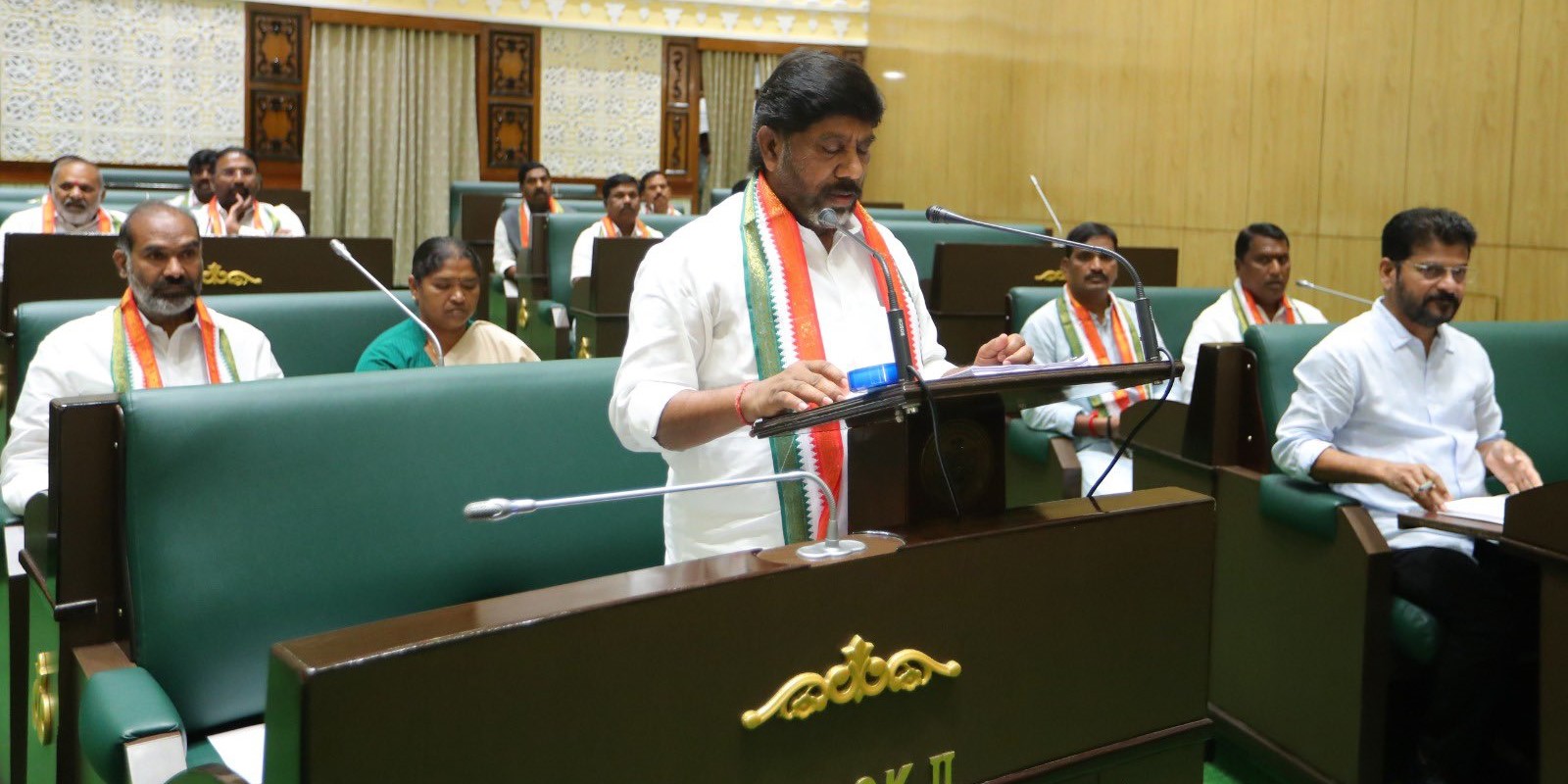
Finance Minister Mallu Bhatti Vikramarka presenting the Telangana Budget. (X)
Synopsis: The Telangana Budget 2026–27 stands out as a balanced, people-centric policy framework that effectively integrates welfare with long-term development. By prioritising education, healthcare, digital empowerment, and social security, the government has laid a strong foundation for inclusive growth.
The Telangana Budget 2026–27 reflects a strong, forward-looking vision rooted in inclusive growth, social justice, and human capital development. With a calibrated balance between welfare and development, the Budget aligns with the larger vision of building an equitable and progressive society—often described as “Indiramma Rajyam.”
It is more than a statement of accounts; it’s a roadmap to improve the quality of life for all sections of society while sustaining economic momentum.
With a total outlay of ₹3,24,234 crore, an increase over the previous year, the Budget underscores the state’s expanding fiscal capacity and development ambition.
Telangana’s robust economic performance—with a growth rate of 10.7%, higher than the national average, and a per capita income growth of 10.2%—provides a strong foundation for these initiatives. The government’s long-term vision to transform the state into a $1 trillion economy by 2034 and $3 trillion by 2047 further highlights its strategic outlook.
At the heart of this Budget lies a clear emphasis on education and healthcare as pillars of sustainable development. The allocation of ₹26,674 crore to education—over 8% of the total budget—marks a significant enhancement compared to previous years. This reflects a conscious shift towards investing in human capital, recognising that long-term growth is driven by knowledge, skills, and innovation.
The healthcare sector, with an allocation of ₹13,679 crore, complements this vision by strengthening public health infrastructure and expanding access to quality care. Together, these sectors form the backbone of a development model that prioritises people over mere statistics.
The Budget introduces a wide range of initiatives across all levels of education, from pre-primary to higher education. The expansion of pre-primary education from 1,362 pilot schools to nearly 2,500 institutions is a crucial step towards building strong learning foundations. Recognising that early childhood education shapes future outcomes, this initiative is expected to have a lasting impact.
Special focus on girls’ education is evident through the upgradation of Kasturba Gandhi Balika Vidyalayas into Young India Institutes of Excellence, with several institutions being extended to the intermediate level. This move not only enhances access but also promotes continuity in education for young girls.
The introduction of a breakfast programme for students—from pre-primary to intermediate—demonstrates a thoughtful integration of nutrition with education. By providing milk and ragi malt, the government aims to improve both attendance and learning outcomes. The extension of midday meals to intermediate students further strengthens this approach, ensuring that no child is deprived of education due to hunger. Inclusive education has also been prioritised, with provisions such as motorised transport for differently-abled students ensuring equal access to opportunities.
The establishment of Young India Integrated Residential Schools across constituencies represents a transformative step towards social equity. By bringing together students from diverse social backgrounds—SC, ST, BC, and minority communities—these institutions foster inclusivity and mutual understanding while encouraging academic excellence. With significant investments in infrastructure, each school is envisioned as a centre of excellence.
The allocation for modernising kitchens and improving nutrition in residential schools further reflects the government’s holistic approach to student welfare. The Budget recognises that investments in education extend beyond schooling into higher education and skill development. Substantial allocations to institutions such as Osmania University (₹1,000 crore) and Veeranari Chakali Ilamma Women’s University (₹400 crore) aim to strengthen academic infrastructure and research capabilities.
The integration of the Young India Skill University into the education framework is a strategic move to bridge the gap between academia and industry. By aligning curricula with industry needs and expanding Advanced Technology Centres, the government is creating pathways for employability and innovation.
The provision of stipends to trainees further supports skill acquisition and workforce readiness. A notable strength of Telangana’s education ecosystem has been its early adoption of digital platforms like T-SAT. As education increasingly moves towards hybrid and technology-driven models, continued investment in digital education infrastructure becomes crucial.
Strengthening T-SAT as a comprehensive learning platform can significantly expand access to quality education, particularly for students in rural and underserved areas. By offering live classes, competitive exam coaching, and skill-based training, T-SAT can complement classroom learning and enhance outcomes.
The government’s focus on digital classrooms, improved internet connectivity in government schools, and the development of regional language content will play a vital role in bridging the digital divide. These efforts position Telangana’s youth to compete effectively in a rapidly evolving global economy.
The healthcare initiatives outlined in the Budget reflect a strong commitment to accessibility, affordability, and technological integration. The introduction of digital health cards for citizens marks a step towards modern healthcare management, ensuring better tracking and delivery of services. The expansion of medical infrastructure, including the establishment of new medical colleges, will significantly enhance healthcare capacity across the state.
Improved hospital facilities and increased bed availability further strengthen the public health system. The cashless healthcare scheme for employees, teachers, and pensioners, covering a wide range of treatments, provides a crucial safety net. Additionally, the Indiramma Family Life Insurance Scheme, offering ₹5 lakh coverage to over 1.15 crore families, represents a landmark initiative in social security.
Beyond education and healthcare, the Budget reflects a strong commitment to welfare and inclusive development. Initiatives in agriculture, women’s empowerment, housing, and food security demonstrate a comprehensive governance approach.
Support to farmers through loan waivers and schemes like Rythu Bharosa, financial relief measures such as subsidised LPG and free electricity, and large-scale housing programmes under Indiramma Housing all contribute to improving livelihoods.
Women’s empowerment stands out as a key priority, with schemes aimed at enhancing mobility, financial independence, and entrepreneurship. These initiatives not only uplift individuals but also strengthen the broader socio-economic fabric of the state.
The Telangana Budget 2026–27 stands out as a balanced and people-centric policy framework that effectively combines welfare with long-term development. By prioritising education, healthcare, digital empowerment, and social security, the government has laid a strong foundation for inclusive growth.
With a clear vision, robust economic backing, and a focus on implementation, the Budget has the potential to transform lives and create new opportunities for the people of Telangana. As these initiatives take shape, they reinforce the state’s position as a model of progressive and inclusive governance in India.
(Views are personal. Edited by Majnu Babu).


