

Published Mar 04, 2026 | 2:33 PM ⚊ Updated Mar 04, 2026 | 2:34 PM

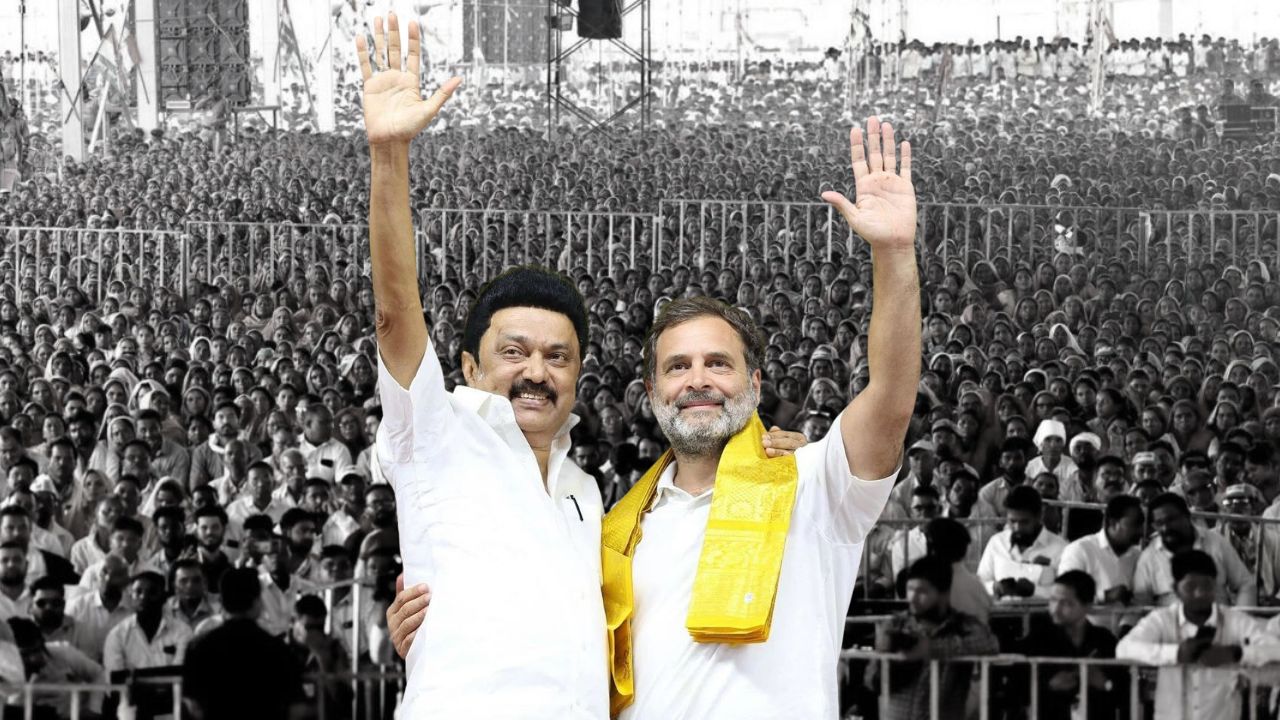
MK Stalin and Rahul Gandhi.
Synopsis: Tamil Nadu Chief Minister MK Stalin and senior Congress leader Rahul Gandhi have shared a ‘brotherly’ relationship between them, often understood from their social media posts and public addresses. However, recent developments, particularly the issue of seat-sharing for the upcoming Assembly elections in Tamil Nadu, show that a crack has emerged.
Fires set ablaze in Tamil Nadu are billowing with smoke in New Delhi.
“Disrespected” by ally Dravida Munnetra Kazhagam (DMK), a section of Congress leaders are seething at the prospects of heading into elections in Tamil Nadu, once again under DMK’s terms and conditions.
While it reads like the same story every election, this time around, one component stands out — a breakdown of brotherhood between Tamil Nadu Chief Minister and DMK chief MK Stalin and Leader of the Opposition in the Lok Sabha Rahul Gandhi.
For years now, the two have called each other “brother” and have come together in a show of unity on several public platforms. Just to refresh one’s memory, Rahul Gandhi’s popular Bharat Jodo Yatra was flagged off by his “brother”, MK Stalin, from Kanniyakumari in Tamil Nadu.
Suddenly, the brotherly love seems to have been discarded. Compare Rahul Gandhi’s birthday wishes to Stalin and the latter’s response this year with last year, and a story unfolds clearly.
Thank you for your warm wishes. https://t.co/WHVBWKN0I2
— M.K.Stalin – தமிழ்நாட்டை தலைகுனிய விடமாட்டேன் (@mkstalin) March 1, 2026
Thank you, dear brother, for your warm wishes and kind words over the phone. https://t.co/qQmsKZBsoC
— M.K.Stalin – தமிழ்நாட்டை தலைகுனிய விடமாட்டேன் (@mkstalin) March 1, 2025
It is no secret that DMK, especially Stalin, has been deeply disappointed with Congress leadership for not reining in party members who have been making public statements against the Dravidian party.
Those making the comments, taking to social media to criticise policies, are not random nobodies. From Praveen Chakravarthy to Manickam Tagore, the names are considered the “close circle” of Rahul Gandhi.
“If they did speak out of turn, the party should have taken action. The fact that they faced no action shows they were emboldened and their views were endorsed by Congress’s top leadership,” a DMK office bearer told South First, adding that there are bound to be consequences.
Ironically, until about six months ago, DMK was unperturbed by statements of Tamil Nadu Congress leaders. “The Gandhi family has a personal relationship with MK Stalin. They value these personal ties, and what anyone else says outside really doesn’t matter,” a DMK spokesperson had told this reporter.
Months down the line, the DMK no longer sees Rahul Gandhi as someone with “close, personal ties” to Stalin. That link is now limited to Sonia Gandhi. It was this link that brought P Chidambaram and Stalin together on Tuesday, 3 March, to resolve the roadblock that had hit the seat-sharing talks.
Sources in the Congress pointed to several instances when the party felt “disrespected” by DMK. The most recent instance was when Congress General Secretary KC Venugopal met Stalin on 22 February 2026. “Someone as senior as KC Venugopal, too, was treated curtly with disdain. It was unbecoming,” a source close to Rahul Gandhi told South First.
The fact that Chidambaram had to step in a week after Venugopal met Stalin was telling of how the conversation proceeded.
The overwhelming feedback on how DMK leaders treat, or rather mistreat, Congress leadership and cadres gave the party a reality check. “We have been allies with no stake in government. We can neither play the role of opposition. DMK has no qualms when the VCK (Viduthalai Chiruthaigal Katchi) or Left parties protest, but raises hell when Congress picks up issues. How do we grow in the state?” asked a worried All India Congress Committee (AICC) office bearer from Tamil Nadu.
Sources close to Rahul Gandhi insist that while there is no personal grouse or exchange of words, Stalin and his party’s alleged “disrespectful” approach to Congress has compelled Rahul Gandhi to take a firm stand.
Perhaps as a message of solidarity with his party leaders who demand a fair share of representation, and making it clear to the DMK that its ways are unacceptable. DMK’s alleged reluctance to help Congress wholeheartedly in neighbouring poll-bound Puducherry has also fanned the flames.
The source pointed out how the concerns are not just about an unwillingness to share power. “The DMK loses nothing if it gives Congress two Cabinet berths. Yet it doesn’t. In losing elections, they part with over 40+ seats, out of which most are unwinnable, only to blame us later. In a winning election, like 2021, they refused to give us more than 25 seats. Worse, now they refuse to allot more seats or even swap seats to counter anti-incumbency. Even if they offer 28 seats, they will force unwinnable seats; the cycle repeats,” an AICC office bearer noted.
Rahul Gandhi’s inner circle is seeing a Bihar pattern repeat in Tamil Nadu. A regional ally that doesn’t want to allot winnable seats, eventually causing severe disillusionment of cadres, poor morale of leaders and disastrous electoral outcomes. On the ground, the incompatibility of Congress and DMK cadres stems from a clear assertion of who is “in power” and who isn’t.
As for the DMK, its irritation stems from Congress refusing to yield at the state level when it wants DMK to back it at the national level.
For Congress, this may be just one more state election, but for DMK — a regional party — it is a question of its survival. Brotherhood has been sacrificed at the altar of survival as Rahul Gandhi and Stalin place their respective parties above brotherly ties.
(Edited by Muhammed Fazil.)


