

Published Jun 04, 2026 | 7:00 AM ⚊ Updated Jun 04, 2026 | 7:00 AM

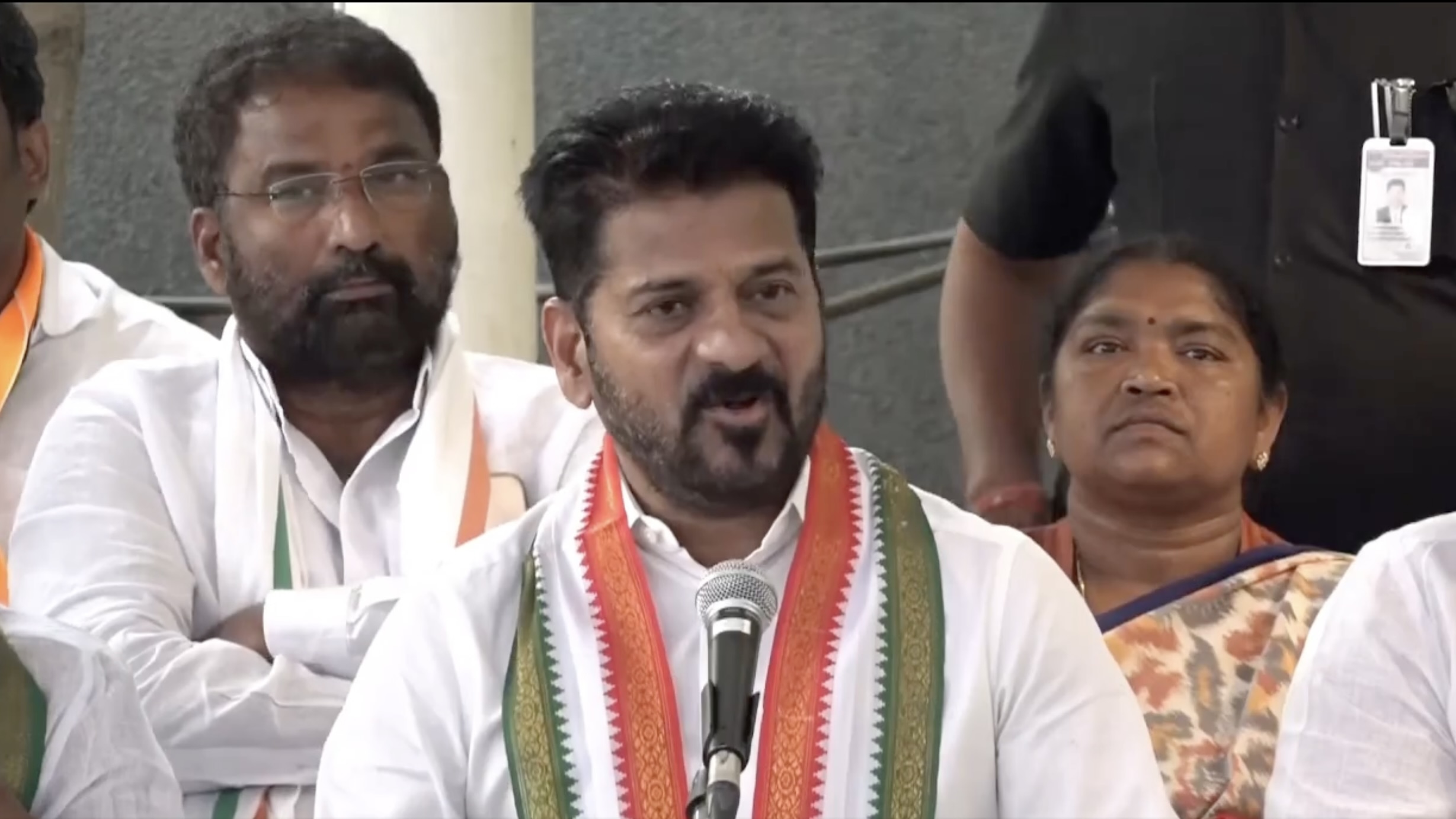
Telangana Chief Minister A Revanth Reddy.

Synopsis: If the first decade of Telangana was largely about building a new State, the current phase may well be about defining the character of its future growth.
Every election promises change. Few governments, however, get the opportunity to redefine the very framework through which development is understood. In a country where welfare and economic growth are often portrayed as competing priorities, the real challenge before any administration is to demonstrate that the two can reinforce each other. Over the past two and a half years, Telangana has emerged as an important testing ground for this idea.
When the Congress government assumed office in Telangana in December 2023, it inherited a State that had already established itself as a significant economic force, driven by rapid urbanisation, technological growth and expanding investment. Yet beneath this success story lay persistent concerns surrounding employment, rural distress, social inclusion and the accessibility of governance. The challenge before the new administration was therefore not simply to maintain growth, but to ensure that growth became more inclusive, participatory and widely shared.
Two and a half years later, opinions may differ on the pace and effectiveness of implementation. However, one development is difficult to ignore: the State’s policy discourse has begun to shift. Increasingly, the focus is not on welfare versus development, but on how welfare can become a foundation for development itself. It is this transition that offers perhaps the most meaningful lens through which to assess Telangana’s governance journey so far.
Also Read: Pawan Kalyan would do well to bother about Andhra. He’s a non-entity in Telangana
The most visible expression of this approach has been the government’s commitment to its welfare agenda.
Programmes such as free bus travel for women, subsidised LPG cylinders, free electricity for eligible households and expanded social security measures have touched millions of lives. Free bus travel alone is estimated to benefit nearly 34 lakh women every day, while the ₹500 LPG cylinder scheme has extended support to more than 42 lakh households. The free electricity initiative has eased the financial burden on approximately 53 lakh families across the State.
While these initiatives are often evaluated in terms of fiscal cost, their broader economic implications deserve equal attention. Welfare, when designed effectively, does more than provide relief. It improves mobility, expands household purchasing power and enables greater participation in economic activity.
The free bus travel scheme for women illustrates this principle. Beyond reducing transportation expenses, it has increased access to education, employment, healthcare and entrepreneurship. For many women, particularly in rural and semi-urban Telangana, mobility is directly linked to opportunity. Greater access to public transport has therefore translated into greater economic and social participation.
Similarly, the government’s support for women’s self-help groups reflects an understanding that sustainable empowerment requires more than assistance; it requires access to credit, markets and opportunities. Over the past two and a half years, women’s self-help groups have been linked to institutional credit exceeding ₹60,000 crore, strengthening grassroots entrepreneurship and economic activity.
Agriculture, which continues to sustain a large section of Telangana’s population, has remained a central policy focus. The government’s decision to implement a farm loan waiver exceeding ₹20,600 crore, benefiting lakhs of farming families, represented one of its most significant interventions. While questions regarding fiscal sustainability have understandably been raised, the measure sought to address rural distress and restore confidence among farmers. Alongside procurement support and other agricultural initiatives, the broader objective has been to strengthen rural demand and provide stability to farming households navigating economic uncertainty.
Another notable aspect of the government’s tenure has been its emphasis on social justice and inclusion.
Efforts relating to Backward Class representation, socio-economic and caste enumeration, and policies aimed at expanding opportunities for historically underrepresented communities have brought questions of equity back into mainstream policy discussions. Whether these measures ultimately produce long-term structural outcomes will depend on implementation, but they have undeniably broadened the scope of public debate.
The administration has also sought to make governance more accessible. Initiatives such as Prajavani have attempted to create a more direct relationship between citizens and the State. Public confidence is often shaped not only by policy outcomes but also by the responsiveness of institutions. By providing platforms through which people can directly communicate their concerns, the government has sought to reinforce the principle that governance must remain accountable and accessible.
Also Read | Unfulfilled dreams in rural Telangana: Reflections from the ground
Yet Telangana’s story over the past two and a half years cannot be understood through welfare alone. The government has simultaneously pursued an ambitious agenda focused on investment, infrastructure and long-term economic growth. This reflects a recognition that welfare programmes require a strong and expanding economic base to remain sustainable.
Despite intense competition from other States, Telangana has continued to attract investment across sectors such as information technology, artificial intelligence, life sciences and advanced manufacturing. The government’s efforts to position the State as a destination for innovation and enterprise have helped sustain investor confidence. Global investment summits and outreach initiatives have projected Telangana as a preferred destination for business, while continued expansion in the IT and life sciences sectors has reinforced Hyderabad’s reputation as one of India’s most dynamic economic centres.
Hyderabad continues to occupy a central place in this vision. Projects such as the Metro Rail expansion, the Regional Ring Road, Future City and the Musi River redevelopment initiative are intended to prepare the State for its next phase of growth. These projects have naturally generated debate regarding environmental sustainability, financing models and implementation challenges. Such scrutiny is both necessary and healthy in a democracy. Nevertheless, the larger objective remains clear: creating the infrastructure required to support future economic expansion and improve urban quality of life.
Employment generation has emerged as another area where the government has sought to demonstrate intent. The recruitment of more than 67,000 candidates into government service within two and a half years has addressed concerns that had accumulated over several years. While government jobs alone cannot resolve broader employment challenges, such large-scale recruitment provides opportunities to thousands of families and reinforces public confidence in institutional processes.
The government’s investments in education, healthcare and skill development are equally significant. The expansion of medical education, strengthening of public institutions and emphasis on skill-oriented learning suggest an awareness that future economic growth will increasingly depend on the quality of human capital. States that invest in knowledge, innovation and skills today are more likely to remain competitive tomorrow.
Also Read | Telangana on the eve of Formation Day: Politics of diversion taking roots
None of this suggests that the government’s journey has been free from challenges.
Fiscal pressures remain substantial. Balancing welfare commitments with capital expenditure requires careful management and long-term planning. Opposition parties continue to question aspects of implementation, debt levels and policy priorities. Public expectations remain high, and delivery will continue to be the ultimate test of governance.
Yet governance is often best evaluated not by isolated successes or shortcomings, but by the trajectory it establishes. Viewed from that perspective, the past two and a half years indicate a noticeable shift in Telangana’s policy narrative. The government has sought to move beyond the traditional debate of welfare versus development and instead explore how welfare can support growth, how inclusion can strengthen economic participation and how governance can become more responsive to citizens.
Whether this experiment ultimately succeeds will become clear only with time. What is already evident, however, is that Telangana is attempting to shape a development model in which economic growth and social justice are not competing objectives but complementary goals. If the first decade of Telangana was largely about building a new State, the current phase may well be about defining the character of its future growth.
Two and a half years may be too short a period to draw definitive conclusions. It is, however, long enough to identify emerging trends. And one such trend is unmistakable: Telangana’s development conversation is evolving from a discussion about welfare delivery alone to a broader conversation about opportunity, participation and inclusive growth. How far that journey ultimately goes will define not only the legacy of the present government, but also the future trajectory of the State itself.
(Views are personal.)



