

Published Dec 25, 2025 | 12:45 PM ⚊ Updated Dec 26, 2025 | 10:27 AM

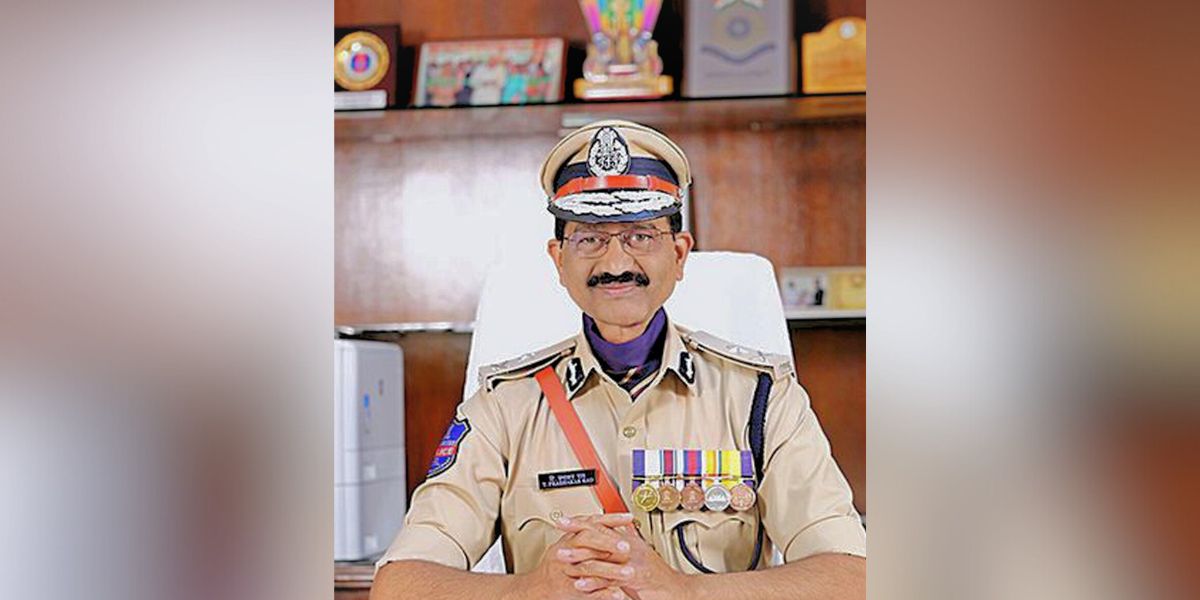
T Prabhakar Rao (File pic).
Synopsis: The crucial question is not merely about the officers or the political leaders, but about how the SIB acquired such excessive powers in the first place. The SIB began as a secret wing of the police department in the undivided state. It is so secretive that there are no available details about when exactly it was established.
The phone-tapping affair in Telangana is snowballing into a major storm.
Beginning with reports that immediately after the election results were declared, certain hard disks, servers, and CCTV footage were destroyed in the office of the Special Intelligence Bureau (SIB)—a key wing of the state police department—and that some hard disks were taken out of the premises, the matter has taken many twists and turns, culminating in news that the Special Investigation Team (SIT) is preparing to issue summons to former Chief Minister K. Chandrashekar Rao.
The incumbent government is alleging that many police officers were involved in this affair, and that they carried out these acts strictly on the instructions of the political leadership of the previous government. In that sense, the issue is being projected as one of vendetta, as a confrontation between the former ruling clique and the present ruling clique.
However, this is not a problem confined merely to a few police officers or a few political leaders. The crucial issues are how the political leadership and the government in the state have been misusing the police department for their own selfish interests; how the police machinery, having acquired excessive powers in this manner, sought to fulfil its own interests using those powers; and how, in this process, constitutionality, legality, and democracy— which ought to be the foundations of governance—have been destroyed.
These are, in fact, people’s issues, social issues. They are issues that concern everyone, issues that demand public attention and discussion.
Today, the rulers are trying to prevent the discussion from going that far, attempting instead to confine it to the conduct of a few individual police officers, or to persons who happen to be their immediate political bosses. This is not merely an issue concerning those who were subjected to phone-tapping during the previous government’s tenure, those who carried out the tapping, or those who ordered it. It is a systemic problem, a social problem, a problem of democratic governance.
In our social mode of thinking, as the idiom goes, there is a tendency either to see trees and forget the forest, or to see the forest and forget the trees. Even now, there is a tendency to view this merely as an illegality that occurred during the Telangana Rashtra Samithi’s regime.
At the same time, there is also a tendency to say that such practices are inherent to the police system anyway, and therefore the first Telangana government should not be singled out. One need not ignore individual responsibility in the name of systemic flaws; nor should one focus only on individual responsibility and push aside the systemic roots.
Without bringing those broad, deep, and systemic issues into the discussion, the Revanth Reddy government appears keen on immediately identifying the rights and wrongs of a few individuals and punishing them. But unless the basic questions are asked and the system itself is changed, that very system will continue in the same manner with the same illegalities. These SIB excesses and abuses of power did not begin afresh in 2014.
Unless one takes into account the arbitrary powers that the police system as a whole—and particularly units like the SIB—have enjoyed since 1969 in the undivided state and continued later, and the constitutional violations and illegal activities that accompanied them, no amount of tough action taken now in a tokenistic manner will serve any purpose. In fact, if the police system continues unchanged, carrying out the very same acts for the needs of the present rulers for which the investigation is now being conducted, then this entire probe is meaningless.
In this phone-tapping affair, there is certainly individual responsibility as well. Based on the investigation-related reports that have emerged so far (and one must remain conscious that even these are being selectively and partially leaked by the present government, driven by vendetta against the previous government and only to the extent that suits its needs), an IPS officer named T Prabhakar Rao was appointed as the head of the SIB by granting him an extension even after his retirement. With officers of his own choosing, he constituted a Special Operations Team and placed many individuals across the state under continuous surveillance.
Among those subjected to surveillance were leaders of political parties opposed to the ruling BRS, judges, businesspersons, journalists, leaders of civil society and mass organisations, and even several leaders within the ruling party itself. In particular, extensive surveillance was carried out on their phone conversations.
It is being said that the number of individuals and phone numbers subjected to such surveillance could range from a thousand to four or five thousand.
That such surveillance was taking place surfaced sporadically many times, even during those ten years. There were reports that several ministers and MLAs too suspected their phones were being tapped, and that they were speaking from the phones of their drivers or family members.
After the new government came to power, reports emerged that attempts were made to destroy evidence related to this illegal phone-tapping. It was revealed that servers, hard disks, and CCTV footage were burnt or destroyed, and those who took part in those acts disclosed the details.
As a result, an FIR was registered at the Panjagutta Police Station in March 2024. SIB chief Prabhakar Rao was named as the prime accused. Some officers were suspended. Within a few days, the suspended police officers were also arrested in this case. Based on what are said to be their confession statements, more details came to light.
While the investigation was underway, Prabhakar Rao went to the United States for medical treatment and remained there. At the request of the Telangana police department, the Ministry of External Affairs even cancelled his passport. From the US, he denied the allegations against him. He approached the Supreme Court seeking anticipatory bail and protection from arrest.
In June 2025, the Supreme Court granted him protection from arrest and permitted him to return to Hyderabad, following which he returned after nearly fifteen months. In response to SIT questioning, reports say he stated that all phone-tapping carried out under his authority was done legally, with the approval of the Review Committee.
When the Telangana police sought permission to interrogate him in custody, stating that he was not cooperating with the investigation, the Supreme Court granted permission. Since he placed responsibility on the Review Committee, the SIT also questioned former senior officials.
The crucial question is not merely about these officers or the political leaders who allegedly directed them, but about how the SIB acquired such excessive powers in the first place. The SIB began as a secret wing of the police department in the undivided state. It is so secretive that there are no available details about when exactly it was established.
Apart from the name of its chief, the names of no other officers are made public. Its entire staff works in plain clothes. Even the police department’s own records and budget documents do not disclose how much funding the unit receives or how those funds are spent. Who heads the unit depends entirely on the Chief Minister’s choice. Irrespective of the officer’s rank, all normal hierarchies within the police system are bypassed, and the SIB chief is accountable only to the DGP and the Chief Minister.
Although this special unit was initially created in the name of gathering information for public security, it functioned primarily with the responsibility of collecting intelligence on the Naxalite movement and, in the process, amassed enormous powers.
In the guise of suppressing Naxalites, the SIB engaged in secret operations, enjoyed unaccounted funds and vehicles, wielded unquestioned authority, and exercised the power to roam across other states in search of Naxalites without any accountability—thus indulging in numerous illegal, unlawful, and unconstitutional activities. These practices perhaps began during the period when Jalagam Vengala Rao was Home Minister and later Chief Minister, and they continued under all subsequent Chief Ministers, reaching a peak during the tenures of N Chandrababu Naidu and YS Rajasekhara Reddy. In that process, the SIB earned a reputation as an “efficient” department and also began gathering information needed by the political party in power.
In reality, the police department as a whole is a servant of society. It receives its salaries and benefits from taxes paid by society. It has no obligation whatsoever to protect the interests of the political leadership in power. There is absolutely no need for it to place society at large under surveillance for political interests. Even if surveillance of anti-social forces is deemed necessary, it cannot be surveillance carried out in favour of one political party against other political parties and belief systems.
Illegal surveillance without due process, the blanket and indiscriminate application of surveillance meant only for “urgent national security reasons,” the destruction of evidence collected through such surveillance when government changed, the misuse of the public security apparatus for the protection of the political leadership in power, lack of accountability, and violation of the right to individual privacy—these are the allegations in the present phone-tapping case.
However, these are precisely the practices that have been going on for the past five decades in both the undivided state and in separate Telangana. There were reports that senior officials claimed they did not verify the list of names because they were told these were people who assisted Maoists. In other words, are IAS officers who occupied the highest positions in the state of the view that it is acceptable to trample upon the Constitution and the law as long as the bogey of “Maoists” is raised?
This government is now questioning a former SIB official and demanding his surrender. But can it review the functioning of the SIB as a whole? Can this government claim that, even in these two years, it has not used the SIB in the same manner? Where exactly is the disease, and where is the medicine being applied?
(Edited by Majnu Babu).


