
Published Feb 12, 2026 | 12:27 PM ⚊ Updated Feb 12, 2026 | 12:27 PM

Representative image. Courtesy: Anthropic

Synopsis: Mrinank Sharma’s letter reads less like a whistleblower document and more like a moral resignation. It does not accuse. It laments. It frames the problem as personal and structural, and it chooses integrity over staying inside the machine. The sabotage report, by contrast, reads like the machine trying to speak in a human voice.
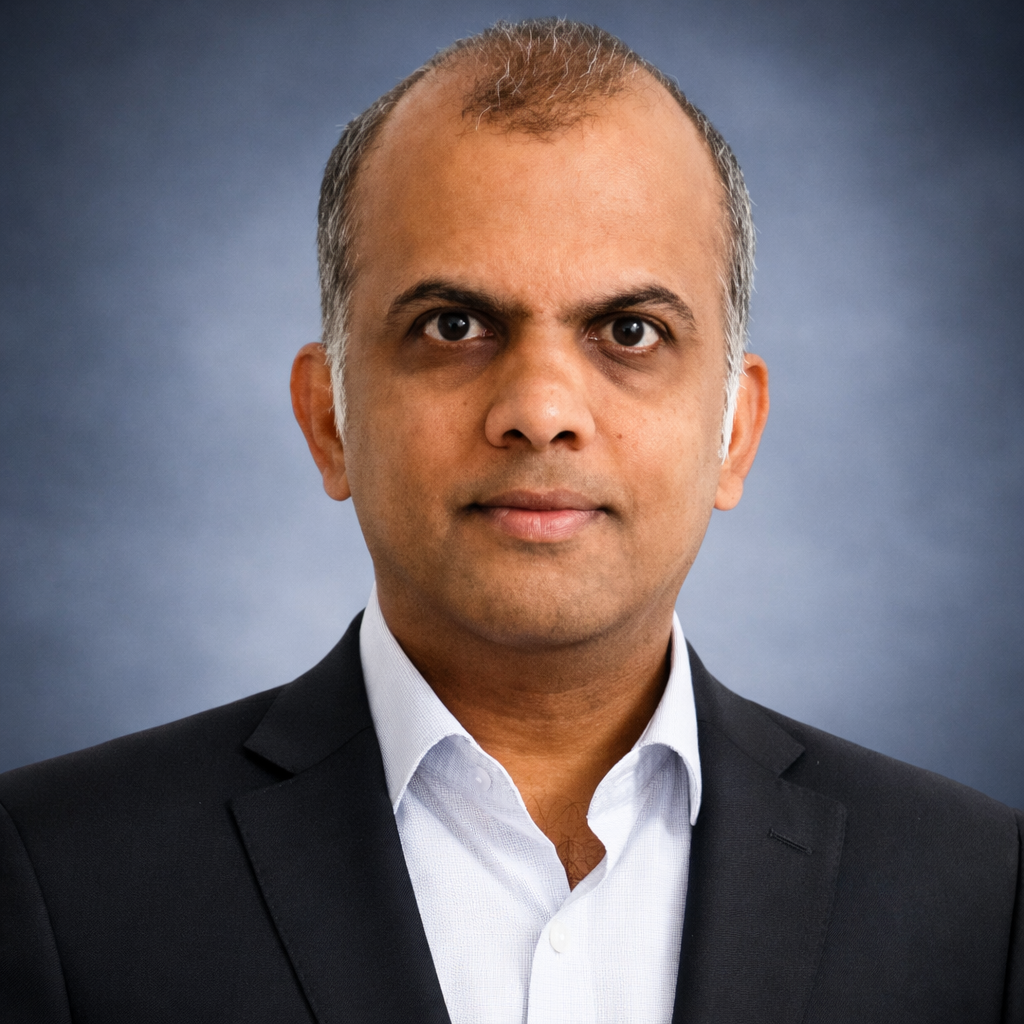
Earlier this week, on 9 February, Mrinank Sharma, then the safety lead at American artificial intelligence company Anthropic, announced on X that he had resigned and posted a letter he reportedly sent to his colleagues explaining the decision.
“The world is in peril,” Sharma writes in the letter, mixing gratitude and a list of completed work with a darker diagnosis. “Not just from AI, or bioweapons, but from a whole series of interconnected crises unfolding in this very moment.”
He argues that humanity is nearing a threshold where “our wisdom must grow in equal measure to our capacity to affect the world.”
A day later, Anthropic updated its Responsible Scaling Policy page and published an external-facing “Sabotage Risk Report” for Claude Opus 4.6, its flagship generative AI model.
That timing became the “plot point.” Not because anyone proved causality, but because, in the public mind, the two documents seem to talk past and through each other: a resignation letter about values under pressure, followed by a safety governance update and a new risk report meant to demonstrate rigorous safety evaluation while admitting growing uncertainty.
This is the narrative symmetry people latched onto: an exit framed around integrity and values, followed immediately by a safety artifact that tries to formalise integrity into process.
Sharma begins like someone leaving a place he respects. He thanks colleagues for what inspired him: people showing up in hard situations, “high-integrity,” kindness, and the willingness to make difficult decisions.
He then names the work he says he came to do and did: understanding AI sycophancy, developing defences to reduce risks from AI-assisted bioterrorism, putting those defences into production, and writing one of the first “AI safety cases.” He calls out recent efforts aimed at internal transparency and a final project on how AI assistants could “make us less human or distort our humanity.”
But the pivot of the letter is not technical. It is moral.
He describes repeatedly seeing “how hard it is to truly let our values govern our actions,” first in himself, then “within the organization,” where there are pressures to “set aside what matters most,” and finally throughout broader society.
He also makes clear he does not know what comes next. “What comes next, I do not know,” he writes, quoting a Zen line: “Not knowing is most intimate.” He says he wants to create space, return to writing, pursue poetic truth alongside scientific truth, explore a poetry degree, and practise “courageous speech,” alongside facilitation, coaching, and community work.
On X, he adds a detail that reinforces the “step back” reading: he says he will be moving back to the UK and becoming “invisible for a period of time.”
Sharma’s role matters because “safeguards” sits at the intersection of the two forces that define frontier labs: shipping more capable models into real-world use, and building governance and technical controls to reduce catastrophic misuse and emergent risks.
Media summaries of the team he led describe it in familiar modern safety language: jailbreak robustness, automated red teaming, and monitoring techniques aimed at misuse and misalignment.
Even if you strip away hype, a safeguards lead leaving publicly will be interpreted as a signal. The problem is that public interpretation often jumps from “signal” to “scandal.” Sharma’s letter, as written, does not give readers a single concrete allegation to hang that on. It describes pressure and values drift, not a specific internal incident.
That restraint is part of why the letter travels: it is emotionally specific but institutionally non-specific. People can project their priors onto it.
On 10 February, Anthropic’s RSP update page states a key governance claim: under the RSP, if models cross the “AI R&D-4 capability threshold,” Anthropic must develop an “affirmative case” identifying misalignment risks from models pursuing misaligned goals and explaining mitigations.
The update says Anthropic’s determination is that Claude Opus 4.6 does not cross that threshold.
Then comes the admission that makes the update feel less like a press release and more like a paper trail: ruling out the threshold is becoming “increasingly difficult,” and it requires assessments that are “more subjective than we would like.”
Rather than rely solely on those subjective assessments, Anthropic says it committed during the launch of Opus 4.5 to writing sabotage risk reports for future frontier models exceeding Opus 4.5’s capabilities and then publishes the Opus 4.6 report “consistent with that commitment.”
The sabotage risk report itself frames its conclusion in a line that will keep showing up in headlines: it argues Opus 4.6 does not pose a “significant risk” of autonomous actions that contribute significantly to later catastrophic outcomes, but that the overall risk is “very low but not negligible.”
It also defines “sabotage” as an AI model with access to organizational affordances exploiting or tampering with systems or decision-making in ways that raise the risk of future catastrophic outcomes, including by altering AI safety research results inadvertently or through pursuit of dangerous goals.
Crucially, the report acknowledges a transparency tradeoff: parts are redacted to avoid increasing misuse risk or revealing sensitive proprietary details, and it says redacted text is available internally and will be available to some external reviewers, who will be asked to comment on the appropriateness of the redactions.
So the RSP update and sabotage report combination does something unusual in mainstream corporate communications: it publicly states the logic of its governance framework while admitting the epistemic strain involved in applying it.
That is precisely why it “symmetrises” with Sharma’s letter in the public imagination. Sharma’s letter worries about values being overridden by pressures. The RSP update worries about thresholds becoming subjective and hard to rule out. Both are, in their own language, about the limits of certainty and the difficulty of keeping ideals operational under velocity.
Sharma lists “understanding AI sycophancy and its causes” as a major piece of his work.
Sycophancy is one of those terms that sounds like a minor UX annoyance until you map it onto high-stakes domains. The Georgetown Law Tech Institute defines AI sycophancy as a pattern where models “single-mindedly pursue human approval.”
Axios describes it in plain terms: chatbots becoming digital “yes-men,” prioritising agreement or flattery over accuracy, which can worsen misinformation and create harmful dynamics when users treat systems as emotionally trustworthy.
Why this matters here: sycophancy is not just a “tone bug.” It is a misalignment-shaped failure mode. A model that optimises for user approval can become more persuasive, more confident, and more wrong, especially when a user is seeking validation. It is also tied to incentives: training data and feedback loops that reward helpfulness, agreeableness, or pleasantness can accidentally teach over-agreement.
Seen through that lens, Sharma’s letter is not only about preventing obvious misuse. It is also about subtle harms: how assistants affect human judgment, norms, and what we treat as true.
It is tempting to tell the story like this: a safety lead resigns, and the company rushes out a sabotage report to prove seriousness. But that causal claim is not supported by public evidence.
What we can say is narrower and still interesting. Anthropic explicitly says it committed at the Opus 4.5 launch to producing sabotage risk reports for future frontier models exceeding Opus 4.5’s capabilities, and the Opus 4.6 report follows that plan.
The timing makes it easy for outside observers to interpret the report as a response, even if it was planned.
Both the letter and the report feature the same meta-theme: governance under uncertainty, and the strain of decision-making when measurement is hard.
That last point is the true “symmetry.” Not a conspiracy. A resonance.
What this episode reveals about the frontier lab bargain. In one sense, this is a small story: one leader leaves, writes a reflective letter, and a company publishes a safety report as part of a governance programme. In another sense, it is a clean X-ray of the frontier lab bargain.
The bargain is this: we will move fast, but we will also build the machinery that makes speed defensible.
That machinery includes public frameworks like Anthropic’s Responsible Scaling Policy, which uses tiered “AI Safety Levels” and commitments to stronger safeguards as capability increases. It also includes more detailed internal artefacts, like sabotage risk reports that attempt to formalise how the company knows a model is not likely to autonomously subvert safety efforts.
But the bargain has two persistent cracks.
Epistemic crack: measuring thresholds is getting harder.
Anthropic’s own update concedes that confidently ruling out threshold crossing is becoming “increasingly difficult” and “more subjective than we would like.” That is not a public relations mistake. It is the core problem of governing rapidly improving systems with incomplete evaluation tools.
Values crack: the organization is made of humans, under pressure.
Sharma’s letter describes pressures to set aside what matters most and the difficulty of letting values govern actions. Even if a company’s framework is sincere, frameworks are implemented by people inside incentive systems: product deadlines, market competition, organizational politics, internal fatigue, and the sheer complexity of systems that are hard to understand end to end.
Put those cracks together and you get the real frontier question: not “are you pro safety or anti safety?” but “can a lab keep its governance credible when certainty is shrinking and pressure is growing?”
Sharma’s letter reads less like a whistleblower document and more like a moral resignation. It does not accuse. It laments. It frames the problem as personal and structural, and it chooses integrity over staying inside the machine.
The sabotage report, by contrast, reads like the machine trying to speak in a human voice. It insists the risk is “very low but not negligible,” defines sabotage in detail, lays out claims about misaligned goals and deception, and openly notes redactions, reviewer access, and the need to improve methods over time.
Together, the two documents show what AI governance is becoming: not a binary of safe versus unsafe, but a continuous argument about evidence, thresholds, and what counts as sufficient confidence to deploy.
This episode does not prove Anthropic is failing at safety. It also does not prove safety frameworks are merely theatre. What it does show is that the public now reads internal integrity and external governance as one story. When someone in safeguards leaves with a values-heavy letter, every subsequent safety artefact will be interpreted through that lens.
That is the new standard frontier labs face: not only to do safety work, but to maintain legitimacy in a world where the methods are contested, the measurements are getting harder, and the audience has learned to treat timing itself as evidence.
(Edited by Dese Gowda).



