

Published Oct 31, 2024 | 7:00 AM ⚊ Updated Oct 31, 2024 | 9:11 AM

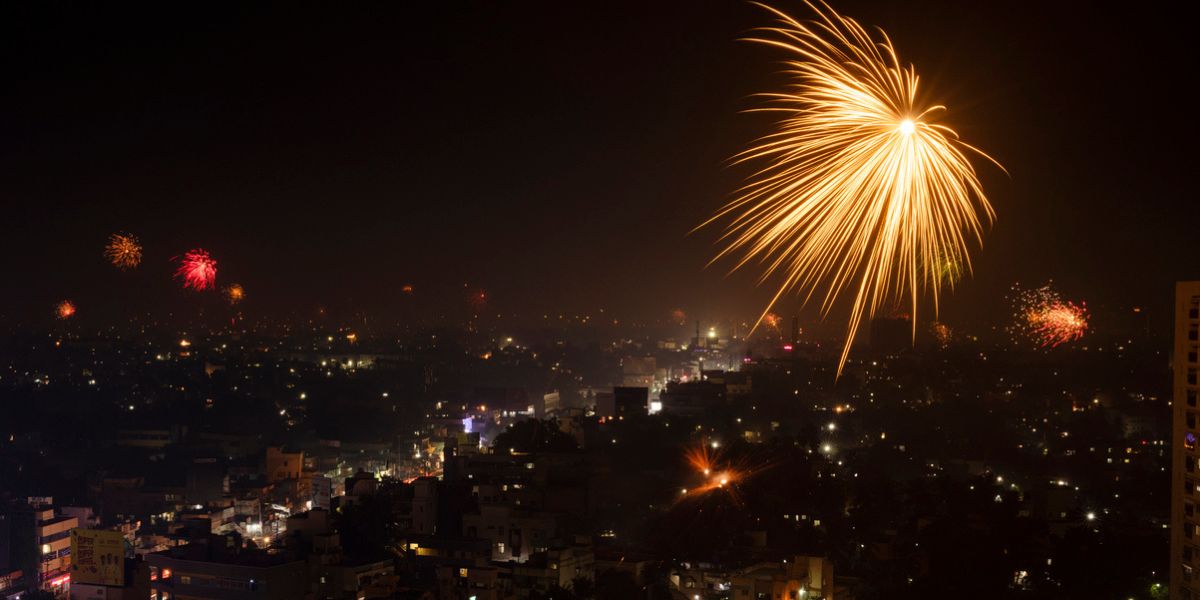
The Supreme Court of India, on November 7, ordered a ban on firecrackers all across the country. (iStock)

With the onset of Deepavali, a festive season known for its vibrant celebrations and proliferation of fireworks, a significant shift in firecracker usage is being mandated across India, particularly in Karnataka.
In compliance with Supreme Court directives, the Karnataka State Pollution Control Board (KSPCB), in collaboration with the Bruhat Bengaluru Mahanagara Palike (BBMP), enforced strict regulations on the sale and usage of firecrackers across the state, mandating the exclusive use of “green crackers” during Deepavali.
The emphasis is now on the use of eco-friendly green crackers, with clear directives for their sale and usage during the festive period.
This initiative aims to mitigate the festival’s impact on air quality and public health by reducing the environmental and noise pollution associated with conventional fireworks.
As per the Council of Scientific and Industrial Research’s National Environmental Engineering Research Institute (CSIR-NEERI), Green Crackers are an environmentally friendlier alternative to traditional firecrackers. These crackers are specially designed to produce fewer emissions and less noise, thus making them a cleaner option.
Unlike regular crackers, they contain fewer harmful chemicals, leading to a significant reduction in pollutants such as sulphur dioxide, nitrogen oxide, and particulate matter, which contribute to air pollution and respiratory issues.
Green crackers are made with eco-friendly components like potassium nitrate and aluminium and are engineered to release water vapour and non-toxic gases upon ignition.
In line with the Supreme Court’s guidelines, the KSPCB has introduced stringent restrictions for Deepavali celebrations. Tushar Girinath, the Chief Commissioner of BBMP, has emphasized that only green crackers will be permitted across Karnataka, with violations carrying strict penalties.
ಬೆಳಕಿನ ಹಬ್ಬ ದೀಪಾವಳಿ ಎಲ್ಲರಿಗೂ ಸಂಭ್ರಮ ತರಲಿ.. ಹಸಿರು(Green Crackers) ಪಟಾಕಿ ನಿಮ್ಮ ಆಯ್ಕೆಯಾಗಿರಲಿ.#BBMP #BBMPCares #deepavali2024 #deepavali #DKShivakumar #bbmpadministrator #bbmpchiefcommissioner #Dhanteras@CMofKarnataka @DKShivakumar pic.twitter.com/KIWJxN5vTP
— Tushar Giri Nath IAS (@BBMPCOMM) October 29, 2024
Girinath has instructed BBMP officials to actively inform the public on compliance and has warned of strong action, including criminal cases and the seizure of non-compliant firecracker stocks, for any breaches.
The regulations specify that only eco-friendly green crackers are permitted, with strict prohibitions on firecrackers outside this category. To further mitigate environmental impact, the hours for bursting firecrackers are restricted to 8 pm to 10 pm on designated days from 31 October to 2 November.
The guidelines extend beyond Karnataka, reflecting a nationwide effort to manage firecracker usage. In Kerala, for example, the timing for bursting firecrackers has been limited to two hours: From 8 pm to 10 pm on 31 October, and from 11.55 pm to 12.30 am during Christmas and New Year celebrations.
Meanwhile, Chennai has implemented a strict schedule, permitting firecrackers only between 6 am to 7 am and 7 pm to 8 pm, with a ban on crackers that produce sounds exceeding 125 decibels and a prohibition on Chinese-made firecrackers.
In Hyderabad, citizens are similarly restricted to bursting crackers solely between 8 pm and 10 pm on Deepavali night. These coordinated efforts across states highlight a growing recognition of the need for responsible celebration, aiming to balance festive joy with environmental stewardship.
Each green cracker comes with a unique QR code that allows consumers to verify its authenticity. The code links to details about the cracker’s certification, ensuring it meets the environmental standards set by CSIR-NEERI.
This level of transparency helps consumers make conscious choices to reduce pollution while celebrating.
As Deepavali approaches, the emphasis on green crackers signals a shift toward responsible festivities.
By choosing green crackers, citizens can support the initiative to celebrate in harmony with the environment, making the festival safer for families, elderly citizens, and pets alike.
(Edited by Muhammed Fazil.)



