

Published Jan 08, 2026 | 8:58 AM ⚊ Updated Jan 08, 2026 | 8:58 AM

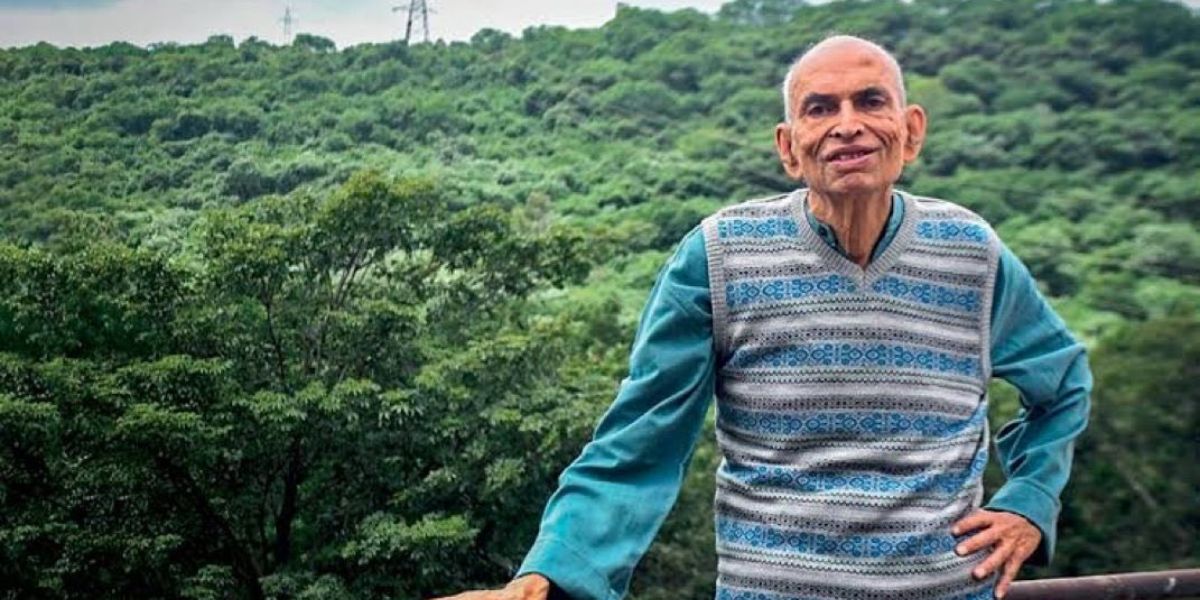
Madhav Gadgil.
Synopsis: Veteran ecologist Madhav Gadgil passed away in Pune. He is known for his work on the conservation of the Western Ghats. Gadgil was the founder of the Centre for Ecological Sciences and also served as a member of the Scientific Advisory Council to the Prime Minister of India.
Veteran ecologist Madhav Gadgil (83), known for his work on the conservation of Western Ghats, passed away in Pune on the night of Wednesday, 7 January, after a brief illness.
“I am very sorry to share the sad news that my father, Madhav Gadgil, passed away late last night in Pune after a brief illness,” his son, Siddhartha Gadgil, said in a statement on Thursday morning.
Gadgil was the founder of the Centre for Ecological Sciences and also served as a member of the Scientific Advisory Council to the Prime Minister of India.
Born on 24 May 1942 in Pune, Gadgil graduated in biology from Fergusson College of the University of Pune in 1963 and secured a master’s degree in zoology from Mumbai University in 1965.
He earned a PhD in 1969 from Harvard University in the US.
Gadgil is widely appreciated for shaping grassroots environmentalism in India. It was he who warned that infrastructure and development projects in the Western Ghats would lead to disastrous consequences.
The Gadgil Report, once sparked controversy in the six states adjoining the Western Ghats, called for the protection of India’s ecologically fragile mountain range in the face of growing threats from industry and the climate crisis.
In 2010, he was appointed chairman of the Western Ghats Ecology Expert Panel (WGEEP) of the Ministry of Environment and Forests to address ecological concerns in the region. Published in 2011, the Gadgil Committee report has underscored the pressing need for comprehensive conservation efforts in the Western Ghats, a critical ecological zone stretching from Kanyakumari to the Tapi River across six southwestern Indian states.
Even though the recommendations in the report were not fully implemented, they were widely discussed following devastating floods in Kerala in 2018.
Congress leader Jairam Ramesh said his influence on public policy has been profound, going back to his crucial role in the Save Silent Valley Movement in the late 70s and early 1980s.
“His intervention to protect forests in Bastar was crucial in the mid -80s. Later, he gave shape to a new direction to the Botanical Survey of India and the Zoological Survey of India. During 2009-2011, he chaired the Western Ghats Ecology Expert Panel and wrote its report in a most sensitive and democratic manner that remains unmatched in both substance and style,” Ramesh wrote on X.
Noted historian Ramachandra Guha, who has co-authored two books with Gadgil, remembered him as an exemplary scientist and citizen.
“The great ecologist Madhav Gadgil died last night. I am devastated. He was an exemplary scientist and citizen, and, to me, a friend and mentor for forty years and more,” Guha said.


