

Published Dec 15, 2025 | 12:45 PM ⚊ Updated Dec 15, 2025 | 12:45 PM

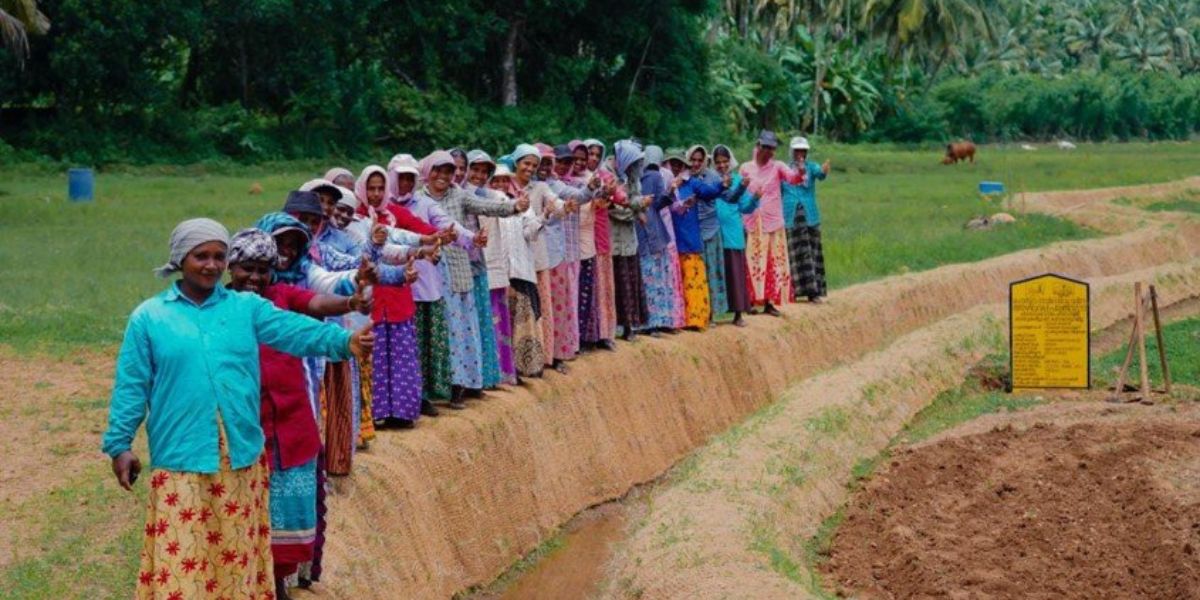
A group of MGNREGS workers in Kerala. (Facebook)
Synopsis: The Union government is expected to introduce the Viksit Bharat—Guarantee for Rozgar and Ajeevika Mission (Gramin) Bill, 2025 in the Lok Sabha to replace the Mahatma Gandhi National Rural Employment Guarantee Act (MGNREGA). CPI(M) Rajya Sabha MP John Brittas said the Bill poses more serious damage. He claimed that the legal employment guarantee has been reduced to a centrally managed publicity scheme at the expense of the states.
The Union government is soon expected to introduce the Viksit Bharat—Guarantee for Rozgar and Ajeevika Mission (Gramin) Bill, 2025 (VB–G Ram G Bill) in the Lok Sabha. The proposed Bill seeks to replace the Mahatma Gandhi National Rural Employment Guarantee Act (MGNREGA).
The Bill proposes to increase guaranteed wage employment for rural households in a financial year from 100 days to 125 days. Under the new scheme, states will be required to bear a larger share of the scheme’s financial responsibility.
According to the Bill, the Union government and states will share costs in a 60:40 ratio for all states and Union Territories with legislatures. However, for North-Eastern and Himalayan states, including Uttarakhand, Himachal Pradesh, and Jammu and Kashmir, the funding pattern will remain 90:10 between the Union government and the states.
“The Central Government shall determine the State-wise normative allocation for each financial year, based on objective parameters as may be prescribed by the Central Government,” the Bill also said.
Meanwhile, CPI(M) Rajya Sabha MP John Brittas said the Bill poses more serious damage. He claimed that the legal employment guarantee has been reduced to a centrally managed publicity scheme at the expense of the states.
Brittas said the government replaced the legislation with a conditional, centrally controlled scheme stacked against states and workers.
“VB–G RAM G Bill repealing MGNREGA: removing Mahatma Gandhi was only the trailer. The real damage is deeper. Govt removed the soul of a rights-based guarantee law and replaced it with a conditional, centrally controlled scheme stacked against States & workers,” he wrote in a post on X.
“‘125 days”’ is the headline. 60:40 is the fine print – MGNREGA was a fully centrally funded one for unskilled wages; G RAM G downgrades it with States to bear 40%. States will now have to shell out around Rs. 50,000+ crore. Kerala alone will have to bear an additional 2,000–2,500 crore. Cost-shifting by stealth, not reform. This is the new federalism: States pay more, Centre walks away, yet claims the credit.”
“MGNREGA was demand-driven: if a worker asked for work, the Centre had to pay – G RAM G replaces this with Centre’s pre-fixed normative allocations & ceilings. When funds run out, rights run out. A legal employment guarantee is reduced to a centrally managed publicity scheme at the expense of States.”
He claimed it is a State-managed labour supply, stripping workers of wages, choice and dignity.
“Panchayats sidelined, dashboards empowered – MGNREGA trusted Gram Sabhas & Panchayats to plan works based on local needs – G RAM G mandates GIS tools, PM Gati Shakti layers & central digital stacks. Local priorities are filtered through a Viksit Bharat National Rural Infrastructure Stack. It makes biometrics, geo-tagging, dashboards & AI audits statutory. For millions of rural workers, tech failures mean exclusion without appeal. Decentralisation replaced by centralised templates; People become data points,” he wrote.
“Worse, G RAM G mandates suspension of work for up to 60 days every year in the name of agricultural seasons. Employment guarantee or labour control? Scheme labourers are legally told: Don’t work. Don’t earn. Wait. Stopping public works to push labour into private farms is not welfare – it is state-managed labour supply, stripping workers of wages, choice and dignity.”
“G RAM G stands for central control, State funds & conditional rights. Same workers. Less rights. More burden. This Bill doesn’t reform MGNREGA – it dismantles it fiscally, institutionally and morally. Bottom line: In the name of RAM, the States and poor are penalised, short-changed and fiscally sacrificed,” Brittas added.
(Edited by Muhammed Fazil.)


