

Published Dec 03, 2024 | 7:00 AM ⚊ Updated Dec 03, 2024 | 11:08 AM

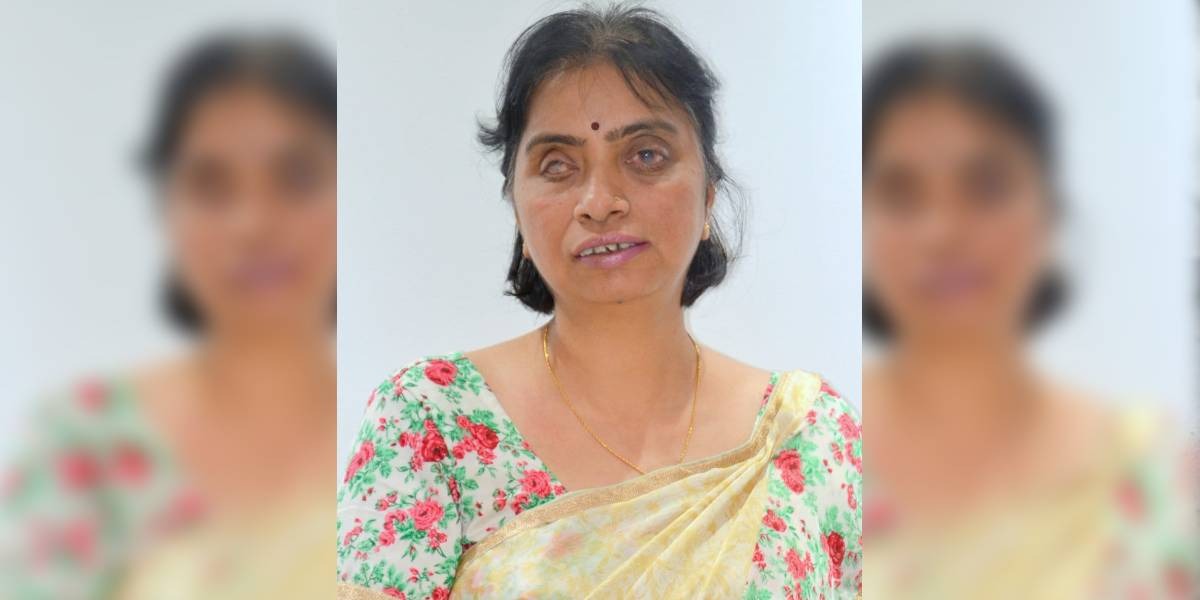
Rajani Gopalkrishna: India’s first blind woman Chartered Accountant

Rajani Gopalkrishna’s life is a story of struggle and triumph. At the age of nine, a seemingly routine prescription for penicillin to treat a cold triggered a severe allergic reaction, causing her to gradually lose her vision.
By the time she completed the Bachelor of Commerce degree, she had lost vision in her right eye and was diminishing in her left eye. Determined to build a meaningful future, Rajani chose to pursue Chartered Accountancy (CA) despite the vision loss.
While she was preparing for the CA examinations, her blindness became complete. With the aid of screen-reading software and dedicated scribes, she completed the rigorous coursework and passed the examination to become India’s first visually impaired woman to qualify as a Chartered Accountant.
Earning the CA qualification, however, was only clearing the first hurdle. In 2002, Rajani struggled to find employment. Employers were hesitant to hire a person with a disability.
With perseverance, she landed her first job, paving the way for a career that combined her professional skills with a passion for social impact.
On December 3rd, International Day of Persons with Disabilities, politicians will cut ribbons to open new spaces, and corporate leaders will discuss the importance of inclusivity for people with disabilities.
What individuals with disabilities truly seek, though, are meaningful opportunities to work, and genuine accessibility to spaces where they walk.
“The entire journey of becoming a Chartered Accountant (CA) was significant for me because it started after I began losing my vision. It was a gradual process, and once I realised the extent of my vision loss, I decided I needed to do something beyond a basic graduation. I felt that just completing the BCom might not help secure the kind of job I aspired to. By pursuing a higher qualification, I believed I could improve my chances of finding meaningful employment,” she told South First.
By the time she began preparations for CA, she had already lost vision in her right eye, and the sight in the left one was diminishing.
“During the course of my CA studies, I lost my vision completely in both eyes. This happened in 1993 while I was preparing for my CA Intermediate exams. Losing my vision was a devastating setback,” she said, explaining that she took a seven-year break from studies.
In 2002, despite losing her vision, Rajani resumed her CA journey.
With the help of screen-reading software and volunteer scribes, she successfully passed her examinations. Gaining the qualification was not quite enough; finding employment was challenging.
While her qualifications impressed employers, many hesitated to give her a job on account of her disability. Through perseverance and the support of a friend who sent her CV around, she secured a job in 2003.
Sahaja yoga meditation became her anchor during the darkest times, helping her find strength, purpose, and determination. She began her career supporting visually impaired and economically disadvantaged students as a Community Coordinator in Bangalore.
Later, she transitioned to Infosys and was engaged in corporate accounting but felt a stronger calling for societal impact.
Rajani eventually shifted to the NGO sector, combining her professional skills with her passion for social change. As a Senior Finance Manager in an NGO, she found her true purpose.
Her message to those facing societal challenges: “Mindset is key; employers may hesitate due to bias, but perseverance, belief in yourself, and seeking support can break barriers and lead to success.”
“How do you perceive a person with a disability? If your first thought is that they can’t do something, then yes, they might not be able to. But if that same person has achieved something extraordinary, shouldn’t we, as individuals and employers, recognise the strength it took to surpass even the capabilities of someone without a disability?” Rajani asks.
Consider this: When you have full vision, you see the world without barriers. Completing a graduation or qualification might seem straightforward.
However, for a person with a disability, achieving the same requires overcoming both physical limitations and societal biases. This accomplishment speaks volumes about their determination and resilience.
“The mindset needs to shift from “this person can’t do X, Y, Z” to “this person has already done A, B, C.”
It’s all about perspective, Rajani says. After more than 20 years of work as a visually impaired individual, I can confidently say that I bring unique strengths to the table. One of my biggest assets is my attention to detail — something others often overlook,” she says.
Everyone has limitations. Some are visible, like a physical disability, while others are invisible, such as difficulty in accepting failure, or being introverted.
Yet, we don’t deny jobs to people for those reasons. “For employers, it is crucial to focus on the potential and see the value a person brings to the table,” says Rajani.
She explains that when one considers the strengths of an individual, or takes into account their unique perspectives or skills, it would be possible to foster an environment that’s supportive and inclusive, free from unnecessary sympathy or condescension.
“Then, we will find that people with disabilities can deliver just as effectively, if not more so,” she says.
Rajani stresses the need for a level playing field.
“This includes embracing technologies and systems that facilitate inclusivity. But it doesn’t stop there. Empathy and recognition must be coupled with genuine opportunities,” she says, explaining that it is not enough to appreciate the person’s efforts. The person must also be given a chance to prove him/herself.
“Persons with disabilities want to excel just as much as anyone else. What we need is recognition, opportunity, and a fair platform to showcase our abilities,” she says.
“Technology has been a game-changer for individuals like me,” says Rajani. “When I lost my vision, I didn’t know how to adapt at first. Had screen-reading software not existed, I wouldn’t have been able to continue my studies or advance in my career. Technology has bridged the gap, allowing visually impaired individuals to access computers and perform tasks just like people without physical disabilities.”
However, Rajani says, there are limits to current technology.
“Screen-reading software enables us to accomplish about 60-70% of what others might do seamlessly. But advancements like AI are transforming this space, making it more interactive and accessible. For example, earlier, if I went to a restaurant, I needed help identifying items on the menu. Now, AI-powered apps allow me to independently navigate such situations.”
“When I pursued Chartered Accountancy, soft copies of study materials weren’t available. I had to rely on scanning physical books and converting them to accessible formats. Today, many educational institutions provide accessible e-books and resources as a standard requirement. Additionally, government programmes offering laptops and resources to economically disadvantaged individuals with disabilities are commendable steps in the right direction,” says Rajani, indicating that with time and technology development, greater accessibility is now more easily possible.
“Despite advancements, significant challenges persist for individuals with disabilities,” says Rajani Gopalkrishna.
“Website developers often neglect accessibility guidelines meant to ensure inclusivity. For instance, CAPTCHA images — used to verify that users are not robots — pose a significant barrier for visually impaired individuals. Without help, even accessing bank accounts or employee portals becomes nearly impossible.”
The issue isn’t limited to digital platforms.
“Everyday tasks like buying groceries, medicines, or accessing healthcare services remain a challenge. Pharmacies, clinics, and hospitals are often not equipped to accommodate visually impaired individuals, turning basic activities into daunting ordeals,” Rajani says.
“There must be a collective effort to implement accessibility measures in both letter and spirit,” Rajani notes. “Websites and digital platforms should be made universally accessible without waiting for enforcement or penalties. It’s about fostering independence and equality,” Rajani says.
“Governments and institutions often claim to provide ramps, tactile pathways, and other infrastructure. However, these measures rarely translate into truly accessible environments,” she explains.
“Ramps might exist, but they often lack tactile markers or clear signage for visually impaired individuals. Infrastructure is designed more for those who can manage with assistance rather than independently,” she points out.
Rajani remembered her own experience while attempting to get a disability certificate. “The hospital department that I needed to visit was tucked away at the back, accessible only through multiple unmarked entrances. Navigating such spaces alone is almost impossible,” she says.
The disparity between policy and ground reality remains a significant hurdle. Accessibility should empower individuals, not leave them reliant on others.
“This is where inclusive design plays a crucial role — both online and offline,” Rajani stresses.
On the digital front, adherence to accessibility guidelines can make websites and apps more user-friendly for all.
“Developers must prioritise inclusivity as a standard, not as an afterthought,” she asserts. On the physical front, built environments must accommodate independent navigation, from clear signage to well-placed tactile markers.
Accessibility is a concern not just for those with disability, but for all people. All healthy people will age – and in old age, one must provide for easy accessibility to those whose abilities are diminishing, Rajani states.
“As a population ages, mobility and sensory impairments become more common,” Rajani points out. “An inclusive system would support individuals with disabilities as well as the elderly and help them lead dignified lives.”
Rajani’s recommendation: “By focusing on creating a truly accessible ecosystem, we can transform the quality of life for visually impaired individuals. Whether navigating a footpath or accessing digital resources, there is a way to remove barriers and ensure equality, independence, and dignity for all.”
Achieving true accessibility requires a fundamental shift in mindset. Accessibility must be recognised as a fundamental right, not a favour or an afterthought, Rajani says.
Policies and guidelines must be implemented with both intent and action to create environments — physical and virtual — that meet the diverse needs of all individuals.
“True independence begins when individuals can navigate spaces without relying on external help,” says Rajani Gopalkrishna.
“Currently, accessibility is often about having someone to support you. Without that, many places remain out of reach.”
Rajani recalls her visit to Sri Lanka. “I was amazed. In Colombo, every single road has tactile markers to help visually impaired individuals understand where the main road begins. If they can do it, why can’t India? It’s not a question of resources but of intent. Accessibility should be a priority, not a token effort for events like International Day for Persons with Disabilities.”
Simple, cost-effective solutions, like installing signboards or tactile markers, can transform accessibility. “These aren’t high-investment solutions — they just require intent and commitment,” Rajani asserts.
Virtual spaces are equally crucial in achieving accessibility. Despite technological advancements, many websites and apps fail to adhere to established accessibility standards. This leaves individuals with disabilities reliant on others for tasks like accessing bank accounts or navigating educational resources.
“Accessibility in virtual spaces is not just about compliance with guidelines,” Rajani emphasises.
“It’s about designing platforms that are inclusive from the outset.”
The rapid integration of AI has shown promise in improving accessibility. “AI-powered tools, like apps that identify objects or read printed text aloud, have significantly increased independence for visually impaired users,” Rajani notes, citing the hurdle of proving that one is not a robot when accessing certain websites.
Rajani underscores the importance of creating opportunities. “The system must go beyond appreciation to provide recognition and support. This means enabling individuals to pursue employment or start their own practice, fostering economic independence and participation in development.”
Achieving accessibility, Rajani states, is not a question of resources but of intent. “As long as we treat accessibility as a checkbox, we’ll only make token efforts,” she cautions, “True progress requires commitment and prioritisation.”
(Edited by Rosamma Thomas)



