


Published Jan 06, 2026 | 12:45 PM ⚊ Updated Jan 06, 2026 | 12:45 PM

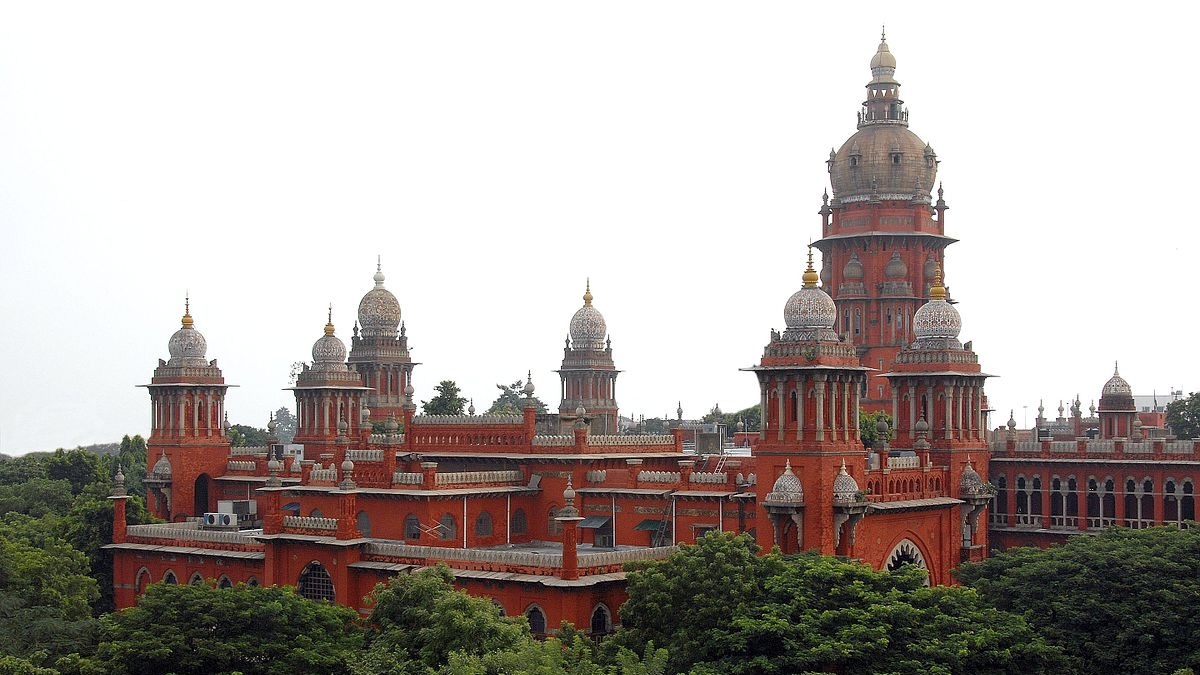
Madras High Court
Synopsis: The Madurai Bench of the Madras High Court dismissed Tamil Nadu’s appeals against a single judge order permitting lamp lighting at Thirupparankundram hill. The court slammed the State for politicising the issue, stressing balance between faith, environment, and public order.
The Madurai Bench of the Madras High Court on Tuesday, 6 January, dismissed the appeal petitions filed by the Tamil Nadu government challenging a single judge order permitting the lighting of a ceremonial lamp on a pillar at the hilltop of Thirupparankundram.
The appeals were filed against an order passed by Justice GR Swaminathan, which had allowed lighting a lamp on the disputed pillar situated on the Thirupparankundram hill.
The State government had argued that implementing the order could lead to serious law and order problems, given the religious sensitivity of the area that houses both the Subramanyaswami temple complex and a dargah.
A Division Bench comprising Justices G Jayachandran and KK Ramakrishnan pronounced the verdict after hearing detailed submissions from the State government, the temple administration, the Hindu Religious and Charitable Endowments (HR&CE) Department, and the dargah side.
While dismissing the appeals, the Bench observed that the State government itself was responsible for the public order issues that arose in connection with the dispute. The judges cautioned the State against acting on political considerations and remarked that the issue appeared to have been viewed through a political lens rather than addressed in a strictly administrative or legal manner.
The court also recalled that earlier judicial directions had suggested exploring the possibility of shifting the location of the lamp so as not to cause disturbance to the nearby dargah.
It further held that the disputed lamp pillar stands on land belonging to the Devasthanam. At the same time, the Bench noted that Thirupparankundram hill is a protected forest area, emphasising that any decision relating to religious practices must balance faith, environmental concerns, and public order.
The case arose from a petition filed by an individual seeking permission to light the Karthigai Deepam on a structure near the hilltop, close to the dargah. Traditionally, the Karthigai Deepam has been lit near the Uchchipillaiyar temple on the hill, a practice followed for several decades.
The petitioner’s request was opposed by the temple administration, the HR&CE Department, and the State government, all of whom argued that the disputed structure is not a recognised deepa thoon (lamp pillar).
Justice GR Swaminathan’s order permitting the lamp led to contempt proceedings after the State cited law and order concerns for not implementing the direction. During those hearings, the single judge questioned the government’s failure to comply with court orders, observing that apprehensions over law and order cannot be a valid excuse for non-compliance with judicial directions.
Before the Division Bench, the temple and HR&CE authorities argued that religious rituals are governed by Agama rules and statutory provisions under the HR&CE Act, and that courts cannot create or alter religious practices at the instance of individuals.
They contended that historical and archaeological records indicate that the disputed structure is either a survey stone or a Jain-era Samana Deepa Thoon, and not a traditional temple lamp pillar used for Karthigai Deepam.
The dargah management also opposed the single judge’s order, stating that it was passed without granting adequate opportunity to file counter affidavits and that permitting lamp lighting near the dargah could disturb communal harmony.
By dismissing the appeals, the Madurai Bench underscored the need for restraint, institutional responsibility, and careful handling of long-standing religious disputes, particularly in locations as sensitive as Thirupparankundram.
(Edited by Amit Vasudev)


