

Published Nov 05, 2023 | 12:51 PM ⚊ Updated Nov 05, 2023 | 12:52 PM

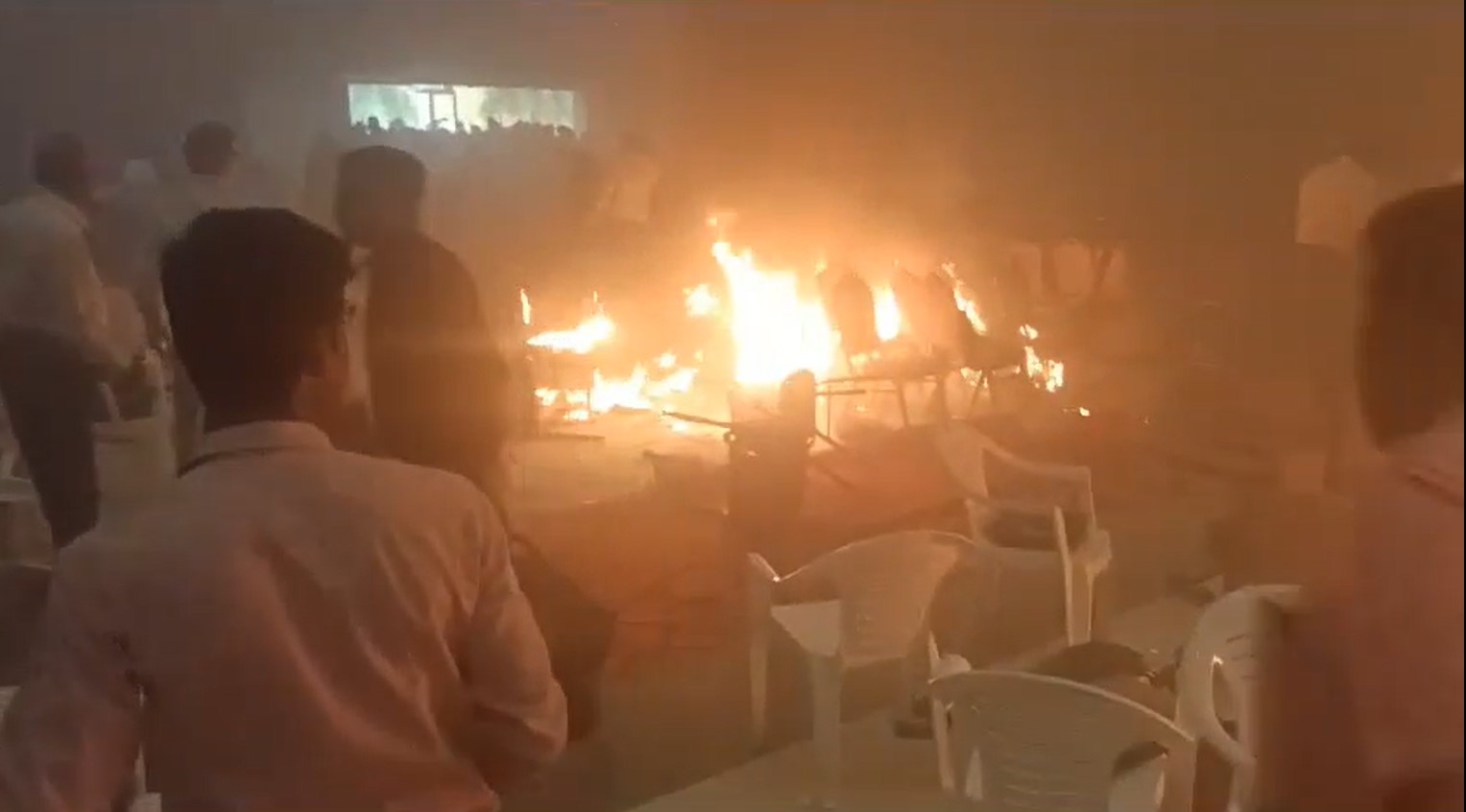
Screengrab from a video of the aftermath of the Kalamassery blasts in Kerala on 29 October, 2023.
The Kerala Police have said they registered 54 cases for spreading communally instigative content through social media in the aftermath of the recent blasts at a Christian prayer meeting near Kalamassery in Kochi.
The police said on Saturday, 4 November, that the most number — 26 cases — was registered in the Malappuram district, followed by 15 in Ernakulam, and five in Thiruvananthapuram.
Thrissur City and Kottayam reported two cases each, while Pathanamthitta, Alappuzha, Palakkad, and Kozhikode Rural have one case each.
The police, in a release, said they identified numerous fake profiles used to share posts that could instigate communal hatred.
“Requests have been made to Facebook, Instagram, X, WhatsApp and, other social media platforms to identify the IP addresses of such fake profiles. The cyber cell in the state is functioning round the clock to identify such handles,” the release said.
The Kerala Police had registered two cases against Union Minister of State for Electronics and Information Technology Rajeev Chandrasekhar for allegedly making statements that could promote enmity between different groups through social media posts in connection with the blasts.
The Ernakulam Central police registered a case against him over the same incident based on a complaint by KPCC digital media convenor P Sarin.
BJP national secretary and spokesperson Anil Antony was also booked for his social media posts based on the complaint of the Congress leader.
“Both cases were registered on 31 October under IPC 153 and 153A and Section 120 (O) of the Kerala Police Act,” a police officer told news agency PTI.
IPC Sections 153 and 153A refer to wantonly giving provocation with intent to cause a riot and promoting enmity between different groups on the grounds of religion, race, place of birth, and residence respectively.
Section 120 (O) of the KP Act refers to causing nuisance and violating public order.
The second FIR against Chandrasekhar was under the same section earlier over his social media posts with regard to the blast incident and an unrelated event organised by an Islamist group in Malappuram district in which a Hamas leader allegedly addressed the audience virtually.
Both Chandrasekhar and the BJP slammed the registration of cases.
While the party condemned the action, the minister of state alleged that the FIR was registered for exposing the appeasement of Hamas by Congress leader Rahul Gandhi and Kerala Chief Minister Pinarayi Vijayan.
The blasts were set off at a convention centre in Kalamassery near Kochi, where a prayer meeting of the Jehovah’s Witnesses — a Christian religious group that originated in the US in the 19th century — was held on 29 October.
A few hours after that, Martin, who claimed to be an estranged member of Jehovah’s Witnesses, surrendered before the police in Thrissur district, claiming that he carried out the multiple blasts.
Initially, one woman was killed in the blasts and 60 were injured — six of them critically. Subsequently, one of the six critically wounded — a 53-year-old woman — succumbed to her injuries.
By 30 October morning, the death toll had risen to three, with the demise of a 12-year-old girl who had sustained 95 percent burns in the incident.
(With PTI inputs)


