

Published Dec 24, 2025 | 9:00 AM ⚊ Updated Jan 26, 2026 | 8:54 AM

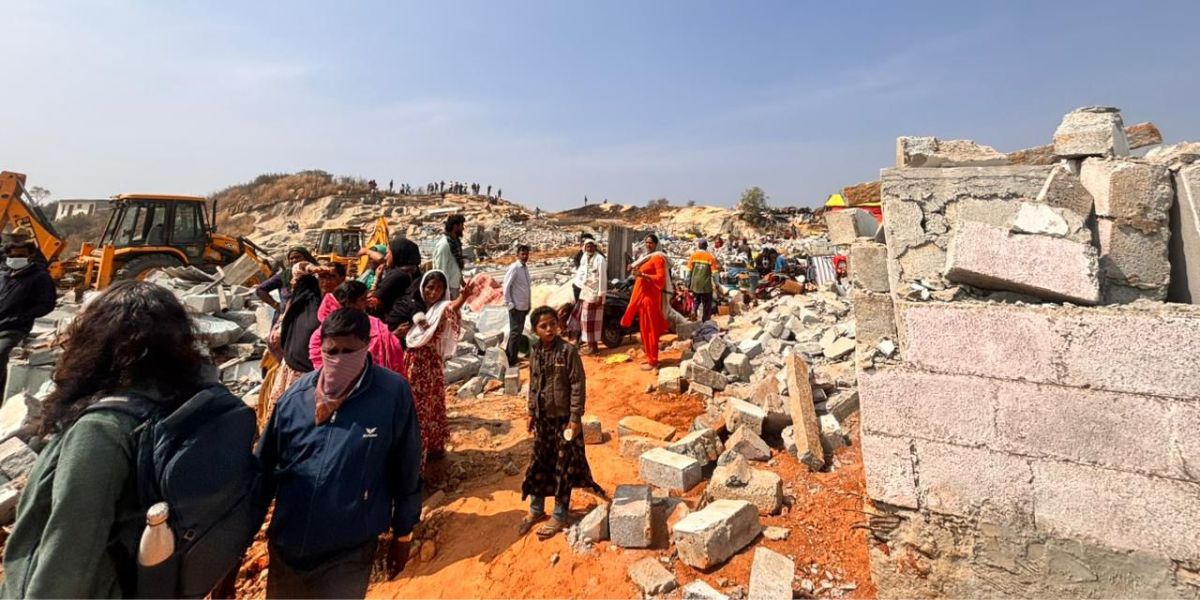
Numerous homes were razed by the Greater Bengaluru Authority.
Synopsis: Following the recent demolition of homes near Yelahanka in Karnataka, several families—largely Muslims belonging to the Fakir community—have been living in the open. While the civic authorities said the demolition was carried out due to encroachments and that notices had been served prior to the drive, residents claimed they received no such notice. Following protests, the authorities have promised alternate housing for those affected.
Sarah, a young woman in her 20s, has been sitting on the ground in the sharp winter morning winds and chilly nights in Kogilu village near Yelehanka, a suburb of Karnataka’s capital Bengaluru, since Saturday, 20 December.
Her family had been living in the area for decades. However, on Saturday, she, along with over 300 families, largely Muslims belonging to the fakir community, woke up to the sound of the rumble of the JCB bulldozers. Their homes, their only safe spaces, were being razed right in front of their eyes.
The Bengaluru Solid Waste Management Limited (BSWML) under the Greater Bengaluru Authority (GBA) carried out a demolition drive on Saturday, razing more than 300 allegedly illegal houses in Fakir Colony and Waseem Layout to set up a proposed solid waste processing unit.
GBA officials maintained that the land had been allotted to the authority several years ago and was allegedly encroached upon by the residents. They said officials had held meetings with the occupants and instructed them to vacate the area. However, residents in the area told South First that they had received no written communication regarding this eviction.
“It all happened so quickly. They removed our LPG cylinders, stoves, and other flammable items from the houses. But everything else was still inside, our clothes, books, my mother’s jewellery and other important items. It has all been reduced to dust,” said Sarah.
GBA officials alleged that most of the residents were migrants from Hyderabad and parts of Andhra Pradesh and belonged to the Durvish community. Residents, however, rejected this assertion, saying they had lived in the layouts for more than two decades.
Around 150 police personnel, including senior officers, were deployed at the site to maintain law and order. Families also alleged that the police authorities resorted to violence when they questioned the sudden demolition drive.
When South First visited the area, a daily-wage labourer was walking through the rubble with a piece of cloth wrapped around her face to cover herself from the dust. She proceeded to sit in an open space with other women who were trying to prepare food with the limited resources they had managed to salvage before the bulldozers arrived.
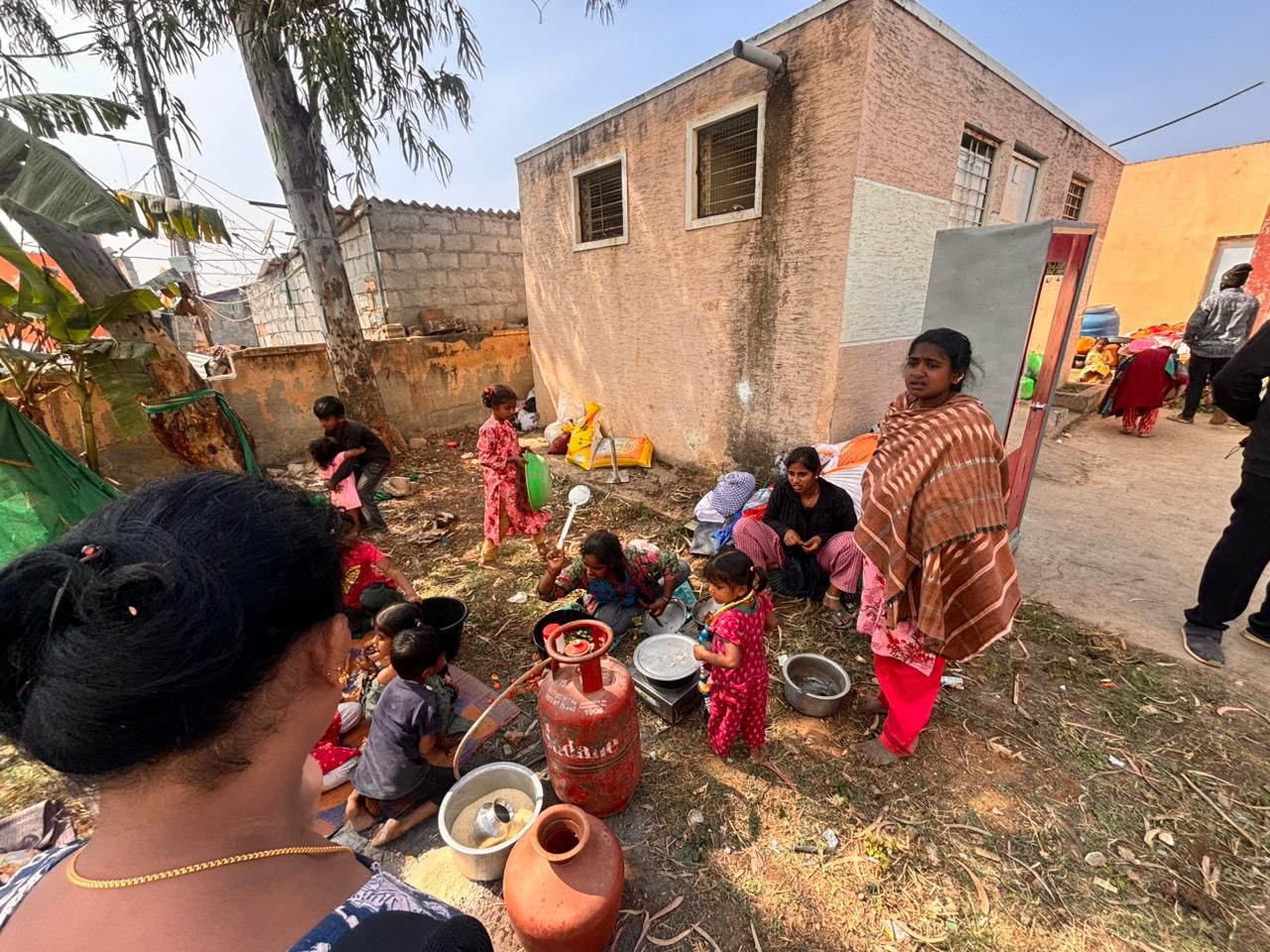
Residents preparing food in front of their demolished homes. (Anisha Reddy/South First)
“I can stop myself from drinking water and eating food so that I don’t have to use the washroom, since there is no washroom. But how can I starve my kids?” she asked, pointing to her children who were sleeping on a mat laid over the muddy remains of her house. Several women also expressed concerns about the lack of privacy, unsure where they could change or dispose of their sanitary napkins safely.
While daylight offers some respite, nights are far harsher. As darkness falls and Bengaluru’s winter chill sets in, residents are forced to huddle in the same clothes they were wearing when they were evicted, with no blankets to shield them from the cold.
“We are taking shelter in the compound of a nearby government school until Sunday. Some are sleeping near their demolished homes,” the daily-wage labourer said.
Several children from the area, who study in private and government schools, have been missing classes to help their family members find their belongings in the rubble.
“Many of them had their exams on Monday, but had to skip them. We don’t know when they will be able to go back. Their school books, which we bought with the limited money that we earn through begging and doing other odd jobs, have been destroyed during the demolition,” said Mira, another resident who has two school-going children.
On Saturday, residents were ready with their documents — Aadhar card, PAN card, voter ID, ration card — clinging on to them and showing them to all the media professionals who arrived there, in a bid to prove that they had all the rights to be living there and that they weren’t living “illegally” as claimed by the civic officials.
“How can they say that we are illegally living here. Politicians used to come and campaign here for votes. We have voted so many times. Were we not illegal residents at that time?” Mira asked.
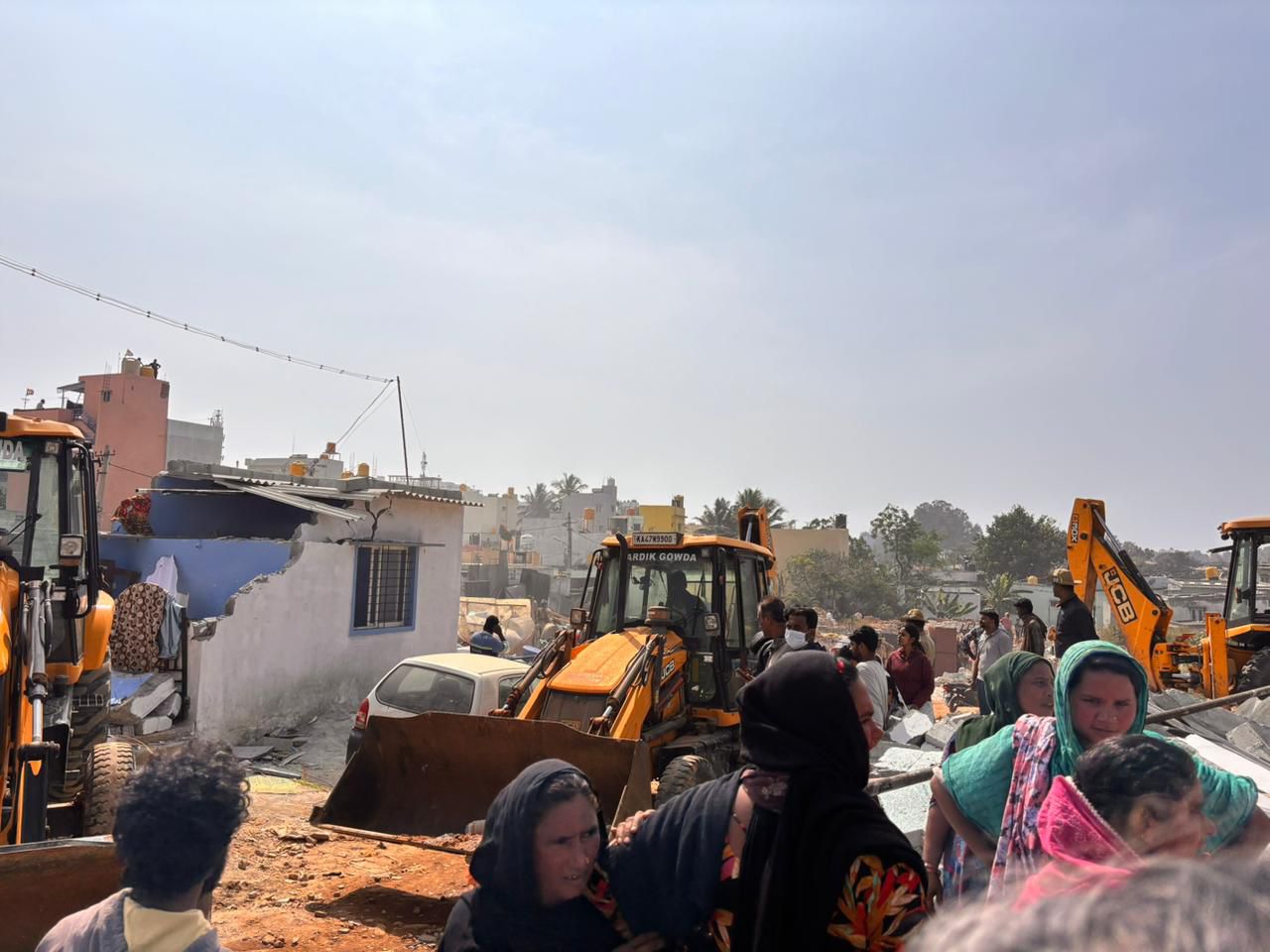
Excavators demolishing the houses. (Anisha Reddy/South First)
Residents claimed that no official or local representatives had provided them any assurance about compensation, any alternate place of residence, temporary relief, or essential items such as food, water and sanitary items.
On Sunday, protests were held outside Revenue Minister Krishna Byre Gowda’s residence, with activists and affected families demanding alternate housing, temporary shelters and essential items for those left homeless due to the demolition. Gowda, who represents the Byatarayanapura constituency under which the demolished area falls, assured the displaced residents and the NGOs and organisations representing them on Monday that a discussion would be held.
“On Monday, he told us that they will build us houses soon and provide us with temporary shelters in the same area where the demolition happened,” said Shazia, a member of Dudiyuva Janara Vedike (DJV), one of the organisations that is assisting the affected families. However, as of Tuesday evening, they had received no such relief measures from the government, Shazia said.
This is not the first demolition or anti-encroachment drive that Bengaluru civic authorities have carried out for infrastructure projects. In November 2025, the Railway Protection Force (RPF) demolished homes of more than 150 families near the Kadugondanahalli railway gate in north-west Bengaluru for the Bengaluru Suburban Rail Project (BSRP). Those who were left homeless were mostly Dalits.
Referring to both these demolitions, several organisations, including Dalit Sangharsha Samithi, Praja Vimochana Chaluvali, and DJV, that are assisting the displaced families in Kogilu, accused the government of being against Dalits and minorities.
(Edited by Muhammed Fazil.)


