

Published Jan 09, 2026 | 2:36 PM ⚊ Updated Jan 09, 2026 | 2:36 PM

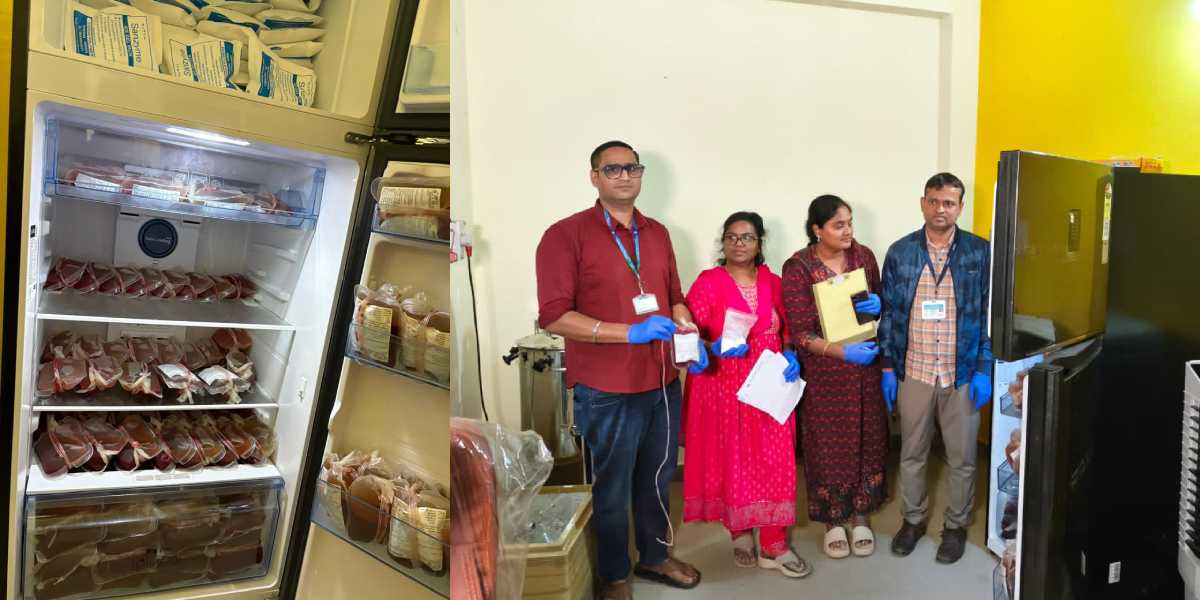
Goat blood in human blood bags. (Supplied)
Synopsis: The seized blood was allegedly being dispatched to Polymedicure Company, a Haryana-based firm, though the intended end-use remains unclear. Drug Control officials suspect the blood may have been intended for unauthorised clinical trials, experimental purposes, or the production of culture media used in laboratory testing.
Drug Control Administrator (DCA) authorities have raided an import-export firm along with Hyderabad City Police in Kacheguda, Hyderabad, and recovered 1,000 litres of animal blood illegally extracted from sheep and goats.
The operation has raised serious concerns about potential misuse in medical and experimental applications. The raid, conducted by Drug Controller officials in coordination with Hyderabad Police, targeted CNK Import Export Company following specific intelligence inputs.
Officials discovered the blood stored in human blood bags, a discovery that immediately escalated the investigation.
The seized blood was allegedly being dispatched to Polymedicure Company, a Haryana-based firm, though the intended end-use remains unclear. Drug Control officials suspect the blood may have been intended for unauthorised clinical trials, experimental purposes, or the production of culture media used in laboratory testing.
“The purpose behind collecting and transporting such large quantities of animal blood remains unexplained. This is a critical aspect of the investigation,” a senior official said.
The Drug Inspector handling the case expressed alarm at the unprecedented nature of the operation. “In my entire career, I have never seen this kind of modus operandi. Even for goat blood or animal blood, never seen anyone collecting in blood bags meant for human blood. No licence is issued to collect blood in human blood bags. If blood has to be collected at all.”
During the raid at the Kacheguda premises, investigators found sophisticated processing equipment including an autoclave machine, laminar air flow unit, and approximately 60 empty blood bags alongside 110 filled bags.
“The presence of a laminar air flow unit was particularly alarming,” the Drug Inspector explained. “A laminar air flow is used to transfer blood from one bag to another in a sterile environment to prevent contamination. The presence of this equipment clearly indicated that blood processing was taking place.”
The laminar flow equipment suggested the blood was being processed for specific applications. According to the inspector, possible uses include culture media for growing bacteria in laboratory testing, or serum extraction for use in skin treatments, hair products, and vaccine-related processes.
“From about 500 ml of blood, nearly 200 ml of serum can be obtained. Serum is used in skin treatments, hair products, and even vaccine-related processes,” he said.
Officials emphasised the potentially fatal consequences if animal blood were to enter the medical supply chain for human use.
“This is a very serious and disturbing case. If even by mistake animal blood is supplied to any hospital, it can lead to fatal consequences. Human blood groups must match exactly. Even mismatched human blood can cause death. Animal blood given to humans will certainly be fatal. That is why blood is treated as a drug and regulated strictly,” the Drug Inspector warned.
He added: “In my 15 years of service, I have never encountered a case like this. I never imagined someone would collect goat blood in this manner.”
The owner of CNK Import Export Company, Nikesh, has been absconding for two days. He is registered as an import-export operator and allegedly paid butchers between ₹2,000 and ₹3,000 per blood bag, also supplying the bags himself.
“The main person in this case is Nikesh. He is the prime accused and the main culprit. As of now, his whereabouts are not known. Until we apprehend him, we do not know exactly what activities he was involved in or what he was doing with the blood,” officials stated.
When police initially attempted to contact Nikesh, he claimed he was coming in for questioning but switched off his phone midway and disappeared. He retrieved keys from the watchman and removed important processing documents, though he lacked time to remove the blood bags.
The investigation began at a butcher shop in Keesara, where around 150 blood bags were initially recovered. Butchers told investigators they simply handed over the blood to Nikesh and were unaware of its final use. Blood was allegedly being collected from isolated locations in the Keesara area, raising suspicion about unregulated and unsafe extraction practices involving live animals.
The case was registered under Section 18(c) of the Drugs and Cosmetics Act at Keesara Police Station. Officials established clear violations of drug control regulations.
“Even to possess empty blood bags, a valid drug licence is mandatory. We recovered around 60 empty blood bags, and Nikesh did not have any licence to possess them,” the Drug Inspector explained.
“The autoclave machine is also a regulated medical device. To possess and operate an autoclave, a drug licence is compulsory. He did not have one.” Under the Act, blood stored in blood bags is legally treated as a drug and subject to strict regulation.
The premises have been sealed and samples sent for laboratory analysis. Investigators are examining company records, transport documents, and financial transactions to identify possible links to a wider network.
Authorities are also investigating whether animal cruelty laws were violated during the blood collection process. “Further action will be initiated based on the outcome of the investigation. Strict legal measures will follow if violations are confirmed,” officials said.
(Edited by Sumavarsha)


