

Published Dec 04, 2025 | 7:00 AM ⚊ Updated Dec 04, 2025 | 11:44 AM

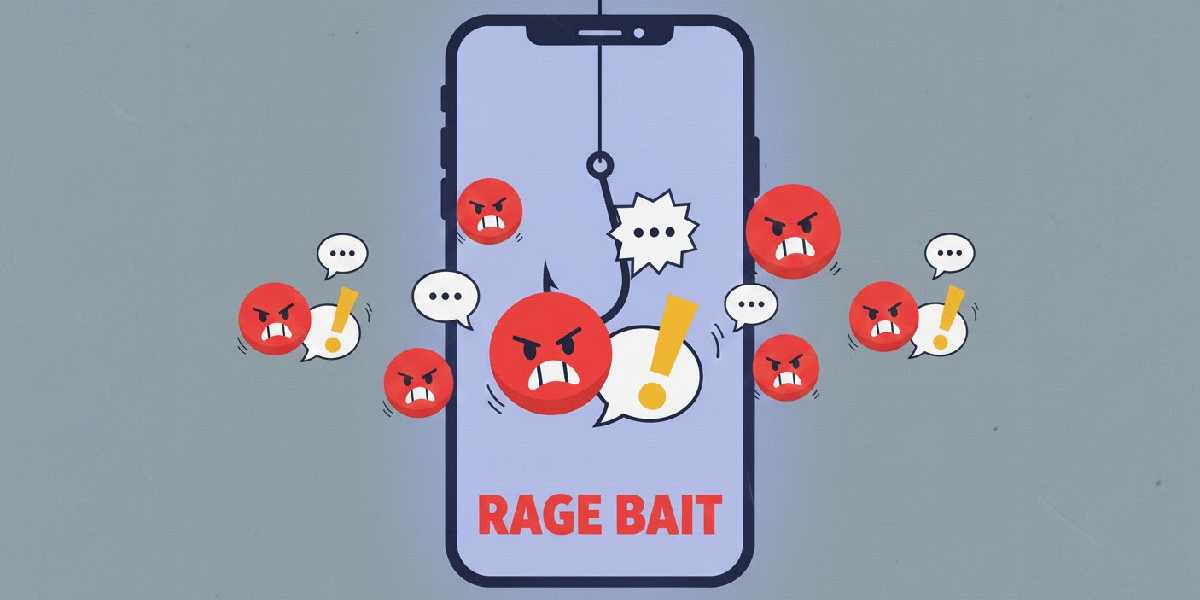
‘Rage bait’ becoming the Word of the Year also makes room for a rather unusual paradox. Does naming the problem solve it, or does it quietly validate it?
Synopsis: Oxford University Press named “rage bait” – deliberately provocative online content designed to spark outrage – as 2025 Word of the Year. Linguists trace its roots to clickbait and fishing metaphors, while psychiatrists warn of rising anxiety, chronic stress, and eroded emotional regulation from constant exposure. Naming it raises awareness but risks normalising a tactic that fuels division and mental burnout.
When Oxford University Press named ‘rage bait’ as Word of the Year for 2025, the choice rang with familiarity to anyone who spent even just an hour scrolling through social media.
The body defines it as such: “Online content deliberately designed to elicit anger or outrage by being frustrating, provocative, or offensive, typically posted to increase traffic or engagement.”
The word and its definition may sound too trendy to understand, but what it describes is something deeply familiar.
If you’ve ever felt irritated after doomscrolling on Instagram, that’s rage bait! Felt exhausted after reading through the comment section? You got it – rage bait!
It also refers to the sensational headline which convinces you into clicking on the link and the provocative statements on social media you just have to respond to. The word neatly sums up what so many of us experience daily.
CONFIRMED: Oxford University Press has named ‘rage bait’ as the Oxford Word of the Year 2025.#OxfordWOTY pic.twitter.com/JATZPd9oxh
— University of Oxford (@UniofOxford) December 1, 2025
Rage bait may now have a name, but the experience is much older, and its impact much deeper. It may be a rather recent addition to the dictionary, but it has been around long before that in the form of ‘clickbait’.
Professor Agniva Pal, Azim Premji University, Bengaluru, has a keen interest in linguistics, and he describes the formation of our Word of the Year.
“This is an endocentric word formation. Both of the meanings together combine to create a meaning which is not the same as either word. It’s more to do with the metaphorical sense,” he tells South First, stemming from his knowledge of morphology.
In simpler terms, we are not just putting two words together, but creating a new idea. ‘Rage’ and ‘bait’ fuse to refer to an intentional, provocative act, meant solely to increase engagement. The vivid imagery that the term incites makes it even more powerful.
Agniva paints the picture, “The food at the end of the fishing hook; it’s called a bait. If you throw it into a pool, fish will be attracted towards it. It’s the imagery of fishing. You’re throwing something at people, which will make them angry, and hence the word rage.”
Beyond the image and its implications, the word also reflects how fast language travels online. People pick up phrases just because other people are using them. “There’s a lot of peer pressure circles, just to live up to the expectations of other people.”
While linguists analyse the word and its transmission, mental-health professionals see its effects up close. At Manas Institute of Mental Health, Dr. Alok Kulkarni, senior consultant psychiatrist, told South First that the impacts are becoming hard to ignore.
“Constantly seeing rage bait content can lead to chronic stress, heightened anxiety, emotional numbness, or a persistently negative mood. Repeated exposure conditions the brain to expect conflict and erodes emotional regulation.”
The doctor notes that this is something he has noticed in his practice as well. “In clinical practice, there’s a noticeable rise in individuals feeling overwhelmed.” Many patients report increasing symptoms of anxiety and depression, with burnout linked directly to their consumption of provocative social media.
This impact, he says, is not limited to what people feel internally. Over time, such emotional overstimulation reshapes the way they respond to everyday life. Small stresses begin to seem larger than they really are, much like what rage bait does. Normal situations start to become ones charged with conflict.
“Prolonged exposure can heighten sensitivity to stressors, fostering a ‘fight or flight’ mindset that spills over into real-life interactions, making people more prone to irritation or overreactions,” says Dr Kulkarni.
‘Rage bait’ becoming the Word of the Year also makes room for a rather unusual paradox. Does naming the problem solve it, or does it quietly validate it? Dr Kulkarni addresses this by saying, “Recognition by Oxford University Press as the 2025 Word of the Year may heighten awareness and discussion around rage bait, but it could also legitimise the tactic—encouraging more creators and consumers to participate in or seek out rage-based content.”
What is meant by awareness can sometimes end up becoming acceptance. Rage bait is now just another online behaviour that we no longer question, casually scrolling past.
Professor Pal places this in a larger context. “Language is more about power. Rage bait will get the legitimate recognition that it is being supported by a big organisation.”
With that recognition comes a shift towards normalisation. Not only does ‘rage bait’ now have a name, but it’s also been put into the spotlight. What it does on this stage, whether it stands taller or retreats into the curtain, is yet to be seen.
(Diya Mantha is an intern with South First. Edited by Amit Vasudev)


