


The Health Department cites expert medical opinion and says that prolonged inhalation of particles from pigeon droppings and feathers can trigger immune reactions deep inside the lungs.

Published Dec 18, 2025 | 7:00 AM ⚊ Updated Dec 18, 2025 | 7:00 AM

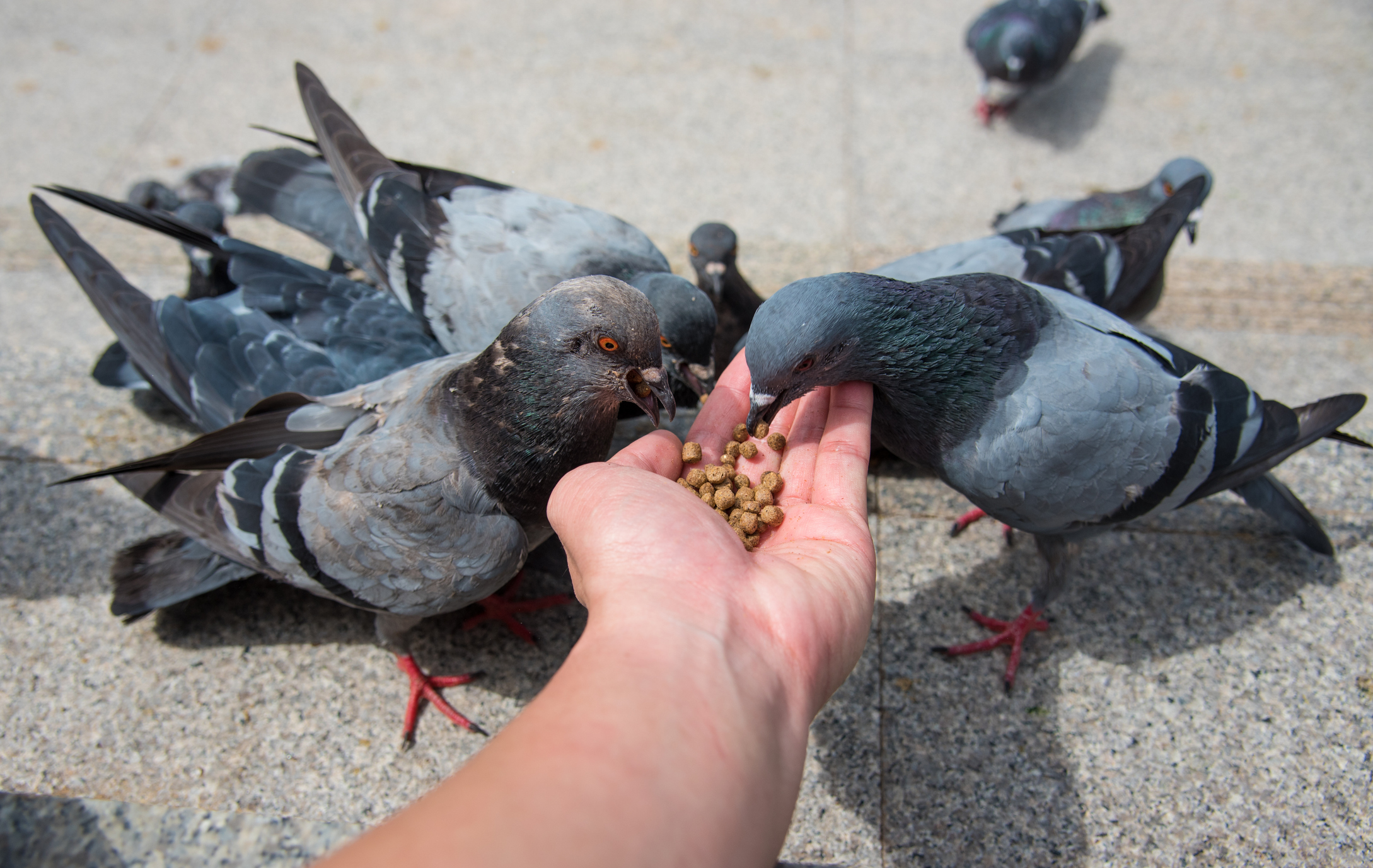
Representational image. Credit: iStock
Synopsis: The Karnataka government is moving to restrict or ban pigeon feeding in public places. An official note from the Health and Family Welfare Department says prolonged exposure to pigeon droppings and feathers, especially in dense urban neighbourhoods, has been linked to lung diseases. Using existing laws, the department has sought to regulate the practice, with violations entailing fines, and prosecution.
If you live in Karnataka, feeding pigeons outside your home, in a park or at a street corner could soon invite fines, warnings and even prosecution.
A detailed official note issued by the state Health and Family Welfare Department on 16 December 2025 makes it clear that the state no longer views pigeon feeding as a benign religious or cultural practice, but as a growing urban health risk that needs urgent regulation.
“It has been brought to the notice of the health department that uncontrolled feeding of pigeons in public places is resulting in serious health concerns, particularly respiratory illnesses,” wrote V Lakshmikanth, Deputy Secretary to the Government, Health and Family Welfare Department, in a note to the Additional Chief Secretary to the Government, Urban Development Department, seeking prohibition on pigeon feeding in public places.
The Health Department said uncontrolled pigeon feeding in public places has led to large congregations of birds, excessive droppings and sustained exposure to feathers and dust, particularly in residential neighbourhoods.
The note warns that such exposure is directly linked to serious respiratory illnesses, including hypersensitivity pneumonitis and other lung diseases.
In conversations with South First, doctors welcomed the move and said they have been seeing an increase in respiratory problems linked to exposure to pigeons and their droppings.
The Health Department note relies on expert medical opinion, which states that prolonged inhalation of particles from pigeon droppings and feathers can trigger immune reactions deep inside the lungs.
Hypersensitivity pneumonitis, one of the conditions highlighted, can cause progressive and irreversible lung scarring if exposure continues.
Officials say the problem has intensified in dense urban settings, where pigeons roost on balconies, window ledges and common areas, increasing daily human exposure. Unlike seasonal pollution spikes, this exposure is constant, making its health impact more severe over time.
The department explicitly flags children, senior citizens and people with pre-existing respiratory conditions as high-risk groups, warning that the damage in such cases may be severe and permanent.
Doctors caution that symptoms are often mistaken for asthma or chronic cough, delaying diagnosis until significant damage has already occurred.
“People assume feeding pigeons is harmless, but what they don’t see is what settles into their lungs. Pigeon droppings dry up, turn into fine dust, and are inhaled daily by residents living nearby,” Dr Sanjay G, a physician from Bengaluru, told South First.
“Over time, this exposure can trigger chronic respiratory inflammation, allergies and, in severe cases, permanent lung damage.”
The Urban Development Department has been asked to issue immediate directions to the Greater Bengaluru Authority and all municipal corporations. The proposed guidelines include:
The note also directs local authorities to run public awareness campaigns using signboards, banners and digital messaging. These campaigns are expected to explain:
The proposal has already been approved by the Health and Family Welfare Minister, signalling that enforcement could begin soon.
Karnataka is not acting in isolation. The Health Department refers to a Bombay High Court order in a similar case, where the court directed the Greater Mumbai Corporation to address the public health nuisance caused by pigeon feeding.
Following the order, Mumbai civic authorities sealed pigeon-feeding enclosures, known as kabutarkhanas, and introduced strict regulatory measures.
Other cities, including Pune and Delhi, have also raised concerns in recent years, with municipal bodies either penalising public feeding or considering bans near residential complexes due to mounting health complaints.
In Pune, former corporator Sham Mankar lost his daughter, Sheetal Vijay Shinde, to lung fibrosis reportedly caused by pigeon droppings. He is now campaigning against pigeon feeding.
In an interview, Mankar said his daughter developed a persistent cough and consulted several doctors. One doctor asked whether there were pigeons around where she lived.
It later emerged that people regularly placed grains for pigeons above her home, leading the birds to nest there. The frequent exposure reportedly resulted in her lung condition.
The Health Department note states that existing laws already empower authorities to act. Under the Bharatiya Nyaya Samhita, 2023, public nuisance and negligent acts likely to spread dangerous diseases are punishable offences.
In serious cases, violations can attract imprisonment ranging from six months to two years, fines, or both.
The note also cites the Greater Bengaluru Authority Act, 2025, which mandates civic authorities to prevent the spread of dangerous diseases and maintain public health standards, and the Karnataka Municipal Corporations Act, 1976, which obligates municipalities to mitigate causes of infectious and dangerous diseases.
However, Animal Welfare Board member Arun Prasad, in a media interview, said banning pigeon feeding is unfair, incorrect and lacks scientific basis.
“Just because someone has written a letter, the government should not take such decision. Pigeons do not spread any life-threatening diseases or cause risk to humans. It is exaggerated,” Prasad told South First.
He also urged the government to withdraw the order without delay and said they would protest against it.
(Edited by Dese Gowda)


