

Published Dec 03, 2025 | 5:10 PM ⚊ Updated Dec 03, 2025 | 5:44 PM

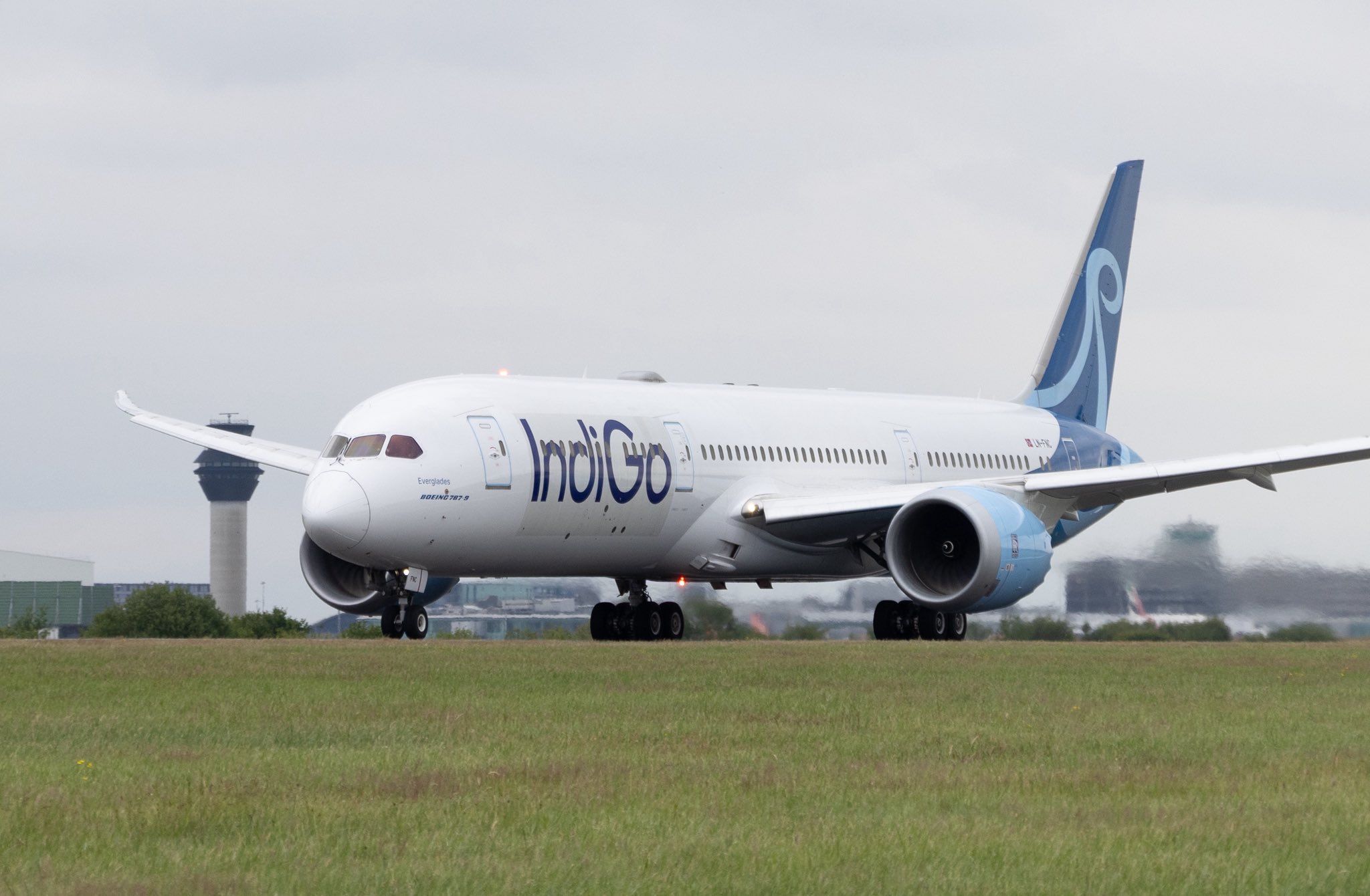
An IndiGo aircraft. Credit: x.com/IndiGo6E
Synopsis: IndiGo cancelled over 70 flights across India and faced widespread delays on Wednesday due to acute crew shortages triggered by the second phase of new FDTL norms, effective 1 November. The rules limit night landings and extend rest periods. Due to this, IndiGo’s on-time performance slumped to 35% on Tuesday, far below rivals, as the airline struggles to adapt to new changes.
IndiGo cancelled over 70 flights across India on Wednesday, 3 December, including departures from Bengaluru, Hyderabad, and Mumbai airports, primarily owing to a shortage of crew, reported PTI.
Numerous IndiGo services also suffered substantial delays at airports nationwide as the airline grappled with staffing issues sufficient to meet its timetable. The carrier has admitted to the disruptions.
“We have experienced a number of unavoidable delays and a limited number of cancellations in recent days due to a combination of factors, including technical glitches, airport congestion, and operational constraints,” an IndiGo spokesperson told PTI.
Indigo has been acutely short of crew since the second phase of the revised Flight Duty Time Limitation (FDTL) regulations came into force.
According to Ministry of Civil Aviation data, IndiGo’s on-time performance at six major domestic airports plunged to just 35 percent on Tuesday, 2 December, markedly below rivals. Meanwhile, Air India recorded 67.2 percent, Air India Express 79.5 percent, SpiceJet 82.5 percent, and Akasa Air 73.2 percent.
The updated FDTL rules, which mandate a minimum 48-hour weekly rest, extend permissible night-duty periods, and restrict crews to two night landings instead of six, were initially resisted by IndiGo and Air India.
Following a Delhi High Court order, the regulations were introduced in phases after a year-long postponement, with some concessions granted to the two largest carriers.
Phase 1 took effect in July, while the restriction on night landings (to 2 per crew) began on 1 November. The rules had originally been scheduled for March 2024, but airlines successfully argued for staggered implementation to allow time to recruit additional crew.
Gurugram-based IndiGo operates approximately 2,100 domestic and international flights daily, a considerable proportion of which occur during night hours.
As of 2 December, its fleet stood at 416 aircraft, of which 366 were in service and 50 grounded—an increase from 47 grounded the previous month, according to airline tracking site Planespotter.com.
Air travel in Hyderabad was disrupted this week after at least 33 flights were cancelled at Rajiv Gandhi International Airport (RGIA) due to a combination of operational issues and airline crew constraints, officials confirmed.
Cancellations began late on Tuesday night, 2 December, when airlines grounded several services citing crew shortage. The impact continued into the next day, affecting both arrivals and departures.
On 2 December, a total of 14 flights were cancelled — nine departures and five arrivals.
The situation worsened on 3 December, when 19 flights were cancelled, including seven departures and 12 arrivals.
Airport authorities have advised passengers to check with their respective airlines for the latest updates and arrive early to avoid additional delays. Operations are expected to stabilise once staffing and scheduling issues are resolved.


