

Published Dec 05, 2025 | 6:53 PM ⚊ Updated Dec 05, 2025 | 8:04 PM

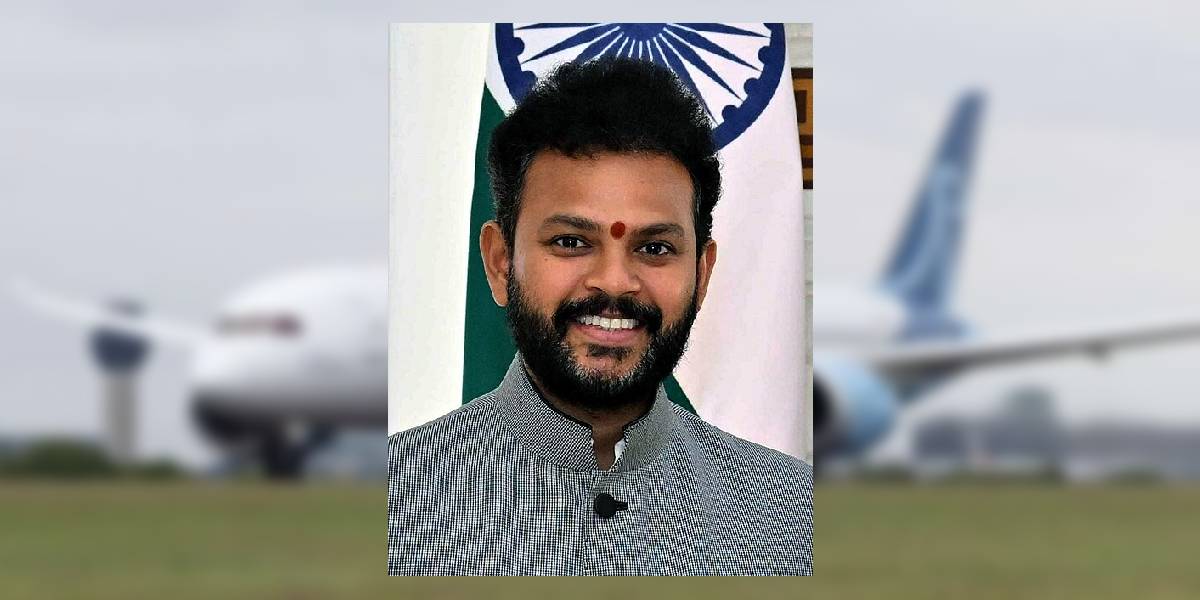
Passengers did not spare Kinjarapu Ram Mohan Naidu, the Minister for Civil Aviation, his political organisation, the TDP, and party leader N Chandrababu Naidu for the IndiGo fiasco.
Synopsis: A singular airline has been creating quite a kerfuffle across airports for the past four days, with meetings cancelled, wedding receptions going online, job interviews missed, and more importantly, shooting up airfare — not to speak about IndiGo’s parent, InterGlobe Aviation, losing more than ₹16,000 crore — its stock sliding nearly 3% — as cancellations of flights surged.
The Hindi phrase, sab kuch chalta hai, ab kuch nahin chalega, suits well for IndiGo, the low-cost airline that cancelled over 750 flights across major airports on Friday, 5 December.
A singular airline has been creating quite a kerfuffle across airports for the past four days, with meetings cancelled, wedding receptions going online, job interviews missed, and more importantly, shooting up airfare — not to speak about IndiGo’s parent, InterGlobe Aviation, losing more than ₹16,000 crore — its stock sliding nearly 3% — as cancellations of flights surged.
The IndiGo fiasco, however, familiarised Indians with FDTL, or Flight Duty Time Limitations, which the airline has been blaming — besides its failure — for the current situation. FDTL is the rulebook that stipulates working hours and conditions for pilots and crew.
The Directorate General of Civil Aviation (DGCA) framed the new set of rules under International Safety Standards in January 2024 (the previous set of rules was issued in 2019) after analysing rosters, fatigue reports and global standards. The DGCA mandated all Indian airlines to enforce the norms by 1 November 2025, to safeguard pilots’ welfare and passenger safety.
IndiGo, the airline that boasted, “On-Time, Low Fares, Courteous and Hassle-Free”, faltered. Perhaps it was the ‘chalta hai‘ attitude, or a bid to arm-twist the government, or plain mismanagement.
The airline has admitted to its failure. It failed to find additional pilots to operate its flights while adhering to the FDTL norms.
The disruption of flights resulted in widespread anger and anguish. Many passengers wondered if Air India and Vistara could comply with the norms and operate seamlessly, so why not IndiGo? They did not spare Kinjarapu Ram Mohan Naidu, the Minister for Civil Aviation, his political organisation, the TDP, and party leader N Chandrababu Naidu.
Meanwhile, IndiGo continued to book tickets for flights no one knew would take off as scheduled. No advisory of cancellation was issued, causing chaos and confusion, and making passengers wait for hours at airports that resembled cacophonic local markets. Ticket fares were refunded after 24 hours, and the entire nation was made to suffer.
However, certain developments at the airline during the run-up to the 1 November deadline indicated that the disruption was bound to happen. According to the Federation of Indian Pilots, IndiGo imposed a freeze on hiring and pilots’ pay, entered into non-poaching agreements, and, worse, damaged the morale of pilots and crew members.
While all these were happening at the airline, the DGCA and the Civil Aviation Ministry, apparently, looked the other way and left passengers at the mercy of the airlines.
Here is a sample: An X user, who tried to book a ticket to attend a wedding in Coimbatore, explained it in vivid terms.
“I was looking for tickets to attend a friend’s daughter’s wedding near Coimbatore later this month. The best option is @airindia via Mumbai from Chennai. Just under Rs. 50,000 for a round trip and under Rs. 1.75 lakh for business class!
I used to joke that the easiest way to get to Thiruvananthapuram from Kozhikode by air is via Dubai!
This has been made a practical possibility by @RamMNK’s and @JaiTDP’s unparalleled work at @MoCA_GoI. Thank you @ncbn,” RK Radhakrishanan, a senior journalist, posted.
The airline is no more ‘sexy’ as it has been promoting its brand identity based on its IATA code, 6E. For passengers, it is not a “6E Experience”.
Several citizens have raised questions, holding Civil Aviation minister and TDP MP Kinjarapu Ram Mohan Naidu, directly responsible for the ride Indigo has taken the Narendra Modi government on. What really was the minister and his ministry doing all these months? Why did they let regulatory oversight slide and allow thousands of passengers to suffer the consequences of IndiGo’s refusal to make administrative and structural changes in tune with regulations?
On Friday, the DGCA intervened — or buckled under pressure. The directorate rolled back a key provision in the new rostering norms and granted IndiGo a one-time exemption from night duty rules until 10 February 2026.
Let us repeat. The FTDL was meant to ensure the welfare of pilots and the safety of passengers. And, the DGCA diluted the norms at the fag end of 2025, the year in which an Air India flight went down and burst into flames in Ahmedabad, killing 241 souls on board, and 19 on the ground.
The DGCA also withdrew the provision — with immediate effect — that barred airlines from substituting weekly rest with leave. This decision will allow airlines to use leave instead of weekly rest to stabilise operations.
Acknowledging the pressure on airlines caused by pilot shortage and seasonal demand, the DGCA said the relaxed FDTL are meant to provide more flexibility for airlines to manage crew rosters and reduce disruptions.
The DGCA appealed to all pilot associations to cooperate to stabilise operations and minimise disruptions. Additionally, it asked its inspectors to operate IndiGo flights. Inspectors are pilots on a five-year contract, and they act as auditors. Interestingly, they are normally barred from operating any flight for any airline during the contract period.
In short, Naidu’s ministry has allowed passenger safety to take a back seat because an airline, that should have ideally faced fines and action for failing to implement regulations, has cancelled its flights causing large-scale inconvenience as if to hold the government to ransom.
Meanwhile, IndiGo issued an apology on Friday — its third since the disruption — and announced measures to assist stranded passengers.
“We sincerely regret the inconvenience and distress this has caused and remain committed to stabilising operations,” the airline said.


