

Published Nov 23, 2026 | 12:36 PM ⚊ Updated Nov 23, 2026 | 12:36 PM

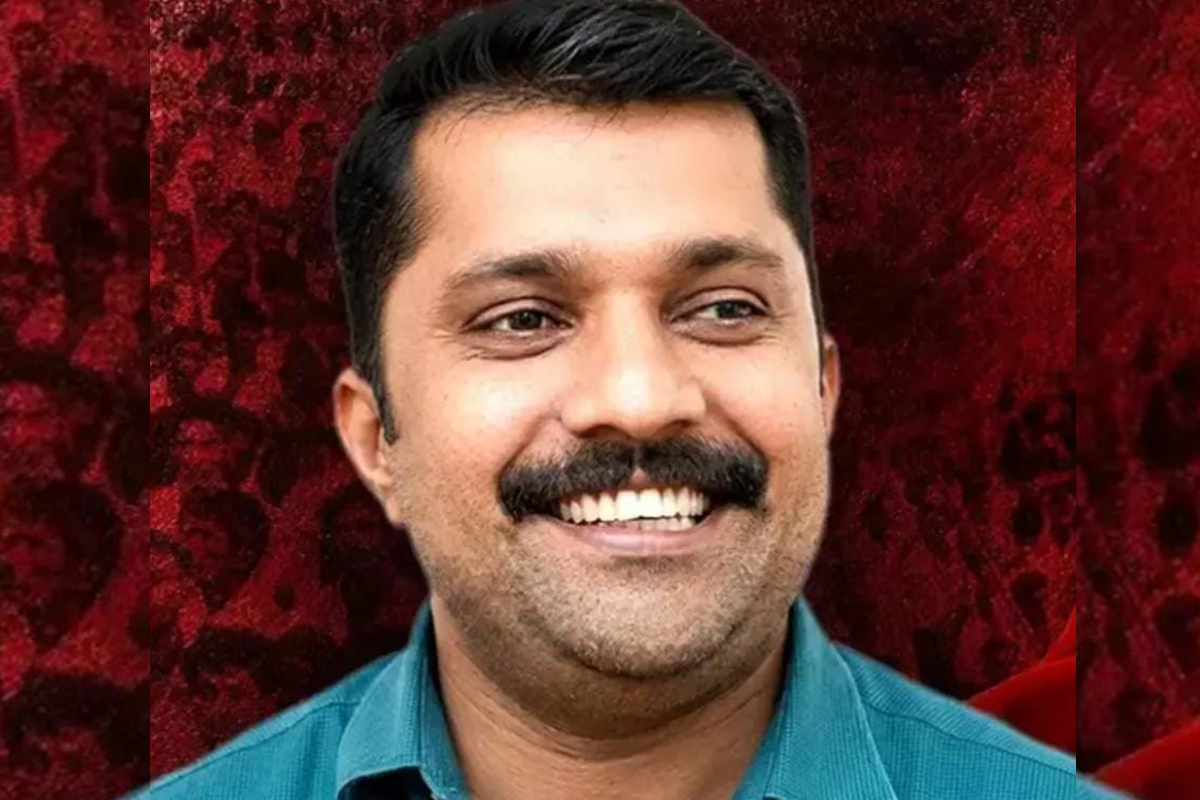
C V Dhanaraj, a former CPI(M) branch secretary at Ezhimala and DYFI leader, was hacked to death on July 11, 2016, at Karanthat in Ramanthali.

The verdict in the decade-old murder of CPI(M) worker CV Dhanaraj has brought little political relief to the party in Payyannur.
With only three of the 19 accused convicted and the remaining 16 acquitted, the judgment has opened another difficult chapter for the CPI(M)’s local leadership, already struggling to contain internal dissent, the martyr fund controversy and the loss of its traditional stronghold.
The Thaliparambu Additional District Sessions Court, presided over by Judge KN Prashanth, found the first three accused — TP Biju, M Vaishakh and M Vipin — guilty of murdering Dhanaraj.
The fourth to 11th and 13th to 20th accused were acquitted. The 12th accused, C Biju alias Churakkattu Biju, had been killed in a separate incident, and the trial proceeded against the remaining 19.
The court made a scathing observation on the brutality of the crime, noting that the manner in which Dhanaraj was hacked to death was so gruesome that even such brutality would be difficult to witness in a butcher’s shop.
However, the court refused to classify the case as one of the ‘rarest of rare’ and made it clear that it would not award capital punishment.
The court will pronounce the quantum of punishment for the three convicts on Wednesday.
While the convictions bring a measure of closure to a case that had remained politically sensitive for nearly a decade, the verdict is unlikely to end the controversy surrounding the murder. Instead, it could put the CPI(M)’s already strained organisational machinery in Payyannur under renewed pressure.
Dhanaraj, a former CPI(M) branch secretary at Ezhimala and DYFI leader, was hacked to death on July 11, 2016, at Karanthat in Ramanthali, in front of his mother and wife. A six-member gang arriving on three motorcycles attacked him near his house around 10 pm.
Within three hours, RSS worker Ramachandran was also hacked to death in a retaliatory attack, turning the twin murders into one of the most disturbing episodes in Kannur’s history of political violence.
The killings, which took place just months after the first Pinarayi Vijayan government assumed office, triggered widespread political tension.
A remark by then CPI(M) state secretary Kodiyeri Balakrishnan at a public meeting in Payyannur on July 26, 2016 — “If you sow trouble in the field, you will reap the consequences on the ridge” — also sparked a major controversy.
But the political consequences of Dhanaraj’s murder have continued well beyond the violence itself.
The CPI(M), which once enjoyed an almost unchallenged position in Payyannur, has in recent years found itself battling allegations of financial irregularities, factionalism and growing public resentment.
The controversy surrounding the fund collected in Dhanaraj’s name proved particularly damaging. Senior CPI(M) leader V Kunjikrishnan alleged that money raised for the martyr’s family had been diverted and misused by party leaders.
The allegations put the local leadership on the defensive and became a major embarrassment for the organisation. The controversy assumed an added political dimension when Kunjikrishnan, who raised the allegations, left the party and contested the Assembly election as an independent candidate with UDF support, winning the seat.
The CPI(M) also suffered an electoral setback in Payyannur, losing a constituency long regarded as one of its safest political bases. Allegations against former MLA TI Madhusoodanan and dissatisfaction over candidate selection further complicated the party’s position.
The leadership subsequently acknowledged shortcomings in candidate selection and organisational vigilance as factors behind the defeat. However, the damage to the party’s local standing has proved difficult to repair.
The relationship between Kunjikrishnan and the local leadership has remained strained, with allegations of attempts to sideline him from party programmes and public functions. His criticism has become an uncomfortable issue for the CPI(M) as it attempts an organisational course correction.
The court verdict could give fresh momentum to this internal confrontation. The martyr fund controversy, which had temporarily receded from public attention, could return to the centre of political debate.
For the CPI(M), therefore, the significance of the Dhanaraj case extends beyond the number of convictions or acquittals. The verdict comes at a time when the party is struggling to regain its lost political ground in Payyannur. How its local leadership handles the political fallout could prove as consequential as the judgment itself.
(With inputs from Dileep V Kumar. Edited by R Rajesh Kumar.)



