

Published Oct 15, 2026 | 12:03 PM ⚊ Updated Oct 15, 2026 | 2:23 PM

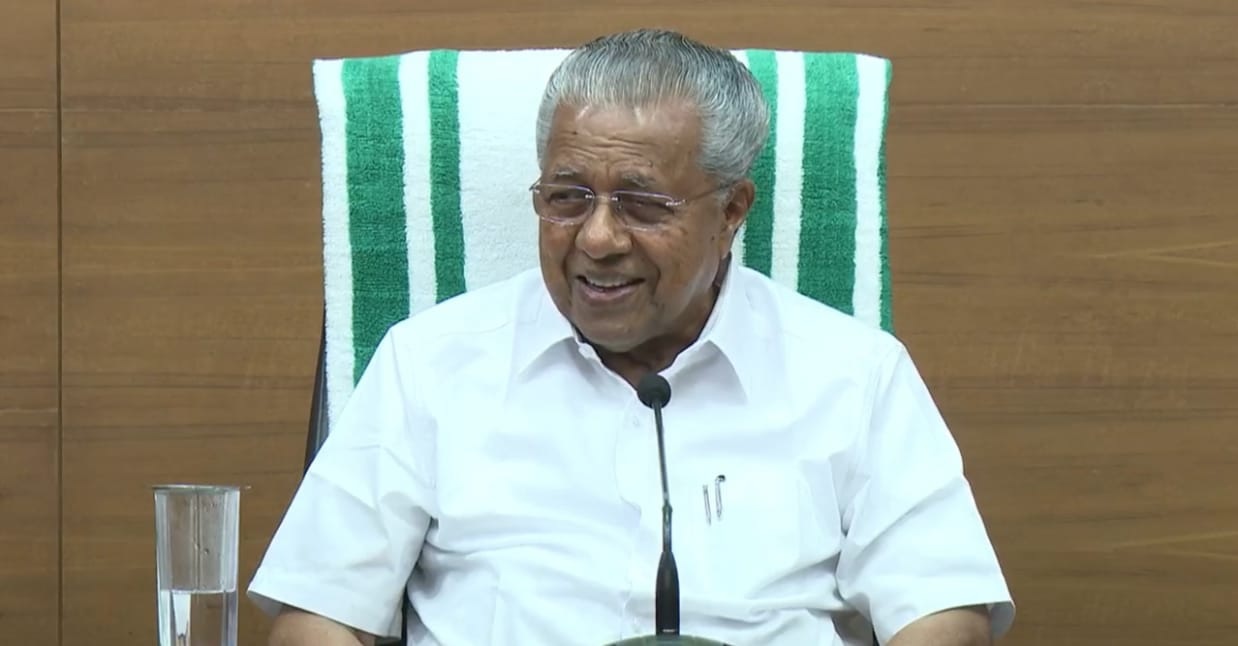
Pinarayi Vijayan

Synopsis: According to Bar and Bench, “We find that the impugned judgment hasn’t affected the right of the applicants to pursue the constitution of the statutory remedy against the registration of FIR and in such a situation all the applications seeking leave to file appeal are dismissed,” the Court held.
The Kerala High Court on Thursday, 15 October, has declined to entertain appeals by former Chief Minister Pinarayi Vijayan, his daughter Veena T. and son-in-law Mohammed Riyas against a directive to register a Vigilance FIR in the CMRL-Exalogic case.
A Division Bench comprising Justices K. Natarajan and Johnson John dismissed the three petitions seeking leave to challenge the single bench order.
According to Bar and Bench, “We find that the impugned judgment hasn’t affected the right of the applicants to pursue the constitution of the statutory remedy against the registration of FIR and in such a situation all the applications seeking leave to file appeal are dismissed,” the Court held.
Also Read: Vigilance registers two FIRs naming Pinarayi, Veena and Riyas; ex-CM to challenge move
The accused in a corruption case have no legal right to be heard before the registration of an FIR and cannot insist on a preliminary inquiry when the information received is supported by sufficient material disclosing cognisable offences, the Kerala High Court has held.
A Division Bench comprising Justices K. Natarajan and Johnson John made the observation while dismissing applications filed by Pinarayi Vijayan, his daughter Veena T and son-in-law Mohammad Riyaz.
They sought leave to appeal against an earlier judgment by a single bench comprising Justice A Badharudeen ordering to register an FIR.
The court also dismissed the consequential appeals.
Rejecting the applicants’ contentions, the court held that the availability of sufficient material disclosing cognisable offences obviated the need for a preliminary inquiry.
It further made clear that an accused could neither claim a right to be heard before registration of an FIR nor demand a preliminary inquiry as a precondition for its registration in a corruption case.
The Bench also noted that the judgment under challenge had not deprived the applicants of their legal remedies against the registration of the FIR.
An FIR could be challenged before the High Court under Article 226 of the Constitution before cognisance was taken, while the jurisdiction under Section 528 of the Bharatiya Nagarik Suraksha Sanhita (BNSS) could be invoked to seek quashing of the proceedings after cognisance.
In view of the continued availability of these constitutional and statutory remedies, the applicants had failed to establish a prima facie or arguable case warranting leave to appeal, the court held.
Earlier, the single bench had directed the Vigilance and Anti-Corruption Bureau (VACB) to register a case under the Prevention of Corruption Act against the three, acting on information provided by the Enforcement Directorate (ED).
It had ruled that the government’s decision to proceed with a preliminary inquiry without registering an FIR was illegal and quashed the order constituting a Special Investigation Team (SIT) for the probe.
Aggrieved by this the three approached the division bench.
In their appeals, the three argued that they had not been heard before the single bench issued directions. They also contended that this violated the principles of natural justice.
The Kerala High Court had held that the material submitted before it disclosed possible cognisable offences. The state police had been examining whether a preliminary inquiry was required before registering an FIR.
The FIRs were registered by the VACB’s Special Investigation Unit-1 following legal advice and the High Court’s directive to initiate a case based on material submitted by the Enforcement Directorate (ED).
Justice A Badharudeen had delivered his verdict on a petition filed by KM Shajahan, the former private secretary to late Kerala Chief Minister VS Achuthanandan.
In the first case, registered under the Prevention of Corruption Act, Vijayan has been named the first accused, while his daughter, Veena T, and her company, Exalogic Solutions, are at the centre of the allegations concerning payments made by Cochin Minerals and Rutile Limited (CMRL).
The second FIR names former minister and MLA P A Mohammed Riyas, Vijayan’s son-in-law, as the first accused and Veena as the second accused. It concerns separate allegations relating to financial transactions and the alleged transfer of money abroad through hawala channels, sources said.
The ED had alleged that CMRL paid Rs 2.78 crore to Exalogic under the guise of IT consultancy services without receiving corresponding services. The allegations have not been established in court.
(Edited by Sumavarsha, with inputs from Dileep V Kumar)



