

Published Oct 20, 2026 | 9:30 AM ⚊ Updated Oct 20, 2026 | 9:30 AM

As of 31 March 2026, KIIFB had accumulated debt liabilities of ₹32,198.33 crore.

Synopsis: Once hailed by the LDF as a key to fast-tracking Keralam’s infrastructure development, KIIFB is now at the centre of a political and financial storm. A committee headed by Sudha Pillai has questioned its borrowing model, flagged alleged irregularities in land acquisition and spending, and warned of a long-term burden on the state exchequer. With Chief Minister VD Satheesan considering a probe and promising action against those responsible, the previous LDF government’s decisions could come under scrutiny. Former Finance Minister TM Thomas Isaac has hit back, accusing the UDF of pursuing a neoliberal agenda that threatens development.
The Kerala Infrastructure Investment Fund Board (KIIFB), an agency the CPI(M) projected as a game-changer in Keralam’s infrastructure development, is facing a test of time.
The UDF government is moving beyond a promised overhaul to considering an investigation into alleged irregularities in the state’s flagship infrastructure financing agency.
The Sudha Pillai Committee report, tabled in the Assembly on 15 October, has raised questions over constitutional compliance, financial controls, consultancy payments and land acquisition, putting the agency’s functioning under renewed scrutiny.
The government formed the high-level expert committee in July to conduct a comprehensive review of KIIFB’s institutional, financial, governance, and operational framework. The committee, headed by former Union Secretary and retired IAS officer Sudha Pillai, was given three months to submit a comprehensive restructuring plan.
If the government proceeds with a probe, its implications could extend beyond KIIFB’s institutional structure, potentially bringing former chief minister Pinarayi Vijayan, two LDF finance ministers — TM Thomas Isaac and KN Balagopal — and senior officials involved in its functioning under the scanner.
For the LDF, which championed KIIFB as a means of funding major infrastructure projects without relying on conventional budgetary allocations, the controversy presents a political and administrative challenge.
Isaac, however, framed the dispute as an ideological battle, accusing Chief Minister VD Satheesan of reshaping KIIFB along neoliberal lines.
With the government weighing its next move, the question is whether the scrutiny will remain a drive for institutional reform or broaden into a probe with wider political consequences for the previous government.
Also Read: Pinarayi Vijayan defends KIIFB land acquisition
The Sudha Pillai Committee report has delivered a sweeping indictment of the KIIFB, questioning its borrowing practices, financial management, land acquisition decisions and accountability to the state government. Its central recommendation is that KIIFB should stop raising money from the market and financing projects, with the government taking over its outstanding obligations and finding a more sustainable way to fund infrastructure development.
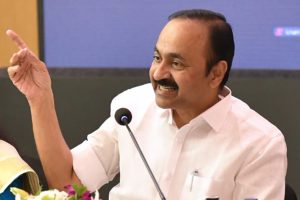
Keralam CM VD Satheesan.
The UDF government’s five-member committee, constituted in July, has been mandated to examine KIIFB’s institutional, financial, governance, and operational framework. The panel warned that KIIFB’s functioning over the past decade has weakened established governance systems and adversely affected Keralam’s future fiscal position.
Satheesan tabled the report in the Assembly on 15 October, setting the stage for a wider review of the infrastructure financing model championed by the previous LDF government.
The panel has called for amendments to the KIIFB Act to remove provisions that enable market borrowings, including Sections 8 and 9, as well as other relevant provisions of the 2016 amendment. It has also recommended a performance audit by the Comptroller and Auditor General (CAG) or the Accountant General, Kerala, covering the 10 financial years from 2016-17 to 2025-26.
While Section 8 empowers KIIFB to borrow money with prior government approval and lend from its funds to public sector and other undertakings in Keralam, subject to prescribed conditions, Section 9 allows the government to guarantee KIIFB loans, with the total guarantee capped at ₹1,000 crore. The government must report annually to the Assembly on guarantees issued and payments made or recovered through the Consolidated Fund of the State.
Also Read: Will CPI(M)’s brainchild KIIFB sink or soar?
One of the report’s most serious findings concerned the impact of KIIFB’s borrowings on the state’s finances. The committee estimated that Kerala’s borrowing limit was reduced by ₹25,932.55 crore, significantly constraining the state’s fiscal space.
The report said 99.4% of the funds the government transferred to KIIFB between 2021-22 and 2024-25 were used to repay loans. The committee has also questioned the use of off-budget borrowings, which it said remained outside the Legislative Assembly’s direct scrutiny and oversight.
The report alleged that the KIIFB’s functioning weakened the Finance Department’s role. It cited an instance in which the department decided against providing guarantees for KIIFB’s loans, but a meeting chaired by the chief minister overruled the decision and authorised the guarantees.
The committee flagged the higher cost of borrowing through KIIFB compared with the state’s own borrowings. It estimated an additional annual interest burden of ₹396 crore, with cumulative excess expenditure of ₹1,250 crore. The loss associated with masala bonds was estimated at ₹181.73 crore.
It has also found that Section 8(1) of the KIIFB Act, which mandated government approval before borrowing, was flouted. Section 8(1) empowers the Board to borrow funds through bonds, debentures, banks or government-approved institutions, with prior government sanction and subject to its conditions.
Also Read: Thomas Isaac rejects ED’s ‘election-season theatrics’ over masala bond notices
The scale of KIIFB’s financial commitments is another major concern. As of 31 March 2026, the board had accumulated debt liabilities of ₹32,198.33 crore.
The company would need a further ₹22,883 crore to complete projects that are ongoing, tendered, or ready to be tendered.
The figures excluded the unpaid balance of ₹11,787.37 crore in the land acquisition pool. The committee warned of additional compensation liabilities if acquisition proceedings were abandoned after issuing notifications under Section 11(1) of the Right to Fair Compensation and Transparency in Land Acquisition, Rehabilitation and Resettlement Act, 2013. The extent of such liabilities would depend on court decisions.
The report estimated that the state government required ₹70,415.54 crore in the coming years to repay KIIFB loans and to complete ongoing projects. Repayments were expected to continue until the 2041-42 financial year. The estimate excluded land acquisition costs, adding to the state’s potential long-term liability.
The committee calculated that, as of 29 September 2026, KIIFB’s resource mobilisation model resulted in a shortfall of ₹61,678.46 crore in government receipts. The total value of funds spent on infrastructure projects and the balance remaining with KIIFB stood at ₹48,574.82 crore. Based on these figures, the report estimated that the state would spend an additional ₹13,103 crore on projects implemented through KIIFB.
The board, meanwhile, had approximately ₹5,821 crore deposited in various accounts even as the state government’s sovereign guarantee remained in place, the report noted.
Also Read: Heavy off-budget borrowings made Kerala financially unhealthy
The committee questioned the assumption that several KIIFB-funded projects would generate revenue to support the financing model. It found that many projects categorised as revenue-generating were not, in reality, capable of generating revenue.
It has also pointed to significant disparities in the geographical distribution of projects. Three districts — Thiruvananthapuram, Kannur and Ernakulam — accounted for 41.6% of KIIFB projects, while Kannur alone accounts for 52.9% of its land acquisition activities.
Land acquisition for industrial projects in Kannur and Palakkad has come under particular scrutiny. KIIFB approved ₹12,727 crore to acquire 5,366 acres in the two districts. Of this, the report alleged that around 1,000 acres were acquired in Kannur at a cost of ₹2,489 crore, but no industrial activity began on the land over the preceding five years.
The committee also flagged a notification to acquire an additional 3,829 acres in Kannur at an estimated cost of ₹9,572 crore. It questioned the valuation and financial implications of the acquisitions. The report alleged that the government acquired land at several times its actual value without generating revenue.
The panel examined KIIFB’s 33rd meeting, held on 25 October 2018, as an instance requiring further scrutiny. The meeting approved land acquisition covering around 5,366 acres in Kannur and Palakkad at an estimated cost of ₹12,727 crore. However, the agenda papers had sought approval for the first phase, covering 1,037 acres at an estimated cost of ₹1,887.50 crore. The board subsequently approved acquisition of 4,896 acres in Kannur and 470 acres in Palakkad in four stages.
The committee also found that the proposal was based on a concept note submitted by KINFRA (Kerala Industrial Infrastructure Development Corporation) and did not indicate that it originated from a decision of the Council of Ministers or a Budget announcement.
KIIFB’s land acquisition role itself has been questioned.
The board was established in 1999, but the 2016 amendment to the KIIFB Act brought financing land acquisition for infrastructure and other government purposes within its remit. As of 15 September 2026, it had sanctioned seven land acquisition projects worth ₹23,190 crore.
The report has flagged “serious irregularities” in KIIFB’s expenditure on publicity and promotion. While the board reported spending ₹21.16 crore on advertising and promotion in 2025-26, the committee claimed actual expenditure was ₹203.72 crore.
Staffing and pay revisions have also come under scrutiny. The government had sanctioned only 40 posts, but KIIFB currently has 498 employees. The committee noted that the salary structure revision lacked the Finance Department’s approval.
The report further recorded several instances in which the government’s Rules of Business were not followed, concluding that KIIFB’s operations over the past decade had weakened established governance arrangements.
The committee proposed a comprehensive restructuring of KIIFB rather than continuing its current role as a market borrower and project financier. It recommended that the respective government departments, with support from implementing agencies, complete infrastructure projects the board had already initiated and the government had prioritised at different stages of implementation.
It also called for cancelling the 2018 government order that allowed the direct transfer of a share of Motor Vehicles Tax revenue and the cess on petroleum products to KIIFB once the state takes over the board’s debt obligations. As of 29 September 2026, the government had transferred ₹26,165.93 crore to KIIFB through these revenue streams.
The committee’s recommendations would require a fundamental change in the way the state finances infrastructure projects. Its proposed audit, scrutiny of land acquisitions, and review of borrowing approvals could also bring decisions made during the previous government’s tenure under closer scrutiny.
The report’s findings and recommendations are now likely to feed into the government’s plans for KIIFB’s future. The key challenge will be meeting existing commitments, completing projects already underway, and establishing a financing mechanism that the committee says must be more fiscally sustainable and accountable.
The UDF government’s move to consider an investigation into alleged irregularities in KIIFB has opened a fresh political front against the LDF, which had projected the infrastructure financing agency as a key driver of Keralam’s development.

TM Thomas Isaac
Chief Minister Satheesan has promised to implement the Sudha Pillai Committee’s recommendations, which flagged deviations from constitutional provisions and the government’s Rules of Business.
Former finance minister Thomas Isaac accused Satheesan of pursuing a neoliberal agenda to dismantle the KIIFB model, warning that the state could return to the slow pace of infrastructure development witnessed a decade ago.
Speaking at a press conference in Thiruvananthapuram on 15 October, Satheesan said the Cabinet would examine the committee report in detail before deciding on an appropriate investigation.
He said the government would bring those responsible for the alleged irregularities to book.
The chief minister blamed KIIFB’s functioning for the state’s precarious fiscal position, alleging the agency had become a “separate empire”. He also pointed out that no other state in the country had an entity like KIIFB.
Isaac, who has been among the principal architects and defenders of the KIIFB financing model, said the dispute was essentially ideological.
He argued that the Left welcomed private investment but, unlike the BJP, had no intention of handing over the entire infrastructure sector to private players or using public money merely to make projects profitable for them.
The former finance minister said the government had a responsibility to undertake projects that might not generate direct profits, including improving facilities in schools, colleges and hospitals. He alleged the new expert committee opposed this approach.
Accusing Satheesan, who describes himself as a ‘Nehruvian socialist’, of promoting neoliberalism, Isaac said the attempt aimed to reshape KIIFB in line with that ideology. He warned that Keralam could return to the slow pace of infrastructure development that prevailed a decade ago.
The former finance minister also announced that the LDF would launch a statewide agitation against an anti-development move. He said the front would highlight KIIFB projects facing cancellation in each Assembly constituency and take the campaign to the public.
The proposed agitation would also focus on other infrastructure concerns, including the renovation of MC Road, which Isaac said could not proceed for want of funds, railway infrastructure development and the ecological restoration of Kuttanad.
With the government considering a probe and the LDF preparing a political campaign to defend KIIFB, the committee report is set to become a major point of confrontation between the two fronts. An investigation could also put decisions made during the previous government’s tenure under scrutiny, including those involving former finance ministers and senior officials.
Meanwhile, economist Dr Mary George has called for scrapping KIIFB and probing alleged irregularities in its functioning, saying those responsible for any large-scale corruption must be brought to justice.
Speaking to South First, she backed the recommendation for a Comptroller and Auditor General audit and called for a forensic audit to establish whether funds were misused.
“If large-scale corruption indeed happened at KIIFB, those responsible must be brought before the law. The state already has mechanisms to execute projects, and an entity like KIIFB has no role. It must go,” she said.
(Edited by Majnu Babu).



