

Published Oct 07, 2026 | 9:00 AM ⚊ Updated Oct 07, 2026 | 9:00 AM

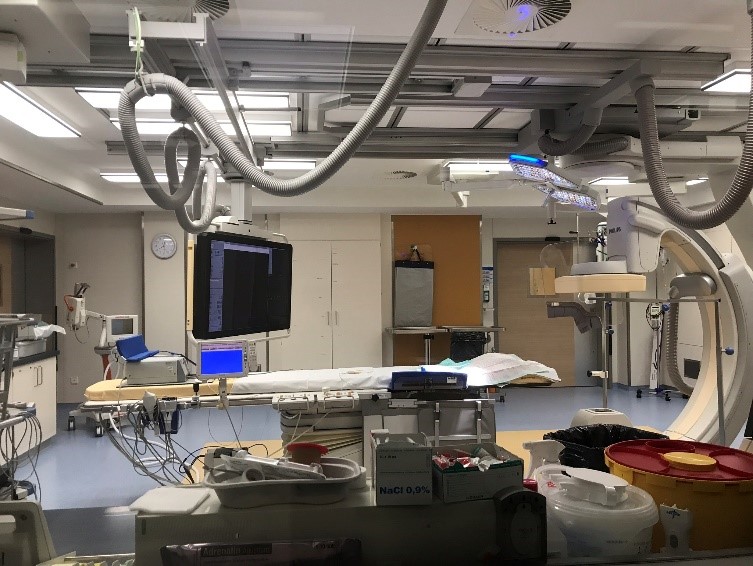
Satheesan said some families have been forced to mortgage their properties to meet treatment costs and urged people to seek a second opinion.

Synopsis: Keralam Chief Minister VD Satheesan’s remarks on unnecessary angioplasties have opened a wider debate in the state over patient safety, medical ethics and the need to distinguish avoidable procedures from life-saving emergency treatment. The controversy comes as doctors also point to the state’s heavy heart-failure burden, underscoring the need for timely, evidence-based cardiac care without fuelling public mistrust.
It is not every day that a chief minister’s remark spills out of the political arena and sparks debate within the medical fraternity and the public healthcare sector.
Yet, that is what has happened in Keralam after Chief Minister VD Satheesan questioned the practice of performing angioplasty on patients who may not actually need the procedure.
What began as a warning against unnecessary interventions has quickly turned into a wider debate.
Keralam’s cardiology community finds itself on opposite sides of a contentious question: are patients being pushed into angioplasty when they do not need it, or is the growing criticism of the procedure risking dangerous delays in genuine cardiac emergencies?
Some object to what they see as a sweeping remark against the profession, while others feel the chief minister has merely put into words a concern long discussed within the medical community.
Also Read: Importance of Primary PTCA for acute myocardial infarction
Satheesan’s remarks on unnecessary angioplasties have triggered a sharp debate among cardiologists, with one senior doctor backing his comments. At the same time, another cautioned that the remarks could create fear among heart-attack patients.
Speaking at the Kerala Heart Care Society’s silver jubilee celebrations in Kozhikode on 3 October, the chief minister said a campaign was needed against unnecessary angioplasties. He alleged that doctors sometimes recommended the procedure immediately and warned patients of serious consequences if they asked for time to discuss it with their families.
He also said some families were forced to mortgage their property to meet treatment costs and urged people to seek a second opinion.
Dr Rajesh Gopalan Nair, Professor and Head of Cardiology at Government Medical College Hospital, Kozhikode, endorsed the statement, calling it “100% true”.
He said cardiology had “significantly declined in stature” and questioned whether doctors could honestly deny that unnecessary angioplasties were performed.
Dr Nair said that he performed angioplasties regularly, but maintained that medication was the primary treatment for chronic stable angina.
He stressed that heart-attack patients required immediate angioplasty and that NSTEMI (Non-ST-segment elevation myocardial infarction is a type of heart attack when a part of the heart does not get enough oxygen, and that NSTEMI patients need angiographic assessment within two hours.
However, Dr Jo Joseph, consultant cardiologist at Lissie Hospital, Kochi, said the chief minister’s remarks needed clarification.
He pointed out that the National Pharmaceutical Pricing Authority was regulating coronary-stent prices, with the 1 April 2026 ceiling for drug-eluting stents put at ₹39,186.03.
He warned that in STEMI (ST-Elevation Myocardial Infarction, a heart attack caused by a complete coronary artery blockage), every minute matters.
Citing an ACS QUIK (Acute Coronary Syndrome Quality Improvement in Kerala Trial) study, he said the median delay in reaching the hospital was 238 minutes for men and 300 minutes for women.
While recommending an audit and action against unnecessary procedures, Dr Joseph warned against casting the entire cardiology community under suspicion.
Also Read: How can hospitals be centres of excellence
Angioplasty restores blood flow through coronary arteries narrowed by fatty deposits, helping ease chest pain and, in emergencies, treat a heart attack.
The procedure involves passing a thin catheter through a major blood vessel in the arm or leg and guiding it to the heart under X-ray imaging. In balloon angioplasty, doctors inflate a tiny balloon at the catheter’s tip at the narrowed section, widening the artery and improving blood flow.
Doctors usually place a small metal mesh tube, or stent, to keep the artery open. Stents may be bare metal or drug-coated.
While drug-coated stents reduce tissue growth, they require longer-term anti-platelet medication.
Blood clots or scar tissue can still narrow the artery again.
Atherectomy is another technique in which a device cuts away plaque from the artery wall, often alongside angioplasty or stenting.
Doctors assess patients using medical history, examination, blood tests, ECG, stress tests or echocardiography. Angioplasty may also be used to open narrowed femoral or iliac arteries.
Also Read: Cardiac arrests in young fitness enthusiasts spotlight gaps in health screening
Meanwhile, doctors’ associations have cautioned that broad public criticism of medical procedures could create fear among patients and, in emergencies, lead to dangerous delays in treatment.
The Interventional Cardiology Council of Kerala (ICCK) said apprehension over unnecessary procedures should not prevent patients from seeking immediate care during a heart attack. The council supported evidence-based and ethical treatment, stressing that every intervention must have a clear clinical indication.
According to ICCK, emergency angioplasty during an acute heart attack should not be equated with planned procedures for stable patients. When a coronary artery is suddenly blocked, restoring blood flow quickly can save heart muscle and, in several cases, the patient’s life.
More than 70% of angioplasties recorded in the statewide ICCK registry were performed in acute or emergencies, he said. Such cases often leave doctors with only a narrow window to decide and intervene.
ICCK further warned that mistrust of cardiac procedures could discourage patients with severe chest pain from reaching hospital promptly.
The Indian Medical Association (IMA) also expressed concern over sweeping public statements.
It said it respected the intention behind Chief Minister Satheesan’s call to avoid unnecessary investigations and treatment, but warned that such remarks could make patients suspicious even of essential procedures.
IMA said treatment decisions must be based on each patient’s condition, test results and risk factors. Any unethical practice should be investigated and acted upon without undermining public trust in doctors who practise sincerely.
Also Read: Most heart attacks can be reversed in the initial golden hours
Heart failure continues to take a heavy toll in Keralam, with patients facing a far greater risk of death and illness over the long term.
A decade-long follow-up of patients hospitalised with acute decompensated heart failure in Keralam has now brought the scale of the problem into sharp focus.
The study, ‘Long-Term Prognosis in Heart Failure: Findings from the Ten-Year Follow-Up of the Trivandrum Registry’, published in August in the Journal of Cardiac Failure, found that nearly 83% of patients in the registry died during the 10-year follow-up.
The researchers noted that it was among the highest mortality rates reported worldwide from a heart failure cohort followed for such a long period.
The findings pointed to several possible reasons for the poor outcomes among heart failure patients.
Delays in diagnosis, inadequate use of proven treatments, limited access to specialised cardiac care and wider shortcomings in the healthcare system could all be contributing to the higher burden of death and complications.
The registry, described as the first long-term follow-up of patients hospitalised with acute decompensated heart failure in India, also found clear differences according to the type of heart failure.
The researchers said the findings underlined the need to improve the implementation of guideline-directed treatment for eligible heart failure patients. They also stressed the importance of stronger preventive measures, early diagnosis and better access to appropriate care to reduce the growing burden of heart failure in India.
With around 83 in every 100 patients dying within 10 years in this registry, the study highlighted the long-term consequences of heart failure and the need for sustained treatment and follow-up well beyond the initial hospitalisation.
(Edited by Majnu Babu).



