

Published Jan 13, 2024 | 12:36 PM ⚊ Updated Jan 13, 2024 | 12:36 PM

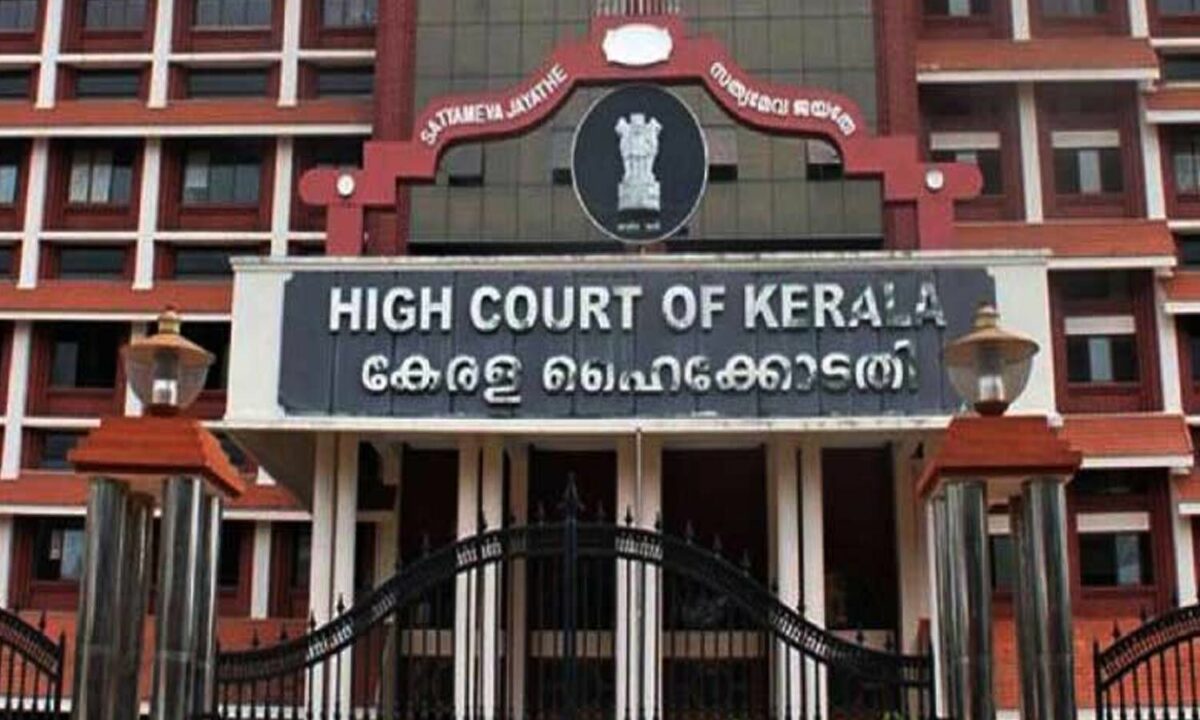
Kerala High Court. (Creative Commons)

Leader of Opposition in the state Assembly VD Satheesan has filed a plea with the Kerala High Court, seeking a CBI probe into alleged corruption in awarding contracts for the Left government’s K-FON project, which offers free internet connectivity to the poor.
In his plea, Satheesan has also alleged that there has been a major delay in implementing the Kerala Fibre Optic Network (K-FON) project.
The Congress leader alleged that a project that would have become a milestone has been handed over to those without the required qualifications for its implementation.
Satheesan sought a CBI probe alleging that there was corruption in awarding the contracts and subcontracts for project implementation.
The plea, filed on Friday, 11 January, is likely to be heard sometime next week.
Satheesan has been a staunch critic of the project’s implementation for long.
At the time of K-FON’s launch, the Opposition leader had told South First, “The expense for the inaugural ceremony was ₹4.35 crore. Such a lavish extravaganza is being organised when the state is facing an acute financial crisis. Despite all tall claims, the project has just been initiated and is in its primary stage.”
He had said the company that won the tender for laying the optical ground wire (OPGW) cable for the K-FON project had violated all norms.
Satheesan said the company used substandard cables imported from China, ignoring pleas to use locally available quality material.
As per the original agreement, the cables should have been made in India.
He also said the Point of Presence (PoP) provided by Presidio, the firm alleged to have links with the chief minister, also did not meet the required standards.
On 30 June, 2023, Satheesan in an affidavit filed in the high court, alleged that Public Sector Undertakings (PSUs) and cooperative societies were being used by shady companies to grab major projects such as the installation of Artificial Intelligence (AI)-enabled traffic surveillance cameras, K-FON, and others.
Satheesan claimed that the projects were entrusted to public sector undertakings or cooperative societies only to aid corruption.
“Recent controversies surrounding important state-funded projects, including the AI camera project, K-FON project, LIFE mission, Covid purchases, etc, show that numerous violations and corrupt practices were employed to steal money from the state coffers,” the affidavit alleged.
Satheesan had submitted before the court that in projects such as AI cameras, K-FON, or LIFE mission, “The public sector enterprises and cooperative societies were used as masks by shady or shell companies to grab the project.”
“While Keltron was arbitrarily chosen as the implementation agency for the AI camera project in violation of government orders, the central PSU Bharat Electronics Limited (BEL) was given the project in K-FON for exorbitant tender in violation of all conventional guidelines,” the affidavit said.
K-FON, launched last year, aims to provide free internet to around 20 lakh economically weak families, and at an affordable rate to others.
The government had earlier said that over 18,000 government offices in the state have been provided internet facilities through the ₹1,500-crore K-FON project.
K-FON is Kerala’s own internet service, through which the government hopes to help strengthen digital infrastructure in the state. Kerala is the first state to declare the Internet as a fundamental right of the citizen.
A consortium of public sector companies including BEL and Railtel, along with certain private companies, is executing the project.
The initial plan was to connect Kerala’s more than 14,000 below-the-poverty-line families with cyberspace.
However, a lack of infrastructure and financial resources prevented the state from aggressively pursuing the ambitious mission, which has already received national and international attention.
In June 2023, officials told South First that cables were laid across the state, but in the first phase — or four months — only 6,900 families would benefit from the network.
In the case of government offices, the initial plan was to give 30,000 connections in the first phase.
Officials said cables were laid for connecting 26,492 offices, but only 17,412 offices and government institutions have been connected so far.
(With PTI inputs)



