

Published Nov 13, 2026 | 9:30 AM ⚊ Updated Nov 13, 2026 | 9:30 AM

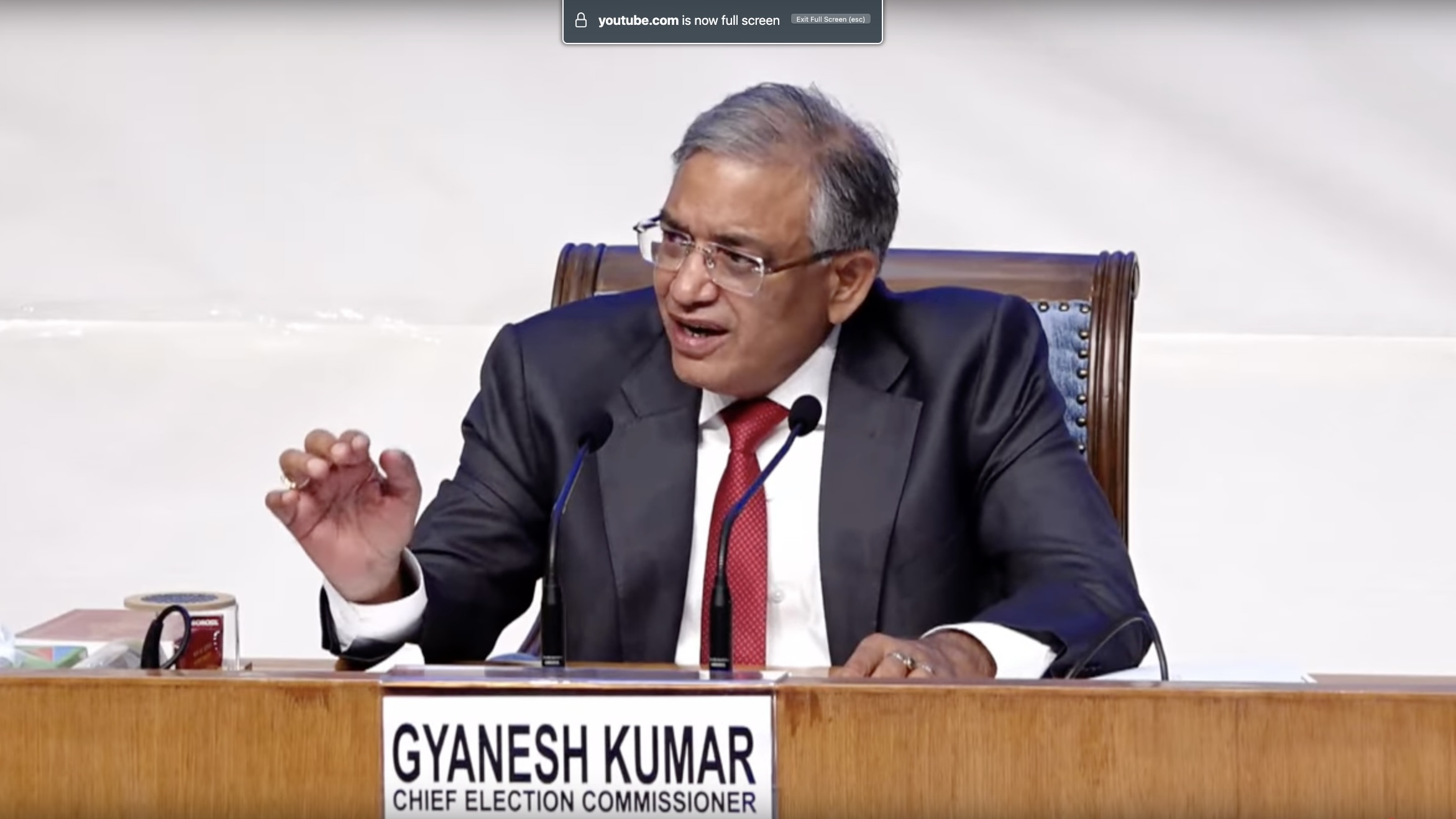
Chief Election Commissioner of India Gyanesh Kumar

Synopsis: A nearly two-decade-old corruption allegation against Chief Election Commissioner Gyanesh Kumar has returned to the spotlight in Keralam, with fresh witness statements lending momentum to a Vigilance probe into the alleged demand for a ₹2-crore bribe to release payments for a World Bank-funded road project. While a 2007 Vigilance inquiry had given Kumar a clean chit, a contractor and the engineer’s former assistant have now revived allegations that crucial evidence was overlooked and witness accounts were altered under pressure.
As the Congress steps up its national campaign demanding the removal of Chief Election Commissioner Gyanesh Kumar, a corruption allegation dating back nearly two decades has acquired fresh significance in Keralam.
An ongoing Vigilance probe into the alleged demand for a bribe by Kumar, during his tenure as Keralam’s Public Works Department secretary in 2006, to clear payments for a World Bank-funded road project has gained momentum with a new witness statement, giving the Congress-led government another opening to build its case against the CEC.
At the heart of the investigation is the death by suicide of a Malaysian engineer, Lee See Been, in 2006, reportedly after months of distress over unpaid project bills.
On 12 November, Shajahan, who worked as a personal assistant to the late Lee, the chief project manager of the PATI-BEL consortium, told Vigilance officials that the engineer was under severe mental distress after payments for the work remained pending. He also reportedly spoke about Lee’s complaints that bribes were being demanded to clear the bills.
The latest statement is significant as it adds another account from someone who was closely associated with the engineer. Lee died by suicide in Kuala Lumpur in 2006, after returning to Malaysia. Allegations that he had faced pressure from officials over the clearance of project payments had surfaced following his death.
At present, the Vigilance is carrying out the inquiry into the allegations against Kumar as a single complaint, as the ones submitted by Congress leader Malayinkeezhu Venugopal and contractor VO Sajan, also a friend of Lee, are similar.
Notably, in 2007, when the allegations first cropped up, including the alleged mention of his name in Lee’s suicide note, and irregularities connected with overpaying a contractor, and in connection with the construction of a bridge, the Vigilance gave a clean chit to Gyanesh Kumar.
Shajahan, a native of Chadayamangalam in Kollam district, was working with Lee when the 2006 road project was under way.
According to his statement, the engineer had confided in him about an alleged bribe demand by PWD officials. Lee was under severe mental stress as his project bills remained unpaid, leaving him worried that the work would grind to a halt, Shajahan said.
Lee later returned to Malaysia and died by suicide. Shajahan told investigators that he came to know from Malaysian officials who had worked with Lee that the engineer’s suicide note referred to the alleged demand for a bribe and the withholding of his bills by PWD officials. Lee had also reportedly shared his distress with the project manager of the PATI-BEL consortium, according to the statement.
The allegations centre on the reconstruction of the MC Road stretch between Angamaly and Thiruvananthapuram under the World Bank-funded KSTP.
The ₹215-crore project was undertaken in 2006, with the contract awarded to PATI-BEL, a joint venture between a Malaysian company and Bhageeratha Engineering.
Earlier, VO Sajan, a sub-contractor who supplied materials to the consortium and a friend of Lee, had alleged that Kumar, who was the PWD secretary at the time, demanded a bribe of ₹2 crore from the Malaysian engineer to release pending bills amounting to around ₹17 crore.
Sajan claimed that the payments were withheld after Lee refused to meet the demand.
Sajan recently appeared before the VACB and reiterated his allegations, accusing the earlier inquiry of failing to examine crucial evidence. He also alleged that a company official’s initial statement implicating Kumar was subsequently changed under pressure, after the official was warned that his own bills could face difficulties.
The Vigilance team has already recorded Sajan’s statement on 9 November and is now examining the claims made by him.
Then, Sajan claimed that the initial probe into the case had failed to pursue important leads and had largely relied on statements that favoured Gyanesh Kumar, leaving out material that could have pointed to his alleged role.
He said the available information warranted a more thorough inquiry, but the investigation at the time had not adequately examined the evidence. This, he alleged, had enabled Kumar to escape being named as an accused.
Sajan also alleged that a senior commercial official of the company had initially given investigators a statement suggesting Kumar’s involvement. However, the official was later called back, around four months after the first statement, and allegedly warned that the company’s pending bills could face hurdles if Kumar’s name remained in the record.
According to Sajan, the official subsequently changed his account under pressure, leading to the removal of Kumar’s name from the statement. He said documentary records were available to substantiate this allegation and urged the VACB to examine them during its ongoing investigation.
At the same time, Venugopal, who first approached the Vigilance demanding a fresh inquiry into the 2006 developments, told South First that as both Sajan’s and Shajahan’s statements had been recorded, the Vigilance was expected to issue summons to those who figured in their statements.
“The sleuths will record their accounts also. The first investigation carried out in 2007 was compromised. There is no doubt about that. Then four witnesses’ statements were recorded. But only those who were close to Kumar was selected. What we expect is a comprehensive probe,” said Venugopal.
Earlier, in the first week of November, the state government authorised the VACB to register a case and conduct a formal investigation into the allegations.
The decision followed a preliminary inquiry and legal advice from Additional Director General of Prosecution (Vigilance) G Saseendran, who held that the passage of time would not, by itself, prevent the investigation.
The legal opinion also reportedly recognised the evidentiary value of statements made by a person before death, clearing a key legal hurdle for the probe.
The investigation has been assigned to the Vigilance Department’s Special Investigation Unit-I in Thiruvananthapuram. The agency has sought detailed records from the KSTP regarding the PATI-BEL contract, payments made to the consortium, the bills that were withheld and the circumstances under which the outstanding amounts were eventually settled.
Investigators are also examining the circumstances surrounding Lee’s death and the allegations recorded in his suicide note. The latest statement from Shajahan is expected to form part of this exercise.
(Edited by Dese Gowda)



