

Published Oct 11, 2026 | 6:45 AM ⚊ Updated Oct 11, 2026 | 6:45 AM

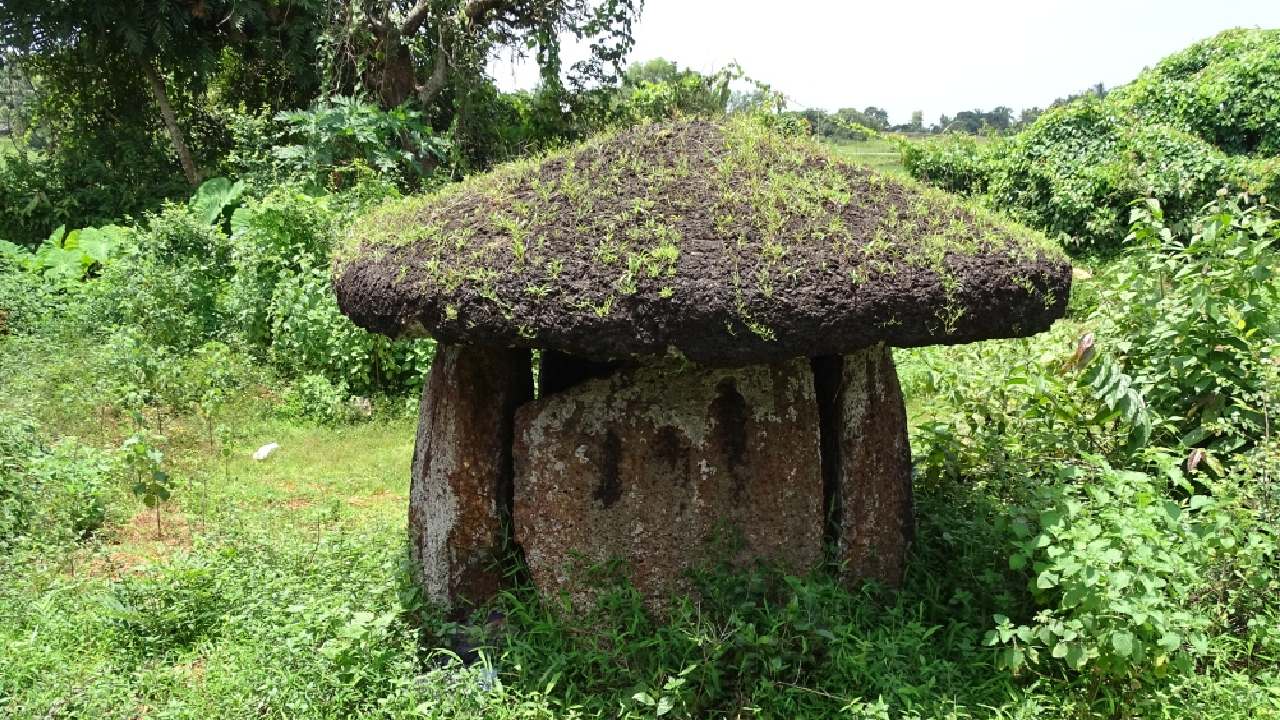
A 'kudakallu', a prehistoric megalithic burial monument, at Kundamkuzhy, Kasaragod. (Kerala Tourism).

Synopsis: Kasaragod’s archaeological story may be far richer than its well-known forts and monuments suggest. A district-wide survey is now searching its laterite hills, caves, fields, and other landscapes for evidence of undocumented settlements and burial practices. The survey has already uncovered previously undocumented megalithic sites and rock-cut chambers. The exercise could reveal new chapters in the district’s and the state’s ancient history while also highlighting the urgent need to scientifically document, protect, and preserve its archaeological heritage.
Forts, temples and palaces have long stood as reminders of Kasaragod’s rich past. But beyond these well-known landmarks, the district may still hold many untold stories of human settlement — buried under the soil, hidden in the landscape or left undocumented.
Keralam’s Archaeology Department has now set out to find them.
The department has launched the Kasaragod Archaeological Survey 2026, a district-wide exercise to identify, document and map archaeological remains, including sites that have so far escaped official attention. A 25-member team comprising archaeology officials, researchers and students has been divided into five groups for the field survey.
The exercise matters in a district where evidence of human habitation dates back to the Great Stone Age.
Archaeologists and historians believe that Kasaragod’s villages, laterite hills, riverbanks, fields and coastal stretches could hold clues to settlements and cultures that have not yet found a place on the state’s archaeological map.
The survey, therefore, is expected to raise a larger question: what else from Kasaragod’s past remains buried, unnoticed or undocumented?
Answers could broaden understanding of the district’s history and, in turn, add new chapters to Keralam’s history.
But the search also comes with a caution. Experts warn that careless digging and removing artefacts from known or suspected sites can cause irreversible damage. Unscientific excavation does not merely disturb a site; it can destroy the context that helps archaeologists understand it.
Also Read: Kasaragod becomes new favourite location spot for Malayalam filmmakers
The comprehensive archaeological survey, launched on 1 October, is to document and preserve the district’s visible and lesser-known historical remains. Its findings are expected to help bring newly identified monuments into the tourism circuit and strengthen the protection of existing heritage sites.
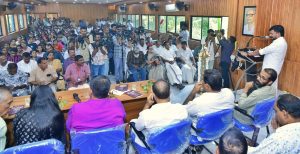
Archaeology Minister O J Janeesh launching the Kasaragod Archaeological Survey 2026 on 1 October
Kasaragod has evidence of human habitation dating back to the Stone Age and has a particularly rich collection of megalithic remains associated with the Iron Age. These include kudakkallu (umbrella stones), muniyaras (dolmens), and laterite caves, along with inscriptions on laterite rock surfaces and several historic forts.
Earlier explorations at Bekkal Fort, Ummichippoyil, Cheemeni-Ariyittapara, and Bandadukka-Manimoola had already brought several important sites to the department’s attention. The latest exercise builds on that work through a systematic survey covering the wider district.
The archaeological record of Kasaragod also reflects the successive influence of the Alupa dynasty, local chieftains, the Vijayanagara Empire, the Ikkeri Nayakas and European colonial powers.
Archaeology Minister O J Janeesh said, while launching the survey, that Keralam’s history would remain incomplete if it left out Kasaragod’s past. He described the district, popularly known as the ‘Land of Forts’, as a region whose historical roots stretch back to the Stone Age.
“The survey is being conducted as part of the government’s 100-day action plan. Besides documenting archaeological evidence, the department plans to ensure better preservation of the monuments identified during the exercise and explore their inclusion in the district’s tourism map,” he stated.
Also Read: Malayalam Language Bill reopens old wounds in Kasaragod
A week into the department’s first district-wide archaeological survey in Kasaragod, the field teams, it’s learnt, have already recorded several previously undocumented sites and findings, raising hopes of gaining new insights into the region’s ancient past.
K. Krishnaraj of the Department of Archaeology, who is coordinating the survey, told South First that this is the first time the department is undertaking such a comprehensive exercise across an entire district.
“The department has conducted extensive surveys in the past, but they were largely confined to individual panchayats or taluks. This time, we are looking at Kasaragod as a whole. We do not yet have an extensive archaeological inventory of the district. There have been several individual discoveries, but there is still much more to uncover,” he said.
Fieldwork began a day after the project launched on 1 October.
In the first week, the teams found several findings not documented earlier.
At Kodakkad, the survey identified six to seven undocumented umbrella stones, a characteristic feature of ancient megalithic burial practices.
At Pilicode, the team also located previously unnoticed caves. The area is known for its single-chambered rock-cut tombs from the Megalithic period.
Krishnaraj said the district-wide approach helped overcome some of the limitations of isolated archaeological surveys.
“Individual surveys have their limitations. A wider search is often missing, and documentation can also be inadequate. In this survey, we have the workforce to cover a larger area and document the findings systematically,” he said.
The early discoveries, he added, indicated that the survey could throw up evidence that may help archaeologists understand Kasaragod’s past in greater detail.
Also Read: How did ‘bachelor’ Babiya get a successor
As the survey is expected to uncover new clues to Kasaragod’s past, a call has been made for a dedicated museum in the district to preserve its archaeological wealth and bring artefacts now housed elsewhere back to their place of origin.
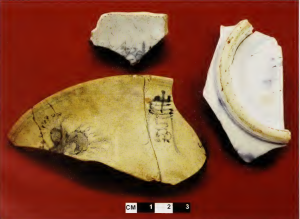
Inscribed porcelain ware excavated by Archaeological Survey of India from Kasaragod
Dr Nandakumar Koroth of the Department of History, Nehru Arts and Science College, Kanhangad, told South First that surveys involving residents had proved useful in a district as archaeologically rich as Kasaragod.
But he cautioned that unscientific digging at known sites and the removal of artefacts could permanently damage the heritage the surveys seek to uncover.
“Destroying already known sites through unscientific digging and taking away artefacts results in only a partial loss of Kasaragod’s heritage,” he said.
He proposed establishing an Archaeological Museum at Nileshwaram, the historic port city, as the first major step towards conserving the district’s archaeological legacy.
Kasaragod has yielded prehistoric tools, antiquities, historical objects, and other material that offer important clues to North Keralam’s cultural development. However, Nandakumar said, many of these collections are now preserved outside the district, including in New Delhi, Ernakulam, Thiruvananthapuram, Kozhikode and Payyanur (Kannur).
A Neolithic stone tool, or celt, recovered from Thimiri is one such example. It is currently preserved at the Pazhassi Raja Archaeological Museum in Kozhikode, he said.
Nandakumar said a museum at Nileswaram could serve as a permanent repository for archaeological material recovered from Kasaragod and provide facilities for conservation, scientific documentation and research. It could also preserve historical documents, manuscripts, traditional artefacts and archival records linked to the district.
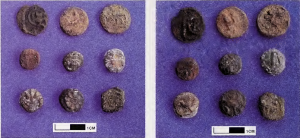
Cash-coin of Ikkeri Nayakas excavated by Archaeological Survey of India from Kasaragod
The museum could become a research and reference centre for historians, archaeologists, students, and scholars, while also introducing the district’s archaeological heritage to the wider public. Its location at Nileshwaram could also add a cultural tourism dimension, given the town’s historical importance as a port.
Meanwhile, Nandakumar urged caution in dealing with the numerous rock-cut chambers found at different locations in Kasaragod.
The structures are known locally by several names, including muniyara, Pandava guha, Peeranki guha, Swami kundu, muthala petty and kalpathayam. He said searching for such structures using only the term muniyara could miss several sites.
He strongly advised against opening covered rock-cut chambers without proper archaeological assessment.
He said the sites needed documentation and scientific study before opening or excavating them. He warned that unscientific intervention could destroy valuable evidence about the district’s past.
Also Read: ‘No endosulfan babies after 2011’ claim angers families, activists
Kasaragod’s past seems to keep emerging from beneath the ground.
Archaeological finds reported from different parts of the district in recent years are steadily adding to the picture of an ancient landscape shaped by human habitation.
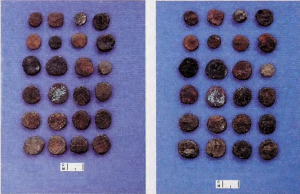
Cash-coins of Tippu Sultan excavated by Archaeological Survey of India from Kasaragod
The latest discovery came in September 2026, when archaeologists identified a significant megalithic burial chamber at Nittadukkam in Kanhangad. The structure is believed to be around 2,000 years old and could offer one of the earliest surviving physical clues to human settlement in the area.
Researchers said the monument may have survived largely because of local beliefs and customs that discouraged people from disturbing or destroying such ancient structures. Similar traditions have helped preserve megalithic remains elsewhere in northern Keralam.
In March, workers found another laterite rock-cut chamber, also believed to date to the Megalithic period, at Panayal during the construction of a compound wall. The construction was halted after the discovery, with archaeologists expecting further excavation to reveal artefacts and other clues to the region’s past.
The district had yielded another intriguing find in October 2024, when a large natural cave was reported at Kundera in Madikkai panchayat. Spanning more than 5,000 square yards, the cave is about 20 feet deep and has ceiling openings resembling those in ancient rock-cut chambers, possibly letting air and sunlight in.
(Edited by Majnu Babu).



